



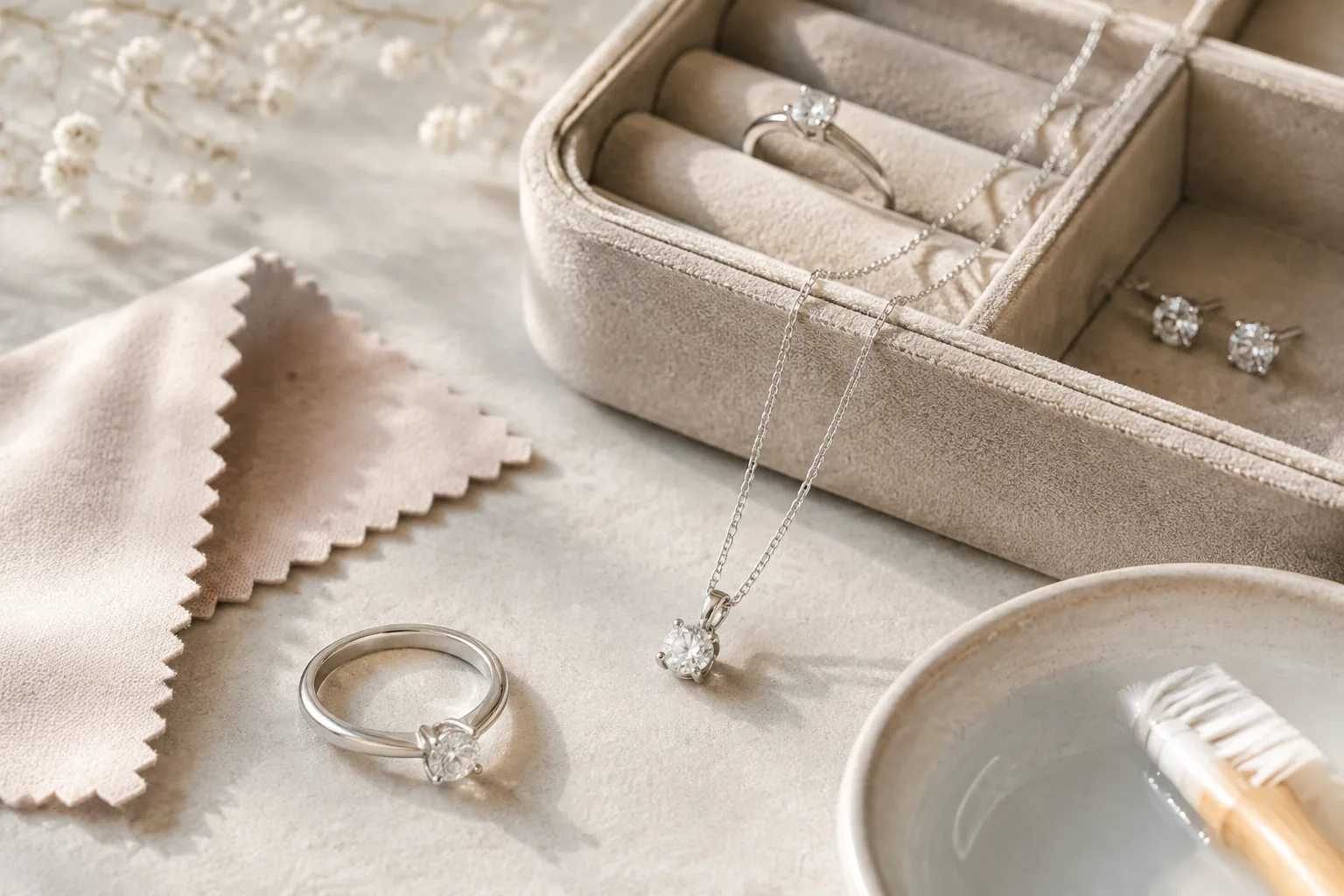
Pandora lab grown diamond jewelry care is not just about keeping a diamond bright. It is about caring for the whole piece: the lab-grown diamond, the sterling silver or other metal, the setting, the chain or clasp, any coating, and the way the jewelry is worn between cleanings.
That distinction matters because many owners hear “diamond” and assume the entire item can handle water, sleep, workouts, brushing, ultrasonic cleaning, or loose storage with other jewelry. Pandora’s own care guidance is more cautious. For Pandora Lab-Grown Diamond jewelry, the most practical rule is simple: clean gently, store separately, remove before high-exposure activities, and stop wearing the piece if it looks damaged or loose.
This guide focuses on Pandora’s official care instructions and uses independent diamond-care context where it helps explain why the surrounding jewelry construction still needs protection. For broader buying context, see our separate guide to Pandora Lab-Grown Diamonds and what buyers should know.
What Pandora Lab-Grown Diamond Jewelry This Guide Covers
Pandora’s supplied U.S. collection page is specifically a sterling silver filtered collection. The page is titled “Sterling silver Pandora Lab-grown diamonds for women” and uses the H1 “STERLING SILVER PANDORA LAB-GROWN DIAMONDS,” according to the official sterling silver Pandora Lab-Grown Diamonds collection. That page includes rings, earrings, necklaces, bracelets, and gift sets.
This does not prove that every Pandora Lab-Grown Diamond item is sterling silver. It means this guide is especially relevant to owners of sterling silver Pandora Lab-Grown Diamond pieces, while still noting Pandora’s broader lab-grown diamond care guidance where it applies. Pandora’s collection includes product names such as the Pandora Infinite Sterling Silver Lab-grown Diamond Ring and the Pandora Talisman Sterling Silver Lab-Grown Diamond Heart Pendant Necklace.
Pandora’s product-level description of the Pandora Infinite Sterling Silver Lab-grown Diamond Ring describes a solid sterling silver ring hand set with a 0.25 carat lab-grown diamond. Pandora also identifies sterling silver as its signature metal on that product page.
For readers comparing Pandora’s lab-grown diamond jewelry against other fashion-jewelry and engagement-ring options, our lab-grown diamond jewelry buying guide covers the buying side. This article stays on ownership: what to do after the piece is yours.
The Key Care Rule: Treat the Whole Piece, Not Just the Diamond
Pandora says its lab-grown diamonds are diamonds, “made, not mined,” grown using 100% renewable energy, and created by CVD on its official collection page. On the product example page, Pandora states that the lab-grown diamond is optically, chemically, thermally, and physically identical to mined diamonds.
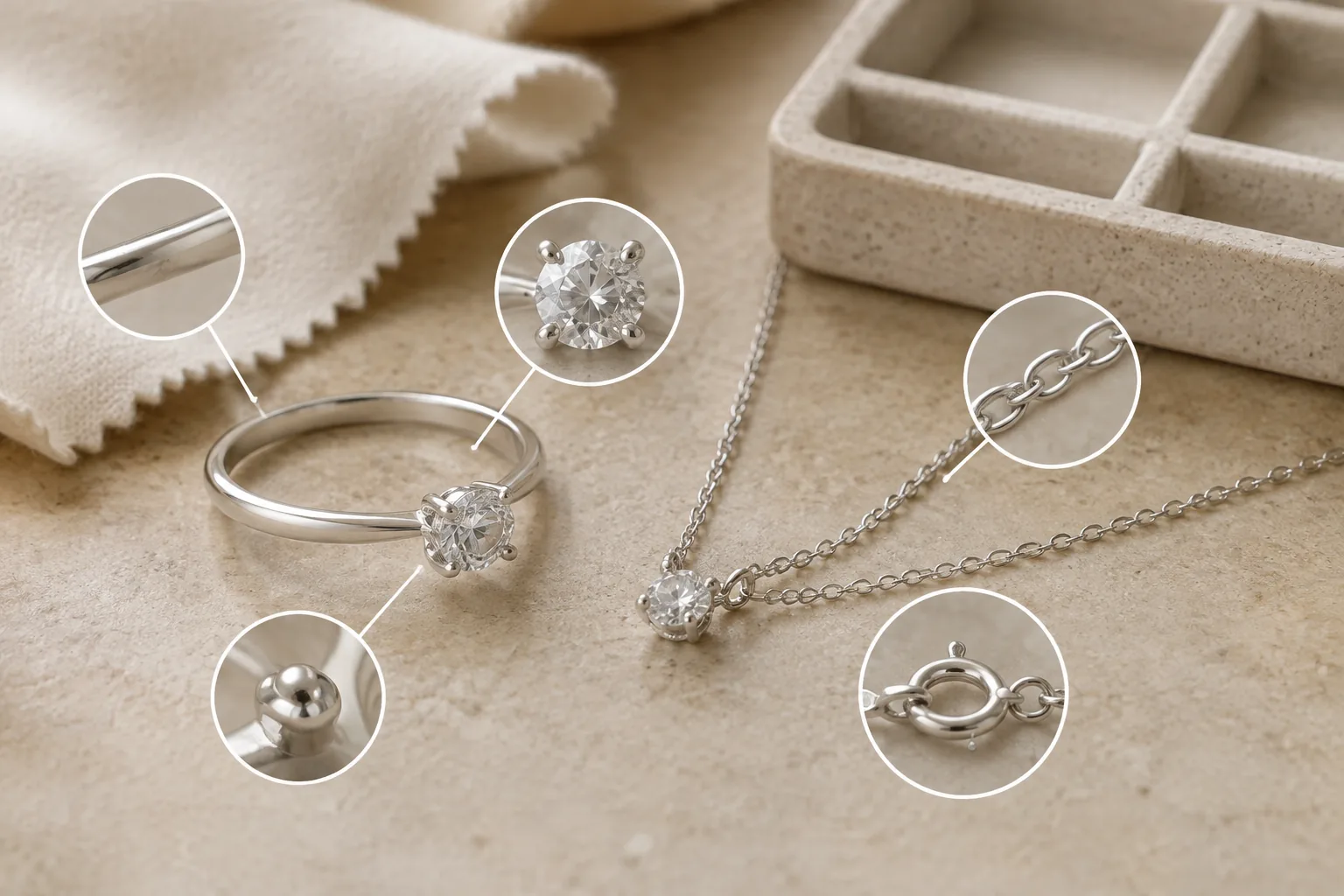
That diamond fact does not make the complete jewelry item waterproof, scratch-proof, or maintenance-free. A ring, necklace, bracelet, or pair of earrings also includes metal, settings, joints, clasps, chains, prongs, and sometimes coatings or finishes. Those parts are often more vulnerable in everyday wear than the diamond itself.
Pandora defines sterling silver as at least 92.5% pure silver plus other metals such as copper, and says sterling silver naturally tarnishes in its official sterling silver care explanation. That is one reason care guidance for a sterling silver lab-grown diamond piece cannot be reduced to “diamonds are durable.”
The Gemological Institute of America also gives useful context for diamond jewelry generally: GIA says diamonds collect oil and need regular cleaning to maintain sparkle, but it also warns that chlorine can damage some metals used in diamond settings and abrasives can scratch gold and other metals. GIA further cautions that ultrasonic cleaners can loosen stones or chip diamond girdles depending on the stone, treatment, and setting.
So the practical owner mindset is this: the diamond may be a diamond, but the jewelry is still jewelry. Care decisions should protect the weakest part of the piece, not only the hardest material in it.
When to Remove Pandora Lab-Grown Diamond Jewelry
Pandora’s care guidance is clear that owners should remove jewelry for several everyday activities. Its official jewelry cleaning guidance says to put jewelry on after skincare and cosmetics, remove jewelry before exercise or showering, and remove rings before cooking and washing hands.
For lab-grown diamond jewelry specifically, Pandora’s Lab-Grown Diamond Care Guide says to remove lab-grown diamond jewelry before showering, swimming, or sleeping. For sterling silver and plated jewelry, Pandora also says to remove pieces before exercising, showering, and swimming.
Showering, Swimming, and Bathing
Do not treat Pandora Lab-Grown Diamond jewelry as shower jewelry. Pandora’s lab-grown diamond care guidance says to remove it before showering and swimming, while its sterling silver care guidance says to remove sterling silver before swimming and bathing.
That advice is about the whole piece. Water exposure may involve soaps, chlorine, salt, shampoo, conditioner, heat, and repeated wet-dry cycles. Even if the diamond itself is not the main concern, the metal, setting, clasp, chain, polish, or coating can be.
This is the same general theme we cover in Can You Shower With Jewelry? What Brand Care Pages Actually Warn About: brand care pages often warn against water exposure because of the complete construction, not because every material fails instantly.
Sleeping, Exercise, Cooking, and Products
Pandora’s lab-grown diamond care PDF says to remove lab-grown diamond jewelry before sleeping. That is sensible for rings, necklaces, bracelets, and earrings because sleep can add pressure, snagging, bending, and chain stress.
Pandora’s general care guidance says to remove jewelry before exercise. For rings, it also says to remove them before cooking and washing hands. Pandora’s general advice to put jewelry on after skincare and cosmetics means lotions, creams, perfumes, and makeup should go on first, with jewelry added after products have settled.
Pandora also gives a specific warning for white gold lab-grown diamond products: keep them away from hand sanitizer, perfumes, and creams to protect the rhodium coating. That warning should not be stretched into a claim that those products are harmless to other Pandora Lab-Grown Diamond jewelry. A safer habit is to reduce contact between jewelry and cosmetics, creams, sanitizer, perfume, chlorine, sweat, and cleaning products unless Pandora gives specific approval for the item.
How to Clean Pandora Lab-Grown Diamond Jewelry at Home
Pandora’s supported at-home routine is measured and specific. Pandora says its Jewelry Care Kit is designed for Pandora jewelry including gold, sterling silver, plated metals, and stones. Its general cleaning method is to submerge jewelry in liquid cleaner for two minutes, rinse with lukewarm water, pat dry, and buff with the Pandora Polishing Cloth.
For lab-grown diamond jewelry specifically, Pandora repeats the liquid cleaner, lukewarm rinse, dry, and polish method. For sterling silver, Pandora says to clean with the Pandora Care Kit, soak for about two minutes, pat dry, and polish with the white side of the polishing cloth.
For daily-wear jewelry, Pandora recommends cleaning every two weeks and getting a professional in-store cleaning and check once a year. That cadence is useful for a ring or necklace worn often, especially because GIA notes that diamonds collect oil and need regular cleaning to maintain sparkle.
A Safe Pandora-Based Cleaning Routine
Start by checking whether the piece looks structurally sound. If a stone looks loose, a prong appears bent, a clasp is not closing properly, a chain is stretched, or the piece is visibly damaged, do not use cleaning as a fix. Stop wearing it and contact Pandora or use the relevant service channel.
If the piece appears intact, follow Pandora’s lab-grown diamond method: use the Pandora liquid cleaner, submerge for the stated two minutes, rinse with lukewarm water, pat dry, and then use the Pandora Polishing Cloth gently. Avoid treating polishing as scrubbing. The cloth is for buffing the metal surface, not forcing pressure into stones, prongs, or delicate settings.
How Often to Clean
For pieces worn daily, Pandora’s every-two-weeks cleaning recommendation is the clearest frequency in the available sources. The research does not provide a Pandora-specific schedule for occasional-wear Pandora Lab-Grown Diamond jewelry, so a practical approach is to clean when buildup is visible, before storing after heavy wear, or before an annual check if the piece has been worn regularly.
If tarnish is your main issue on sterling silver, our guide to preventing jewelry tarnish through storage and daily wear habits explains why prevention is usually easier than aggressive cleanup later.
What Not to Use: Brushes, Ultrasonics, Chemicals, and Abrasives
The most important Pandora-specific warning is about the brush. Pandora’s general jewelry cleaning advice discusses brush use for some buildup around some stone settings, but Pandora says not to use the soft cleaning brush on lab-grown diamond pieces. For Pandora Lab-Grown Diamond jewelry, follow the more specific lab-grown diamond instruction.
Do not assume ultrasonic cleaning is a default safe option. The available Pandora sources do not provide Pandora-specific approval for ultrasonic cleaners on Pandora Lab-Grown Diamond jewelry. GIA cautions that ultrasonic cleaners can loosen stones or chip diamond girdles depending on the stone, treatment, and setting, and recommends checking the grading report before ultrasonic cleaning.
Avoid chlorine, harsh chemicals, and abrasives. GIA warns that chlorine can damage some metals used in diamond settings and that abrasives can scratch gold and other metals. Pandora’s white gold lab-grown diamond warning about hand sanitizer, perfumes, and creams also supports a cautious approach around product exposure, especially where rhodium coating is involved.
This does not mean every accidental exposure ruins a piece. It means owners should not build habits around exposure. If the jewelry has been worn in the pool, shower, gym, or while applying products, clean it according to Pandora guidance, dry it thoroughly, inspect it gently, and avoid repeating the exposure as routine care.
How to Store Pandora Lab-Grown Diamond Jewelry
Pandora recommends storing jewelry away from sunlight and heat in a lined jewelry box or tarnish-resistant pouch. It also recommends separating jewelry pieces into pouches or compartments to reduce scratching and rubbing. For lab-grown diamond jewelry, Pandora says to store it safely and separately, including in the box it came in.
That means loose storage in a dish, toiletry bag, purse pocket, or shared pouch is a poor fit for Pandora Lab-Grown Diamond jewelry. Diamonds, metal edges, clasps, and chains can rub against each other. Sterling silver can tarnish, and polished surfaces can pick up scratches from harder neighboring pieces.
For sterling silver, Pandora says to store pieces separately in a tarnish-resistant box or pouch and keep them away from abrasive surfaces. That is especially relevant for sterling silver Pandora Lab-Grown Diamond rings, bracelets, pendants, and earrings.
For travel, Pandora’s storage guidance says to separate pieces into pouches or lay them separately on cloth or a towel and roll them to minimize rubbing. A simple travel setup is one small pouch or compartment per piece, with chains fastened before packing and rings kept away from earrings, clasps, or other stones.
Troubleshooting: Dullness, Tarnish, Scratches, Loose Stones, or Damage
Not every problem should be handled at home. Pandora’s guidance supports routine cleaning, separate storage, annual checks, warranty channels, and Pandora Cares where applicable. It does not provide a Pandora-specific at-home diagnosis for every issue.
If the Piece Looks Dull
Dullness can come from skin oil, lotion, cosmetics, soap residue, or normal buildup. Pandora’s cleaning method is the starting point: liquid cleaner, lukewarm rinse, pat dry, and gentle polishing cloth use. For daily-wear jewelry, Pandora recommends cleaning every two weeks.
If dullness remains after proper cleaning, do not escalate to aggressive brushing, abrasive products, or ultrasonic cleaning by default. The issue may be tarnish, coating wear, residue in a setting, or a surface problem that needs professional attention.
If Sterling Silver Looks Tarnished
Pandora says sterling silver naturally tarnishes. For sterling silver Pandora Lab-Grown Diamond pieces, use Pandora’s sterling silver method: the Pandora Care Kit, about a two-minute soak, pat dry, and the white side of the polishing cloth.
Prevention still matters. Store the piece separately in a tarnish-resistant pouch or lined jewelry box, keep it away from abrasive surfaces, and remove it before bathing, swimming, exercising, and product application where Pandora guidance applies.
If You See Scratches, Loose Stones, Bending, or Broken Parts
Stop wearing the piece if a stone appears loose, a prong is bent, a clasp does not close securely, a chain is stretched, a band is thinning or misshapen, or a stone is missing. Cleaning is not a repair method, and continued wear can make damage worse.
Pandora recommends a professional in-store cleaning and check once a year. For defects in materials or workmanship, Pandora’s lab-grown diamond care PDF says Pandora will replace or refund Pandora Lab-Grown Diamonds products under ordinary consumer use for two years from original purchase through an authorized Pandora channel, with proof of purchase required.
Pandora Cares is separate from the brand warranty. On the official Pandora Cares page, Pandora describes it as an Assurant protection plan, not the same as the brand warranty. Covered examples listed there include chain or bracelet stretching, discoloration and rhodium or other plating, refinishing or polishing, loss of precious or semi-precious stones and crystals excluding the primary stone, stone resetting, dents, chips, breaks, scratches, thinning bands, retipping prongs, earring repair, and lost earring backs.
Warranty and Protection-Plan Boundaries to Check
Pandora’s lab-grown diamond care PDF says Pandora Lab-Grown Diamonds products are covered for defects in materials or workmanship under ordinary consumer use for two years from original purchase through an authorized Pandora channel, with proof of purchase required. Pandora’s Pandora Cares page also states that Pandora Lab-Grown Diamond items include a two-year warranty from purchase.
The same lab-grown diamond care PDF says all stones 0.50 ct and above are IGI certified and that Pandora has a lifetime grading guarantee tied to advertised weight and grades. Those are grading and product-representation points, not a promise that jewelry cannot be scratched, bent, tarnished, loosened, or damaged in wear.
Pandora Cares should be treated separately. Pandora describes it as an Assurant protection plan that covers eligible damage or breakdown after the manufacturer warranty period, beginning one year plus one day after plan purchase, for up to two years. Eligibility, exclusions, proof of purchase, timing, and the exact item purchased matter.
Because the research package notes some inconsistency between a product-page warranty reference and warranty-related materials, owners should check their receipt, current Pandora product page, warranty terms, and customer-service guidance before relying on a single summary. The safe editorial takeaway is not “everything is covered.” It is: keep proof of purchase, inspect the jewelry regularly, stop wearing damaged pieces, and use Pandora’s official channels when the issue is beyond routine cleaning.
Pandora Lab-Grown Diamond Jewelry Care Checklist
Use this as a practical ownership routine for Pandora Lab-Grown Diamond pieces, especially sterling silver styles.
Clean daily-wear jewelry every two weeks using Pandora’s supported method: liquid cleaner, two-minute soak where directed, lukewarm rinse, pat dry, and gentle polishing with the Pandora Polishing Cloth.
Do not use the soft cleaning brush on Pandora Lab-Grown Diamond pieces.
Remove lab-grown diamond jewelry before showering, swimming, or sleeping.
Remove jewelry before exercise or showering, and remove rings before cooking and washing hands, following Pandora’s general care guidance.
Put jewelry on after skincare, cosmetics, perfume, creams, and lotions rather than before them.
For white gold lab-grown diamond products, keep the piece away from hand sanitizer, perfumes, and creams to help protect the rhodium coating.
Store Pandora Lab-Grown Diamond jewelry safely and separately, including in its original box, a lined jewelry box, or a tarnish-resistant pouch.
Separate pieces into pouches or compartments so diamonds, metals, chains, clasps, and settings do not rub together.
For travel, separate pieces into pouches or lay them apart on cloth or a towel and roll them to minimize rubbing.
Schedule Pandora’s recommended professional in-store cleaning and check once a year for jewelry worn regularly.
Stop wearing the piece if you notice loose stones, bending, broken clasps, stretched chains, missing stones, thinning bands, or damage that cleaning cannot address.
Conclusion
Pandora Lab-Grown Diamond jewelry should be cared for as a complete piece of jewelry, not as a loose diamond. Pandora’s own instructions point toward gentle liquid cleaning, lukewarm rinsing, careful drying, light polishing, separate storage, and removal before showering, swimming, sleeping, exercise, and other exposure-heavy situations.
The diamond may be optically, chemically, thermally, and physically identical to a mined diamond, according to Pandora, but the setting, sterling silver, coating, chain, clasp, and stone mounting still create care limits. Owners who follow Pandora’s specific lab-grown diamond guidance, avoid unsupported shortcuts, store pieces separately, and use Pandora service channels when damage appears are in the best position to keep the jewelry wearable without over-cleaning or assuming it is indestructible.
Related Guides
Can You Shower With Jewelry? What Brand Care Pages Actually Warn About
How to Prevent Jewelry Tarnish: Storage, Chemicals, and Daily Wear Habits
Pandora Lab-Grown Diamonds: What Buyers Should Know
Mejuri vs Monica Vinader vs Missoma vs Pandora: Lab-Grown Diamond Specs Compared