



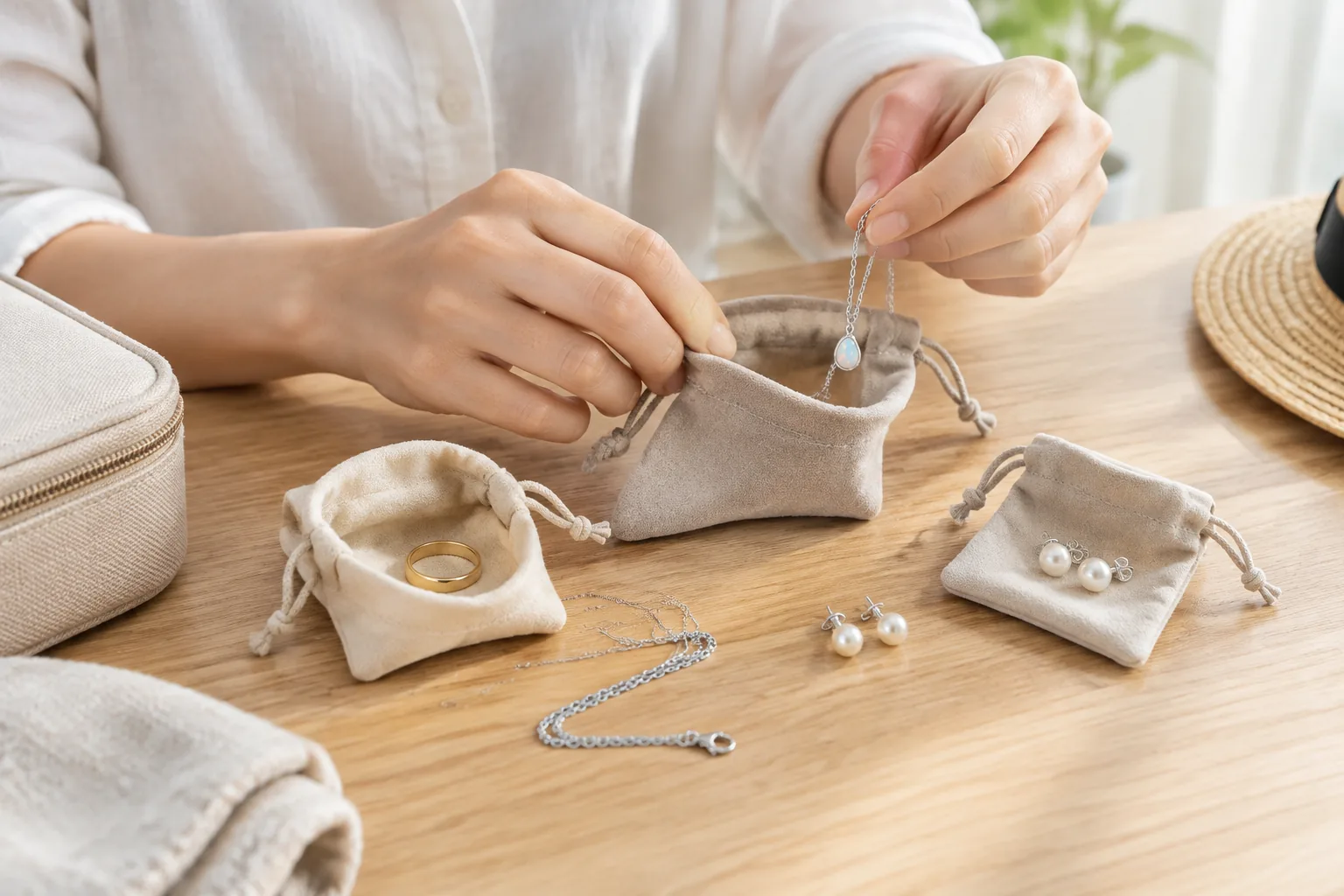
Buying jewelry for humid weather requires more than choosing a durable-looking metal. Humidity, sweat, sunscreen, perfume, salt water, pool chemicals, heat, and repeated temperature changes can affect a piece’s base metal, plating, gemstone, setting, clasp, adhesive, or moving parts in different ways.
The most useful approach is to assess the entire piece before buying or packing it. A solid-metal bracelet with no stones may have different care limits from a gold-vermeil ring with a delicate setting. A stainless-steel item may need less metal maintenance than sterling silver, but that does not automatically make every attached stone or finish suitable for swimming.
This guide explains what to check when choosing jewelry for a tropical trip, beach vacation, humid climate, or frequent summer wear. The recommendations are intentionally conservative because the available brand guidance does not establish that any jewelry is waterproof, tarnish-proof, maintenance-free, or suitable for all-day exposure in humid conditions.
What Humid Weather Changes About Jewelry Care
Humidity does not act on every jewelry material in the same way. Moisture can contribute to tarnish or finish changes, while sweat and cosmetics introduce salts, acids, oils, and chemicals that may affect surfaces. Sea water and chlorinated pool water add another exposure concern. Heat and sudden temperature changes can also matter for some gemstones.
The Gemological Institute of America’s jewelry-care guidance advises removing fine jewelry before chlorinated swimming or household cleaning. It also recommends keeping jewelry away from perfume, lotion, hairspray, cosmetics, and chemicals, using separate padded storage while traveling, and avoiding excessive heat or sudden temperature changes.
That makes “humid-weather jewelry” a use-case question rather than a simple material ranking. Before buying, separate these five factors:
- Base metal: such as gold, sterling silver, or stainless steel.
- Surface treatment: such as gold plating, vermeil, rhodium, oxidation, or PVD.
- Gemstone: including pearls, opals, treated stones, or composite materials.
- Construction: including prongs, hinges, charms, adhesives, clasps, and moving components.
- Manufacturer guidance: the exact product page and care instructions for that piece.
A practical editorial rule is to follow the most vulnerable disclosed component. This is an analysis based on the component-specific warnings in the available professional and brand sources, not a universal industry standard.
Compare Materials Before You Buy
The right choice depends on your itinerary and your willingness to remove, dry, and maintain the piece. A material that is convenient for one trip may be a poor fit for another if it has a delicate finish or a moisture-sensitive stone.
Solid Gold: A Durable Base Does Not Remove Care Limits
The FTC explains that “solid gold” means an item is not hollow; it does not mean the item is pure gold. The karat designation still matters because jewelry may be made from alloys rather than pure gold. The FTC’s consumer guidance on platinum, gold, and silver jewelry is useful when reading a product description.
For humid travel, a disclosed solid-gold piece may be a straightforward option when it has a simple construction and no sensitive stones. However, the available evidence does not establish that every solid-gold product is suitable for showering, swimming, sunscreen, or prolonged sweat exposure. A solid-gold ring with a pearl, opal, adhesive-set element, or delicate moving component still needs the care plan for those parts.
Check the karat, alloy disclosure, stone identity, setting, and manufacturer’s exposure guidance rather than treating “solid gold” as a blanket permission for water.
Gold Vermeil and Conventional Plating: Inspect the Surface Finish
Gold vermeil is gold over sterling silver. The FTC identifies vermeil as gold-plated sterling silver and distinguishes gold electroplate from thinner gold-flashed or gold-washed applications. It also states that gold plating eventually wears depending on use and plating thickness.
This matters in humid conditions because moisture, sweat, friction, cosmetics, and repeated contact can affect the visible surface. Mejuri describes its gold vermeil as a gold layer over sterling silver and advises dry storage, gentle wiping, limited polishing, and avoiding steam or ultrasonic cleaning in the reported care material.
Gold vermeil can suit a traveler who wants a particular color and is prepared to remove the jewelry for swimming, showering, exercise, and heavy cosmetic exposure. It may be less suitable for someone seeking a piece to leave on continuously throughout a humid itinerary.
Conventional plating needs the same caution, with an additional need to clarify what lies beneath the surface and how the brand defines the finish. Ask whether the item is plated over sterling silver or another metal, whether the thickness is disclosed, and what the warranty excludes.
For a deeper explanation of finish wear and replating questions, see what to look for when buying gold vermeil jewelry.
Sterling Silver, Stainless Steel, and Mixed Metals
Sterling silver is 92.5% silver and can tarnish. Mejuri’s reported sterling-silver guidance recommends a soft dry cloth or silver polishing cloth, while noting that oxidized silver requires different treatment because polishing or water can remove the finish. Missoma states that its sterling silver jewelry is rhodium plated to reduce long-term tarnishing.
Those details show why “sterling silver” alone is not a complete care description. A rhodium-plated or oxidized finish can change what cleaning is appropriate, and the finish may have its own wear limits. Do not assume that a silver polishing cloth is suitable for every silver item.
Mejuri’s reported stainless-steel guidance describes its steel as surgical-grade, corrosion-resistant, hypoallergenic, and PVD bonded, while also warning that harsh chemicals, abrasives, or extreme conditions can affect the surface. The same guidance recommends a soft dry cloth and avoiding abrasive cloths, harsh solutions, steam cleaners, and ultrasonic cleaners. These are product-specific statements and should not be expanded into a universal claim that every stainless-steel piece is safe for every wearer or water exposure.
Mixed-metal jewelry deserves a component-by-component check. A piece may combine a relatively durable metal with plated details, a rhodium finish, enamel, charms, adhesives, or a gemstone. For a mixed piece, evaluate the least tolerant disclosed component first.
Why Pearls, Opals, and Treated Stones Need Extra Caution
Metal is only one part of the care decision. Gemstones can change the recommended packing and wearing routine, especially when the stone is porous, treated, coated, composite, or sensitive to heat and chemicals.
Pearls Are Soft and Easily Exposed to Cosmetics
GIA describes pearls as approximately Mohs 2.5, which makes them susceptible to scratching. Its pearl-care guidance states that heat, acids, perfume, cosmetics, hairspray, and perspiration can damage pearls. GIA recommends wiping pearls with a soft cloth and avoiding ultrasonic and steam cleaners.
Pandora’s reported care guidance similarly advises treating natural pearls gently, not soaking them, and keeping them away from acids, solvents, ultrasonic cleaning, high temperatures, and prolonged direct light.
For humid travel, pack pearls separately in a soft pouch. Put them on after skincare, sunscreen, perfume, and makeup have dried, and wipe them gently after wearing. Do not use a general metal-cleaning routine on a pearl piece unless the manufacturer specifically permits it.
You can also review this focused guide to cleaning pearl jewelry without soaking or scrubbing.
Opals and Treated Stones Need Product-Specific Guidance
The reported Mejuri opal-care material states that care varies by opal type. It warns about water, perfume, soap, cleaning products, lotion, cosmetics, excessive sweat, and extreme temperature changes, and distinguishes Australian opals from Ethiopian opals in its cleaning guidance.
GIA also warns that opals are vulnerable to heat, dryness, sudden temperature changes, scratches, and chips. These cautions do not support a single rule for every opal. They support asking which type of opal is used and what the manufacturer recommends for cleaning and storage.
The same principle applies to treated, dyed, coated, fracture-filled, composite, or otherwise modified stones. If the product page does not disclose the treatment or care limit, contact the brand before exposing the piece to water, heat, chemicals, or ultrasonic cleaning.
Brand Instructions: Mejuri, Missoma, Monica Vinader, and Pandora
The available brand sources differ in scope and specificity. They should be read as brand or product guidance, not as one industry-wide policy.
Mejuri
The supplied Mejuri jewelry-care page identifies materials including 10K and 14K gold, gold vermeil, sterling silver, titanium, platinum, stainless steel, opals, emeralds, pearls, enamel, and other materials.
The reported Mejuri material-specific guidance recommends dry storage and gentle care. Its gold-vermeil material states that vermeil can tarnish through moisture, air pollution, sulfur-containing materials, and environmental exposure. Its sterling-silver material distinguishes ordinary sterling silver from oxidized silver, while its stainless-steel guidance warns against abrasive or harsh cleaning methods.
For a humid trip, the practical implication is to identify the exact material and finish rather than relying on the general brand name. A Mejuri piece with an opal or pearl needs a different plan from a simple metal-only item.
Missoma
Missoma advises storing pieces individually in a soft-lined box or pouch and keeping gold vermeil and silver in a dark, cool, dry place, according to its Help and FAQs page.
Missoma also states that its sterling silver jewelry is rhodium plated to reduce long-term tarnishing. Its reported FAQ warranty covers manufacturing defects such as breakage or tarnishing for two years and excludes loss and theft.
The warranty information is relevant to ownership risk, but it should not be treated as permission to swim, shower, or expose jewelry to chemicals. Check the exact product instructions and warranty exclusions before travel.
Monica Vinader
Monica Vinader’s Quality Promise and Warranty states a five-year warranty and lifetime repair service. It also states that vermeil can be replated if it loses color and describes its vermeil as a layer of 18K gold over sterling silver.
Those services may reduce the practical concern of eventual finish wear, but they do not establish how a specific item will perform under a particular itinerary. Replating and repair are ownership options, not evidence that a piece is waterproof or suitable for continuous humid-weather wear.
Pandora
The supplied Pandora Moments category URL was not directly verified as a live product description during the reported review. A separate official Pandora product page is reported as identifying a Pandora Moments bangle as polished sterling silver and listing a complimentary one-year warranty. That page instructs customers to remove jewelry before showering, swimming, or sleeping.
Pandora’s reported care page also recommends removing jewelry before exercise or showering, putting it on after skincare and cosmetics, and treating natural pearls more gently. These instructions are useful for planning, but the exact product page remains the controlling reference for a particular item.
What to Check on the Product Page
Before buying jewelry for humid weather, look for specific information rather than broad durability language.
Composition and Finish
Check:
- The base metal and karat, if applicable.
- Whether “solid gold” refers to a non-hollow item rather than pure gold.
- Whether the finish is gold vermeil, gold plating, rhodium, oxidation, PVD, enamel, or another treatment.
- The metal beneath a plated or vermeil surface.
- Whether plating or vermeil thickness is disclosed.
- Whether the item combines multiple metals or finishes.
Be cautious with terms such as “tarnish-proof,” “waterproof,” “permanent plating,” and “maintenance-free.” The available evidence does not support using these claims as universal purchasing criteria.
Stones and Construction
Identify:
- The exact gemstone and whether it is natural, treated, coated, composite, or otherwise modified.
- The setting type and whether stones are held by prongs, bezels, adhesives, or other construction.
- Charms, hinges, moving parts, hollow components, and delicate clasps.
- Whether the care instructions mention water, sweat, cosmetics, chemicals, heat, or temperature changes.
- Whether the manufacturer gives separate instructions for pearls, opals, or treated stones.
Service, Warranty, and Returns
Check warranty duration, covered defects, exclusions, repair or replating services, proof-of-purchase requirements, and return conditions for the market where you are buying. A warranty may address manufacturing defects, repair, or finish service, but it does not automatically cover water-related damage, chemical exposure, ordinary wear, stone loss, or finish wear.
How to Pack and Wear Jewelry in Humid Travel
A simple travel routine reduces avoidable exposure:
- Pack each piece separately. Use a soft-lined pouch or padded compartment to reduce scratching and chain tangling. Missoma specifically recommends individual storage, and GIA recommends separate padded storage while traveling.
- Keep jewelry away from cosmetics and chemicals. Put on jewelry after skincare, sunscreen, perfume, hairspray, and makeup have been applied and allowed to dry.
- Remove pieces before swimming or showering. This is especially important for pearls, opals, plated or vermeil finishes, and pieces with unclear instructions. Pandora’s reported product guidance specifically says to remove jewelry before showering and swimming.
- Remove jewelry for exercise and sleep when the product guidance recommends it. Sweat, friction, pressure, and bedding can affect finishes, stones, and settings.
- Dry jewelry before storing it. This is a cautious travel recommendation based on repeated source guidance favoring dry storage and warning about moisture-sensitive materials. Do not seal a damp piece in a pouch or case.
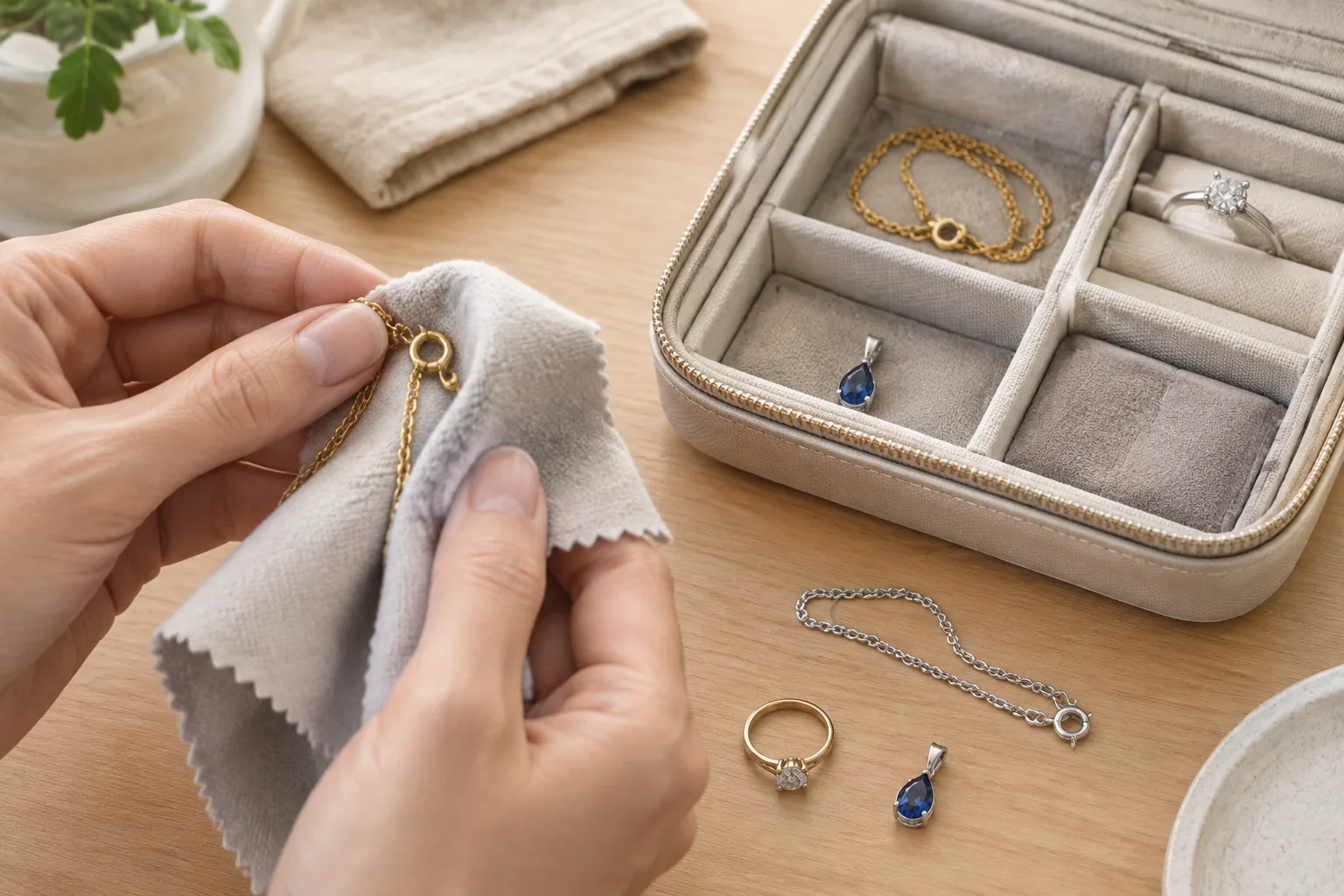
- Use the least aggressive cleaning method. A soft, dry cloth may be appropriate for some pieces, but polishing, water, steam, ultrasonic cleaning, or silver products may be unsuitable for particular finishes or stones.
- Separate wet activities from jewelry wear. Sea water, pool water, sunscreen, and heat should be treated as separate risks rather than assumed to have identical effects.
For additional context, see what brand care pages actually warn about showering with jewelry.
When to Remove Jewelry and Ask for Advice
Remove jewelry before swimming, showering, exercising, sleeping, household cleaning, or applying cosmetics when the manufacturer recommends it. A conservative approach is also appropriate when the piece contains a pearl, opal, treated stone, delicate setting, adhesive-set element, or unclear finish.
Pause before cleaning if:
- The product page does not identify the stone treatment.
- The piece is oxidized, rhodium plated, gold vermeil, or conventionally plated.
- The finish has begun to change color.
- A stone is loose, chipped, cracked, or separating from its setting.
- The piece has moving parts, adhesives, or a complex charm construction.
- The brand instructions conflict with a general cleaning habit.
- You cannot determine whether water, polishing, steam, or ultrasonic cleaning is permitted.
When instructions are unclear, contact the brand or a qualified jewelry professional with the exact product details. Do not infer exposure permission from a warranty length, a “durable” description, or the presence of one relatively resistant material.
Humid-Weather Jewelry Buying Checklist
Before purchasing, ask:
- What is the base metal, and is the item hollow, solid, plated, vermeil, rhodium finished, oxidized, or PVD treated?
- Which gemstone is used, and is any treatment disclosed?
- What component is most vulnerable to moisture, chemicals, heat, friction, or scratching?
- Does the product page give specific guidance for swimming, showering, exercise, sleep, cosmetics, and storage?
- Are plating thickness, repair options, replating, warranty exclusions, and return conditions clear?
- Can the piece be stored separately and dried easily during travel?
- Am I prepared to remove it for water activities and heavy sweat?
- Is the claim based on a specific product instruction, or only on broad language such as “waterproof” or “tarnish-proof”?
The best jewelry for humid weather is therefore the piece whose material, finish, gemstone, construction, and care routine match the itinerary. A simpler metal-only design may be easier to manage, while vermeil, plating, pearls, opals, and treated stones can still be appropriate when the buyer accepts more careful storage and removal. No available source supports treating any material as automatically suitable for every humid-weather condition.
Conclusion
Choose jewelry for humid travel by evaluating the whole piece, not just its headline metal. Solid gold, sterling silver, stainless steel, vermeil, and plated jewelry each have different maintenance considerations, while pearls, opals, treated stones, finishes, clasps, and moving components can set stricter limits.
Pack pieces separately, keep them dry, apply cosmetics before wearing them, and remove them for swimming, showering, exercise, sleep, and chemical exposure when the product guidance advises it. Most importantly, read the exact product page and ask for clarification when composition, treatment, or care limits are unclear.
Related Guides
- What to Look for When Buying Gold Vermeil Jewelry: Replating, Storage, and Wear Limits
- How to Prevent Jewelry Tarnish: Storage, Chemicals, and Daily Wear Habits
- Missoma Metal Guide: 18K Gold Vermeil, Gold Plating, Sterling Silver, and Solid Gold Explained
- How to Clean Pearl Jewelry Safely Without Soaking or Scrubbing

1 Comment
Pingback: Blue Nile Gemstone Rings for Daily Wear Guide