



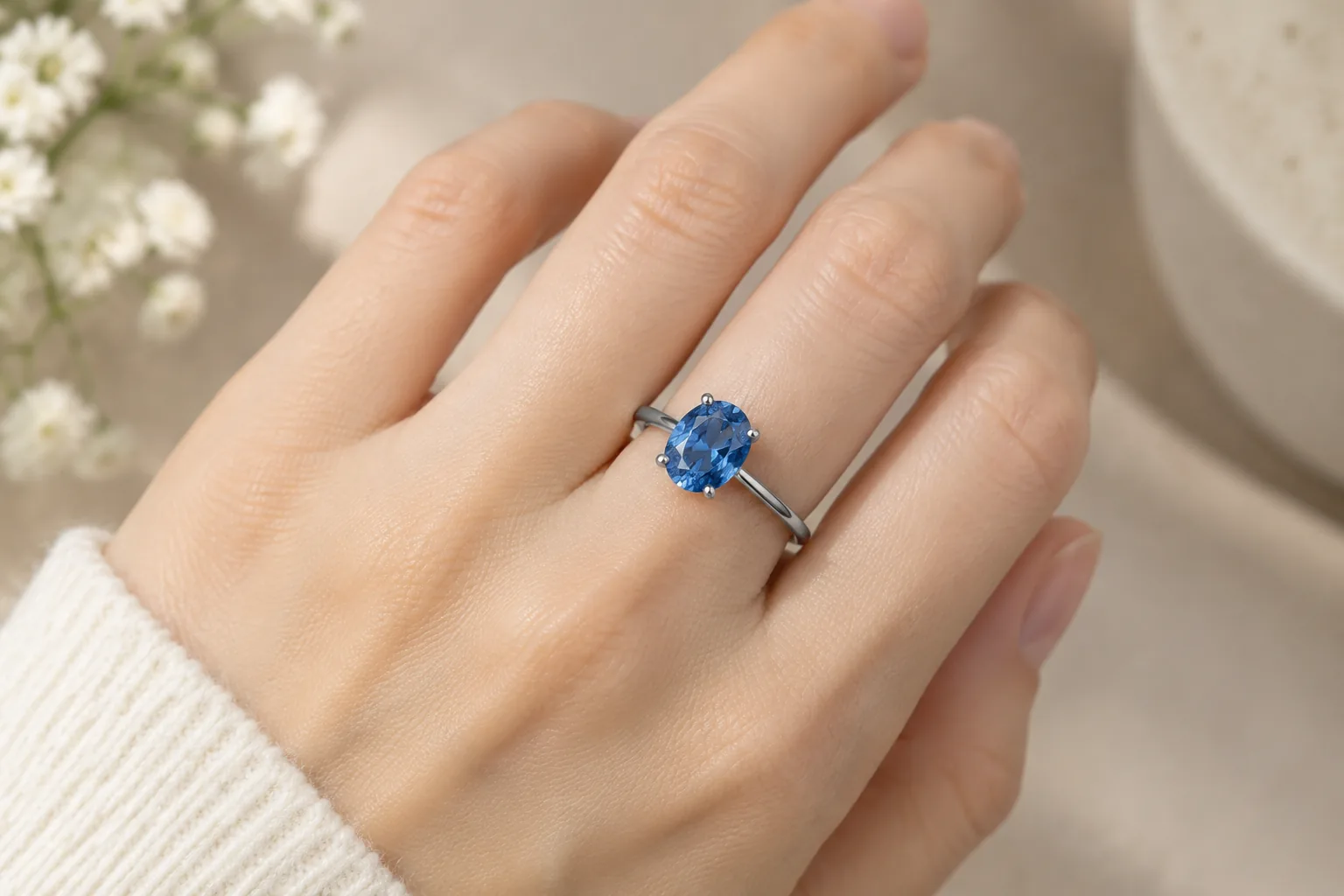
A colored-stone engagement ring can offer more visual personality than a traditional diamond design, but the right choice depends on more than color. Daily wear exposes a ring to impact, friction, household chemicals, temperature changes, and repeated contact with clothing, bags, desks, and other jewelry.
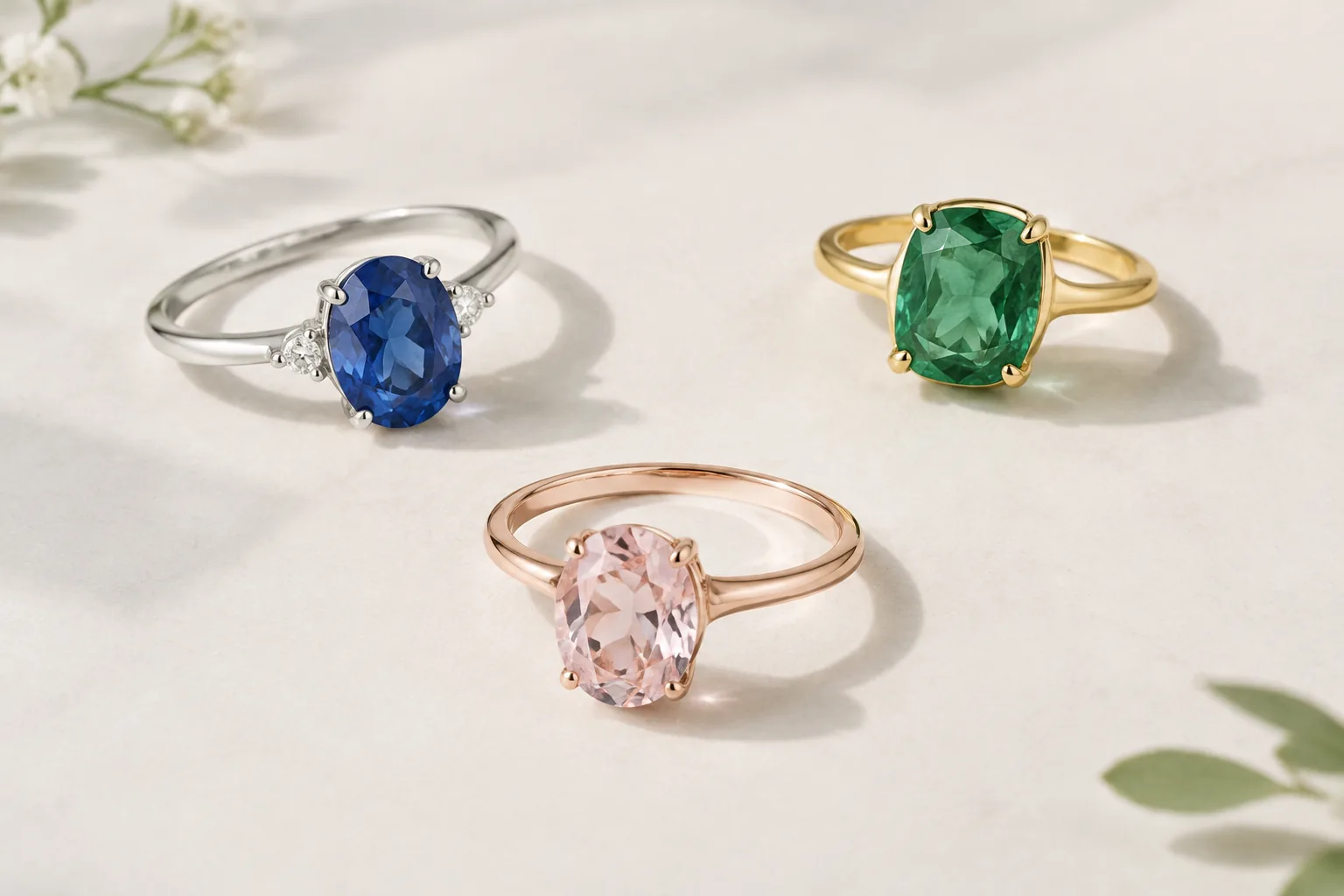
Blue Nile presents gemstone engagement rings as an alternative to diamond rings, emphasizing color, personalization, symbolism, and a price that is typically lower than comparable diamond-focused designs. Its education material includes sapphire, ruby, emerald, morganite, aquamarine, amethyst, topaz, opal, tanzanite, moonstone, and other gemstone categories.
The practical question is not which gemstone is universally “best.” It is whether a particular stone, treatment, cut, setting, care routine, and after-sales policy fit the way you expect to wear the ring.
What Blue Nile Gemstone Engagement Rings Include
Blue Nile’s positioning and example designs
Blue Nile’s gemstone engagement ring guide frames colored stones as an alternative to diamond engagement rings. The brand highlights the ability to choose a distinctive color and a more personalized appearance, while also connecting gemstone selection with symbolism and budget.
The same guide gives examples such as:
- Sapphire stackable rings
- Sapphire and diamond halo rings
- Morganite and diamond halo cocktail rings
- Emerald and diamond pavé stackable rings
- Aquamarine infinity twist rings
- Amethyst and diamond halo cocktail rings
These examples show the breadth of the category, but they do not establish that every listed gemstone has the same daily-wear suitability. A ring being designed and sold as an engagement ring confirms its intended category, not that its stone is suitable for every job, sport, travel routine, or household task.
Blue Nile’s broader diamond and jewelry education material can help explain general jewelry concepts, but it should not be treated as proof that every colored-stone ring includes an independent laboratory report or identical product disclosures.
The main gemstone categories
The stones discussed in Blue Nile’s education material include:
- Sapphire, including blue and pink sapphire
- Ruby
- Emerald
- Amethyst
- Topaz
- Aquamarine
- Morganite
- Opal
- Tanzanite
- Moonstone
- Garnet
- Tourmaline
- Peridot
Some of these are more practical starting points for frequent wear than others, but even within one category, treatment, internal features, shape, setting, and individual stone quality matter. Treat the category as the beginning of the decision, not the conclusion.
How to Evaluate a Gemstone for Daily Wear
Hardness, toughness, and stability are different
A useful daily-wear assessment needs more than the Mohs hardness number. GIA’s explanation of gem durability separates durability into three related areas:
- Hardness: Resistance to scratching
- Toughness: Resistance to chipping, breaking, or fracturing
- Stability: Resistance to chemicals, heat, light, humidity, and temperature changes
A stone can be relatively hard yet still be vulnerable to cleavage or impact. Conversely, a lower-hardness stone may need more attention because everyday contact can create surface scratches over time.
Internal fractures, inclusions, treated fissures, and the cut shape can also influence risk. A pointed corner, thin girdle, exposed table, or high-relief design may deserve closer inspection than a more protected outline. These are product-level considerations, so general gemstone guidance cannot replace examining the specific ring listing.
Why Mohs hardness alone is not enough
Blue Nile and GIA materials place sapphire and ruby at approximately 9 on the Mohs scale. That makes them strong candidates for comparison when frequent wear and scratch resistance are important. It does not mean they cannot chip, fracture, loosen in a setting, or become damaged by impact.
GIA’s framework is more useful when treated as a checklist:
- How resistant is the stone to scratches?
- How likely is it to chip under a sharp impact?
- Does it have cleavage or internal fractures?
- Is it sensitive to heat, chemicals, light, or rapid temperature changes?
- Has it been treated in a way that changes its care requirements?
- Does the cut expose corners or vulnerable surfaces?
- Does the setting protect the stone without creating avoidable cleaning or snagging concerns?
This approach helps prevent a common buying mistake: selecting a stone based only on its color or hardness number.
Comparing Blue Nile’s Main Colored-Stone Options
Sapphire and ruby
Sapphire and ruby are both varieties of corundum and are listed in the research material at approximately 9 on the Mohs scale. From a decision-making perspective, they are sensible options to investigate first when the ring is expected to receive frequent wear and scratch resistance is a high priority.
That does not make either stone damage-proof. The setting, corners, girdle, inclusions, treatment, and impact exposure still matter. A wearer who regularly handles tools, does contact sports, or works with hard surfaces may need a more cautious routine even with sapphire or ruby.
Before buying, confirm whether the specific stone is treated, whether the treatment is disclosed, and whether the product page provides any report or additional stone information. Do not infer natural status, origin, or treatment from color or price.
Emerald
Blue Nile includes emerald among its engagement-ring gemstone options, but its educational guidance also treats emerald as a stone requiring more careful handling. The research material places emerald at approximately 7.5 to 8 on the Mohs scale and notes that emeralds commonly have fissures and may be treated.
The important distinction is between wearable in a ring and low-maintenance for intensive daily wear. An emerald ring may suit someone who values its color and accepts periodic checks and a more cautious routine. It may be a weaker fit for someone who wants to wear the ring during physically demanding work, frequent impact, or activities involving unknown chemicals.
Emerald should be evaluated by the individual stone and its treatment disclosure. Ask how the stone should be cleaned and whether heat, steam, ultrasonic cleaning, solvents, or particular chemicals should be avoided.
Morganite and aquamarine
Morganite and aquamarine are both included in Blue Nile’s gemstone education and are listed at approximately 7.5 to 8 on the Mohs scale in the research material. Morganite is described as potentially suitable for a daily ring with careful use and appropriate care. Aquamarine also requires protection from impact and high heat.
These stones may appeal to buyers who want a pale pink or blue look and are willing to accept more maintenance than a purely durability-led choice. The practical fit depends on how much contact the ring will have with hard surfaces and whether the wearer is comfortable removing it for higher-risk activities.
The pale color of either stone should not be treated as evidence of treatment status, durability, or lower maintenance. Confirm the product-specific details before ordering.
Amethyst and topaz
Amethyst is listed at approximately 7 on the Mohs scale and is described in the research material as requiring gentler use, with care around high heat and prolonged strong light. It may work for a wearer who prioritizes color and accepts a more protective routine, but it should not automatically be treated as an unrestricted daily-wear stone.
Topaz is listed at approximately 8, yet the research material notes cleavage and chipping concerns. This illustrates why a higher hardness number does not automatically produce a lower overall risk. A topaz ring may require care around sharp impacts, especially where the cut or setting leaves vulnerable areas exposed.
For both stones, the decision should include the wearer’s activities, setting design, treatment disclosure, and cleaning instructions.
Opal, tanzanite, and moonstone
The research material identifies opal, tanzanite, and moonstone as stones with higher care requirements related to hardness, toughness, or stability. They should not be presented as high-strength, low-maintenance daily-wear options without stone-specific evidence.
These gemstones may suit someone who is comfortable removing a ring for certain activities and following detailed care instructions. They may be less suitable for a buyer seeking a ring that can be worn through physical work, exercise, household cleaning, travel, and unpredictable contact with hard surfaces.
The key tradeoff is not whether these stones are attractive or meaningful. It is whether the wearer accepts the additional ownership discipline their characteristics may require.
Treatments and Product-Level Disclosure
What gemstone treatments can mean
Blue Nile’s gemstone enhancements education discusses treatments such as heating, filling, surface coating, bleaching, dyeing, and irradiation. Treatment is not a single category with one universal effect. Its significance depends on the gemstone, the treatment method, its stability, and the care restrictions that apply afterward.
CIBJO’s Official Gemstone Book includes disclosure terms such as treated, irradiated, diffusion treated, dyed, fracture filled, glass filled, impregnated, and coated. Its terminology reinforces the importance of explaining relevant treatments before a transaction.
A general education page can explain the categories, but it cannot identify the treatment status of a particular ring.
Questions that general education cannot answer
Do not assume a specific Blue Nile gemstone is untreated, natural, or accompanied by an independent report unless the product information states it. Before checkout, confirm:
- Whether the stone is natural, synthetic, laboratory-created, or another material
- Whether it has been heated, filled, diffused, coated, dyed, irradiated, or otherwise treated
- Whether the treatment affects ultrasonic, steam, heat, solvent, or chemical exposure
- Whether an independent laboratory report is included
- Whether the report identifies treatment, natural status, and origin
- Whether the product page information applies to the current inventory item
Blue Nile’s education content can be useful context, but it is not a substitute for product-level disclosure. Missing information should be treated as an unanswered question, not as confirmation that no treatment or report exists.
Setting, Shape, and Lifestyle Considerations
How the design can change the practical risk
The stone is only one part of an engagement ring. A buyer should also review:
- Metal type and finish
- Prong count and placement
- Whether the center stone is raised
- Whether corners are exposed
- Whether the design is prong-set, bezel-set, or partially enclosed
- Whether a halo or pavé section adds small stones and additional settings
- Whether the profile is likely to catch on clothing or bags
- Whether cleaning around the setting appears straightforward
These features can influence snagging, impact exposure, debris accumulation, inspection needs, and repair complexity. However, a bezel or halo should not automatically be described as safer, and a prong setting should not automatically be described as fragile. The exact construction must be assessed from the individual product page and, where necessary, confirmed with the brand.
Stone shape also matters. Pointed corners may need more protection than rounded outlines, while a high table or exposed profile may receive more direct contact. These are reasons to ask targeted questions, not grounds for universal setting rankings.
Match the ring to the wearer’s routine
Consider the ring in the context of normal life:
- Desk-based work: Repeated contact with hard desk edges, keyboards, and neighboring rings can still create friction.
- Manual work: Tools, equipment, and hard surfaces increase the importance of impact awareness.
- Exercise: The ring may encounter weights, flooring, equipment, or sudden contact.
- Household tasks: Cleaning products, heat, water, and accidental knocks can create different risks.
- Travel: Humidity, swimming, storage limitations, and unfamiliar repair access may affect the care routine.
- Stacking: Adjacent rings can rub against the center ring or increase pressure around the setting.
A ring that fits a mostly low-impact routine may not be the right fit for someone who wants to wear it during every activity. For additional context on environmental exposure, see this jewelry buying guide for humid weather and travel. Buyers considering a stack can also compare ring-stack width, balance, and finger choice.
Care, Warranty, Returns, and Questions to Ask Before Checkout
Blue Nile’s general care guidance
Blue Nile’s gemstone care and cleaning guidance advises avoiding strong chemicals, swimming, steam rooms, and cleaning methods that are unsuitable for the particular gemstone. It also recommends proper storage, regular cleaning, and periodic inspection.
That advice should be applied by stone and treatment. Do not assume that a cleaner, ultrasonic device, steam treatment, or household product is appropriate for every gemstone engagement ring. When the product’s treatment or care limits are unclear, ask Blue Nile before cleaning it.
A practical routine is to store the ring separately from harder jewelry, keep it away from avoidable chemicals, inspect the setting periodically, and remove it for activities that create significant impact or exposure. The exact routine should follow the stone’s documented care requirements.
Warranty and inspection boundaries
According to the research material, Blue Nile’s limited lifetime warranty addresses manufacturing defects but excludes conditions such as loss, chipping or damage to diamonds and colored stones, misuse, abuse, normal wear, and damage caused by chemicals or extreme temperatures.
The reported policy also includes free lifetime cleaning, inspection, and prong tightening, with regular inspection recommended. That service does not mean every repair is free or that all damage is covered. Confirm how the current policy treats loose stones, chipped stones, replacement, resetting, treatment changes, shipping, and other repair work.
The distinction is important: a maintenance service can help identify a problem, while a warranty determines whether a particular defect or repair is covered.
Return conditions and sizing risk
The research material states that eligible Blue Nile items may generally be returned within 30 days of shipment, subject to conditions such as being unworn and unaltered, with original packaging and relevant documents retained. Custom, personalized, engraved, resized-after-purchase, clearance, and final-sale items may have different eligibility or may be excluded.
Review the current product and return terms before changing the ring size or requesting personalization. A sizing decision can affect both fit and return eligibility, so it should be resolved before ordering where possible.
For buyers comparing the broader engagement-ring shopping process, this James Allen, Blue Nile, and Brilliant Earth comparison provides adjacent decision criteria. For a narrower look at documentation, see this guide to Blue Nile versus Brilliant Earth for diamond certification needs. Diamond certification questions do not automatically answer colored-stone disclosure questions, but the distinction is useful when comparing shopping processes.
A checkout checklist
Before purchasing, ask Blue Nile to confirm:
- What exactly is the stone, and is it natural, synthetic, laboratory-created, or another material?
- Which treatments have been applied, and how do they affect cleaning and daily care?
- Is an independent gemstone report included?
- Does the report identify treatment, origin, or natural status?
- What metal is used for the setting?
- What setting structure, prong arrangement, and profile does the ring have?
- Are the corners and girdle protected?
- Can the ring be resized, and would resizing affect return eligibility or warranty coverage?
- Who is responsible for the cost of repair if the stone chips, loosens, falls out, or requires resetting?
- Is the item custom, personalized, engraved, clearance, final sale, or otherwise subject to different return terms?
- Does the current product page contain information specific to the item in stock?
- What inspections and maintenance services are included, and which repairs are excluded?
Conclusion
A Blue Nile gemstone engagement ring can be a meaningful alternative to a diamond design, but daily-wear suitability depends on the whole purchase rather than the stone name alone. Sapphire and ruby may be useful starting points when frequent wear and scratch resistance matter, while emerald, morganite, aquamarine, amethyst, topaz, opal, tanzanite, and moonstone require more stone-specific consideration.
Use hardness as one data point, then assess toughness, stability, cleavage, internal features, treatment, shape, setting, lifestyle, care requirements, warranty limits, and return conditions. The strongest choice is the ring whose documented characteristics match the wearer’s routine and willingness to maintain it, not a stone described with an absolute durability claim.
Related Guides
- James Allen vs Blue Nile vs Brilliant Earth: engagement ring buying process comparison
- Blue Nile vs Brilliant Earth: diamond certification needs
- How to style ring stacks for daily wear
- Buying jewelry for humid weather and travel