



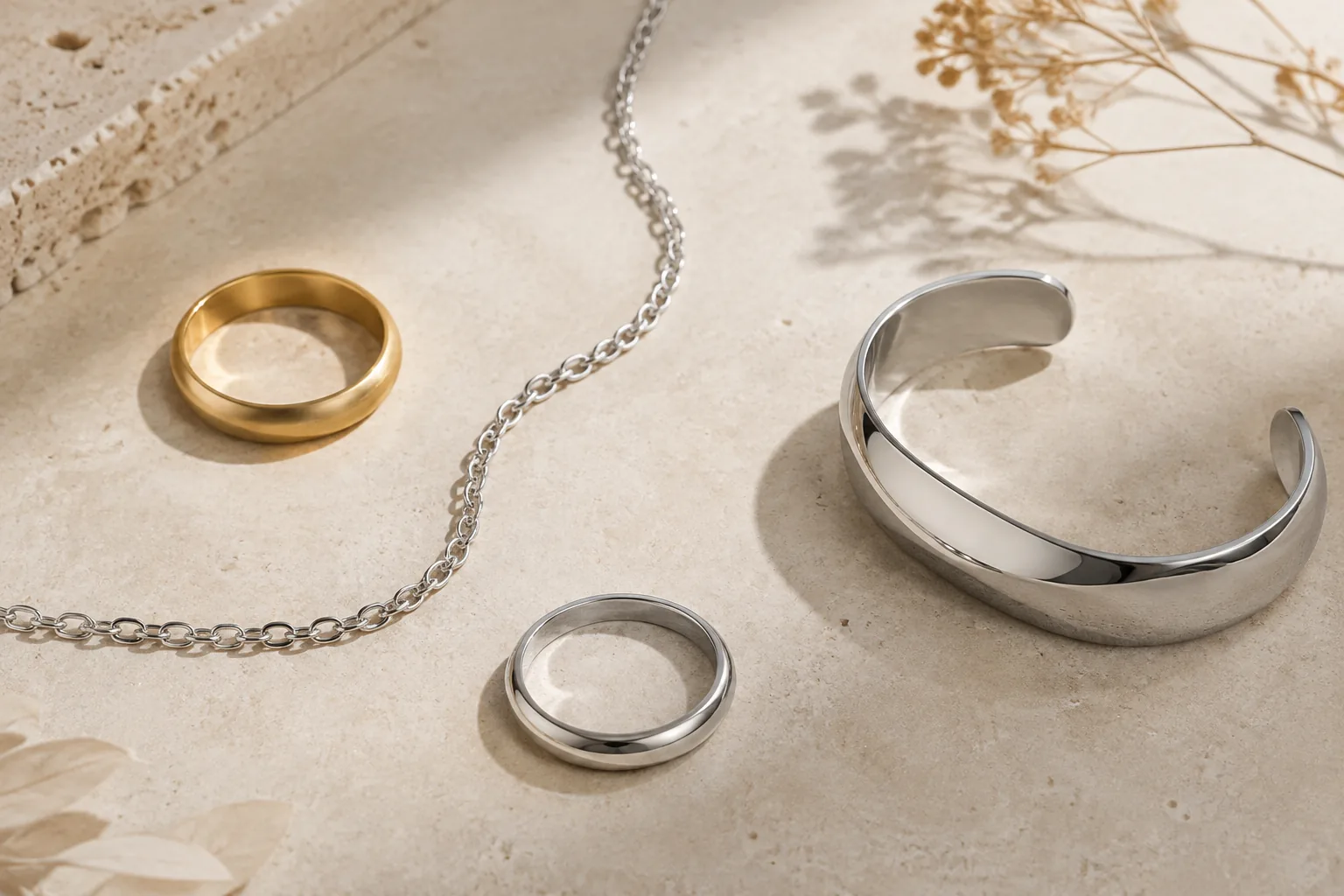
Mejuri’s catalog can look simple at first: clean hoops, slim bands, small pendants, stackable rings, and gemstone pieces designed for repeat wear. The harder part is choosing the right material. A 10K gold ring, sterling silver chain, platinum piece, stainless steel style, and vermeil pendant do not have the same tradeoffs, even when they sit under the same brand.
This guide turns the official Mejuri materials information into a practical buyer framework. It does not claim first-hand wear testing or independent lab testing. Instead, it uses Mejuri’s own disclosures, FTC guidance on precious-metal terms, GIA education on diamonds and gemstones, CIBJO terminology guidance, and AAD context around nickel allergy to help you match Mejuri materials to everyday wear, gifting, active use, and longer-term purchases.
Quick Decision Guide: Which Mejuri Material Makes Sense?
Before comparing individual metals, start with the job the jewelry needs to do. Mejuri’s official materials page says it covers natural diamonds, lab-grown diamonds, 14K gold, 10K gold, 925 sterling silver, 18K gold vermeil, titanium, platinum, gemstones, pearls, enamel, lab-grown gemstones, and stainless steel on its Jewelry Materials & Quality page. That breadth is useful, but it also means the best choice depends on wear context.
Best-Fit Shortlist by Use Case
For everyday gold-tone jewelry, 10K gold can make sense if you want a solid-gold direction at a more accessible level than higher-karat gold. Mejuri states that its 10K gold contains 41.7% pure gold and has a more muted tone than higher-karat gold. If you are comparing karat levels more broadly, this guide to choosing between 9K, 14K, and 18K gold jewelry gives useful context.
For lower-budget gifting, sterling silver is often easier to justify when the recipient already wears silver-tone jewelry. Mejuri says its 925 sterling silver is 92.5% pure silver with copper added for strength. The tradeoff is maintenance: silver-tone does not mean care-free, and tarnish expectations should be part of the gift decision.
For longer-term silver-white jewelry, platinum is the more premium direction in Mejuri’s disclosed materials. Mejuri describes platinum as dense, durable, shiny, and silver-white, and says its platinum is 95% platinum and 5% cobalt. Platinum is especially relevant when the buyer wants a precious metal rather than a plated or layered finish.
For active, casual, or water-exposed use, Mejuri’s stainless steel may be the practical low-maintenance candidate. Mejuri describes it as surgical-grade, corrosion-resistant, water-resistant, anti-tarnish, durable, and suitable for everyday wear. Those are brand claims, not a guarantee that every finish will remain unchanged under every use pattern.
For skin-contact concerns, be cautious with absolutes. The American Academy of Dermatology notes that nickel allergy can be triggered by jewelry and recommends options such as nickel-free or hypoallergenic jewelry, listing surgical-grade stainless steel, high-karat yellow gold, sterling silver, and platinum among material options in its nickel allergy guidance. That supports cautious shopping, but it does not mean any single Mejuri material is guaranteed to work for every wearer.
What to Avoid Assuming
Do not assume vermeil is the same as solid gold. Do not assume a gemstone is daily-wear friendly just because the metal is durable. Do not assume recycled-metal percentages are independent product-level audit results unless the product page or source states that clearly. And do not skip the individual Mejuri product page, because alloy details, stones, settings, finishes, and availability can vary by item.
What Mejuri Says About Its Materials
Mejuri’s official materials page is titled “Jewelry Materials & Quality | Mejuri.” On that page, the brand positions its materials around “Expertly Crafted & Responsibly Sourced” and says it selects materials with quality, durability, and longevity in mind.
That page is the right starting point for brand-specific material claims. It is also where readers should distinguish Mejuri’s own language from independent material standards. For example, Mejuri can disclose that a metal is 10K gold, 925 sterling silver, or 95% platinum, while the FTC helps explain what those terms mean in broader consumer jewelry language through its consumer advice on buying platinum, gold, and silver jewelry.
The practical takeaway: use Mejuri’s page to confirm what the brand says it uses, then use independent sources to understand what the words mean before deciding whether the material suits your use case.
10K Gold: Accessible Solid Gold With a Muted Tone
Mejuri states that its 10K gold contains 41.7% pure gold and 58.3% other metals such as copper, silver, and zinc. That aligns with the FTC explanation that karat is measured as parts out of 24, meaning 10K gold is 10 parts gold out of 24.
This is still gold jewelry, but it is not pure gold. Compared with higher-karat gold, 10K gold contains more non-gold alloy. Mejuri also describes its 10K gold as having a more muted tone than higher-karat gold and as a more accessible long-lasting option.
That makes 10K gold useful for buyers who want a solid-gold category rather than a gold layer over another base, but who are also watching cost. It may suit simple bands, everyday hoops, small pendants, and pieces where a slightly softer gold color is acceptable. It may be less ideal for someone who specifically wants the richer color of higher-karat yellow gold.
One wording issue matters: “solid gold” does not mean pure gold. The FTC explains that “solid gold” means the item is not hollow and should still carry karat context. So a 10K solid gold piece can be solid in construction while still being 10K, not 24K.
Mejuri says all its gold is 90% recycled material on its materials page, and its sustainability page says it prioritizes recycled gold and reports 90% recycled gold in products. Treat those as Mejuri-reported sustainability claims unless a specific item provides more detailed independent verification.
Sterling Silver: Gift-Friendly, But Not Maintenance-Free
Mejuri says its 925 sterling silver is 92.5% pure silver with 7.5% copper for strength. The FTC also confirms that sterling silver means 92.5% pure silver, making this one of the clearer material definitions shoppers will encounter.
Sterling silver is a logical Mejuri choice when the recipient prefers silver-tone jewelry, when the piece is a lower-risk gift, or when the buyer wants precious metal content without moving into platinum or gold pricing. For a broader foundation, see this beginner’s guide to 925 sterling silver jewelry.
The main tradeoff is upkeep. Sterling silver can be a practical jewelry material, but it should not be framed as maintenance-free. Exposure, storage habits, skin chemistry, cosmetics, moisture, and wear frequency can all affect how silver behaves over time. If the gift recipient dislikes cleaning or storing jewelry carefully, stainless steel or gold may be simpler depending on the design and budget.
Mejuri says its sterling silver pieces use 95% recycled silver and 5% newly mined silver. As with recycled gold, this should be attributed to Mejuri rather than presented as an independently confirmed product-by-product audit in this article.
Platinum: The Longer-Term Silver-White Option
Mejuri describes platinum as rare, dense, durable, shiny, and silver-white. It also says its platinum is 100% recycled and made from 95% platinum and 5% cobalt. That composition is important because the FTC says jewelry described as platinum without qualification should be at least 95% pure platinum.
For buyers who want a silver-white precious metal for a longer-term purchase, platinum is easier to defend than a plated or vermeil finish. It is especially relevant for rings, special gifts, and pieces where the buyer cares more about metal category than the lowest upfront cost. For a closer comparison against another white-metal option, this platinum vs white gold engagement ring guide explains the decision points.
Platinum does not remove every ownership concern. Dense and durable does not mean impossible to scratch, and this article is not based on wear testing of Mejuri’s platinum pieces. It does mean that, based on disclosed composition and FTC context, Mejuri’s platinum sits in a more substantial precious-metal category than layered gold finishes.
Platinum may also be a consideration for some wearers with skin-contact concerns, as AAD lists platinum among material options in the context of nickel allergy avoidance. That should be framed cautiously: it may be better tolerated by some wearers, but no jewelry material should be described as guaranteed reaction-free.
Stainless Steel: Practical for Casual, Lower-Maintenance Wear
Mejuri describes its stainless steel as hypoallergenic, surgical-grade, durable, corrosion-resistant, water-resistant, anti-tarnish, and suitable for everyday wear. The brand also says it uses PVD bonding on stainless steel for color, scratch resistance, and a long-lasting finish.
This makes stainless steel the most practical Mejuri material to consider for casual, active, or water-adjacent use, especially if the buyer wants lower-maintenance jewelry and is not prioritizing precious-metal content. It can make sense for pieces worn during busy routines, travel, or situations where sterling silver tarnish or gold vermeil wear would be frustrating.
The limits matter. Mejuri’s claims support considering stainless steel for easier everyday wear, but they do not prove that a PVD finish is scratch-proof, permanent, or unchanged under all exposure. Product design, coating color, surface contact, sweat, water, cleaning products, and impact can still matter.
On skin comfort, avoid overpromising. Mejuri uses the word hypoallergenic, while AAD’s guidance supports nickel-aware material choices without guaranteeing that every wearer will avoid symptoms. If you know you react to specific metals, treat the product page and your own history as more important than broad material marketing.
Vermeil: Gold Layer Over Sterling Silver, Not Solid Gold
Mejuri describes its vermeil as a sterling silver base with a gold layer and says its vermeil uses a 2.5-micron gold layer and is never brass. That is meaningfully different from a brass-based fashion plating, but it is still not the same as solid gold.
The FTC describes vermeil as a special kind of gold-plated product over sterling silver, and it warns that gold plating eventually wears away depending on thickness and use. That is the key buying distinction: vermeil may give you the look of gold at a lower cost, with a sterling silver base, but the gold layer is still a layer.
Vermeil can make sense for trend pieces, occasional-wear jewelry, or gifts where the recipient wants gold color and the budget does not stretch to solid gold. It is less compelling for a buyer who wants the longest possible wear expectations from a gold-tone everyday ring or bracelet that will see frequent friction.
If vermeil is on your shortlist, review this gold vermeil buying guide on replating, storage, and wear limits before treating it like solid gold.
Diamonds, Lab-Grown Diamonds, and Gemstones
Metal choice is only half the decision. A platinum or 10K gold setting can still hold a gemstone that needs more care, while a stainless steel piece may be practical only if the decorative finish and stones also match your lifestyle.
Natural and Lab-Grown Diamonds
Mejuri describes natural diamonds as hard natural substances, unique in appearance, and sourced through partners under its SEA program. The brand states that its natural diamonds are GHI color and SI-I1-2 clarity.
Mejuri describes lab-grown diamonds as having the same physical and chemical properties as natural diamonds, graded by the 4Cs, made by CVD, VS clarity, FG color, and positioned as a higher-value, more accessible option. GIA similarly states that laboratory-grown diamonds have essentially the same chemical, physical, and optical properties as natural diamonds, while noting that reliable separation from natural diamonds requires professional testing or sophisticated instruments in its explanation of natural and laboratory-grown diamond differences.
The wording still matters. Lab-grown diamonds are real diamonds, but they are not natural diamonds. CIBJO guidance emphasizes that consumers should receive clear information that laboratory-grown diamonds are created by industrial processes rather than geological formation, as reflected in its laboratory-grown diamond guidance.
Colored Gemstones and Lab-Grown Gemstones
Mejuri says its gemstones are chosen for beauty, color, and lasting quality, and says it is working toward full traceability while using its SEA program for supplier expectations. Mejuri also describes lab-grown gemstones as having the same physical and chemical properties as natural gemstones and selected through suppliers under its SEA program.
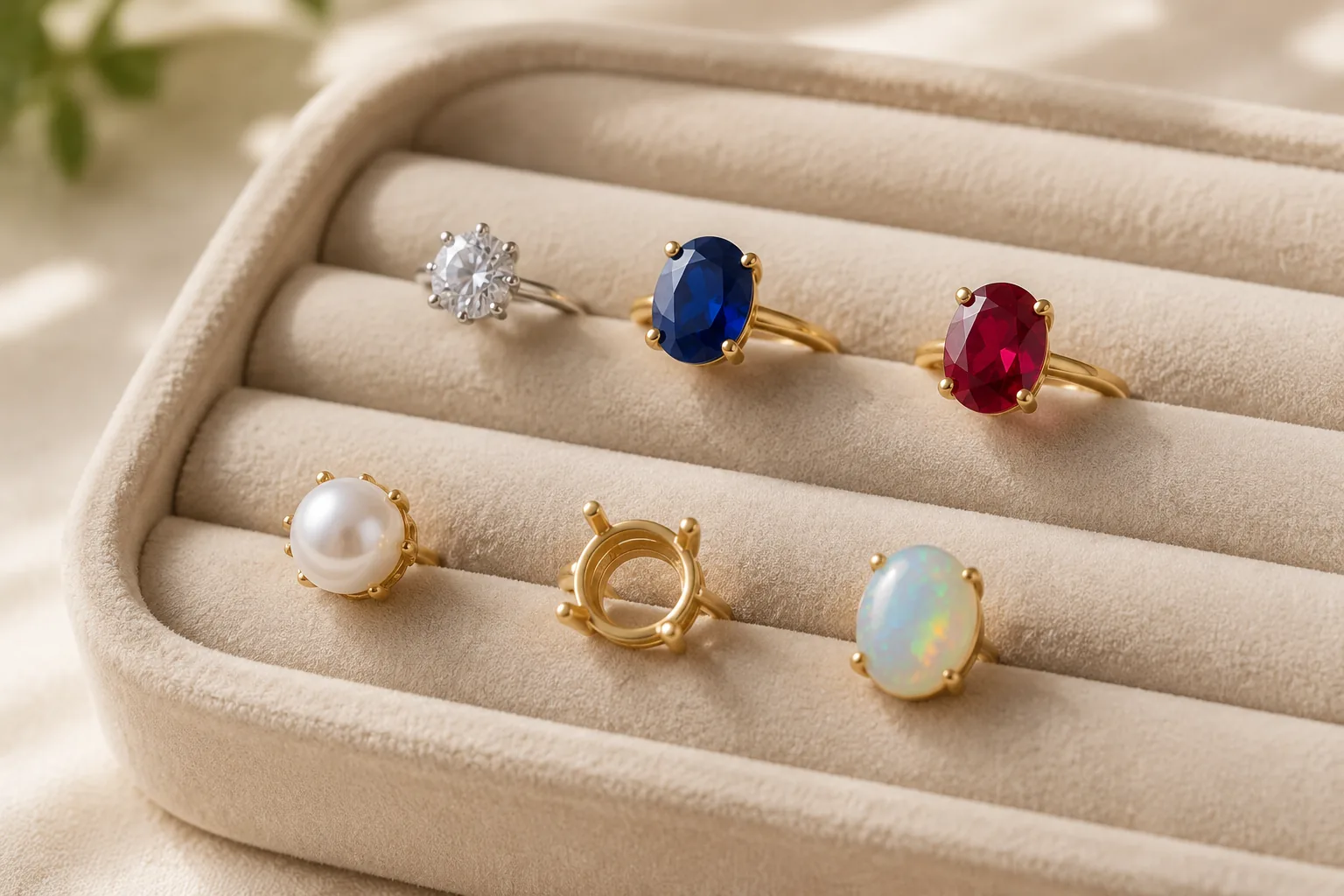
For daily wear, do not treat all gemstones equally. GIA explains that gemstone durability depends on hardness, toughness, and stability, and identifies ruby and sapphire as strong everyday gemstone choices while noting that gemstones such as opal and tanzanite require more care in its colored gemstone buying guidance.
That means you should check the specific stone, not just the metal. A ring worn every day faces more knocks than a pendant. A bracelet sees more surface contact than studs. Pearls, opals, treated stones, enamel, and delicate settings deserve more caution than a simple metal band.
Recycled Materials and Traceability: What to Attribute to Mejuri
Mejuri’s sustainability claims can be useful, but they need careful attribution. Mejuri’s sustainability page says the company uses a mix of newly mined, lab-grown, and recycled materials. It says it prioritizes recycled gold and reports 90% recycled gold in products. It also says newly mined gold sourcing references standards or certifications such as RJC, IRMA, LBMA, and RMI.
For other materials, Mejuri reports that lab-grown diamonds are 100% traceable. It also reports colored gemstones as 92% traceable to country of origin, 7% to region, and 1% not yet traceable. The same sustainability page notes that statistics are based on internal Mejuri data.
The practical editorial treatment is simple: say “Mejuri reports” or “Mejuri says” for these figures. Do not turn them into independently audited, product-level facts unless the specific evidence is available. The supplied evidence does not provide complete public mine-to-market traceability for every Mejuri product, and product-level details may vary.
This does not make the disclosures useless. It means they should be used as brand disclosures, not as proof that every item has the same independently verified sourcing profile.
What to Check Before Buying a Specific Mejuri Piece
A material-wide guide can narrow your choice, but the final decision should happen on the product page. The FTC Jewelry Guides overview covers marketing topics including gemstones, precious metals, and lab-created substitutes, which is a useful reminder that jewelry terms are specific and should not be skimmed.
Product-Page Checklist
Check the exact metal first: 10K gold, 14K gold, sterling silver, platinum, stainless steel, titanium, vermeil, or another listed material. If it is gold, check the karat. If it is vermeil or plated, treat it as a layered finish with wear limits, not solid gold.
Check the stone next. Identify whether it is a natural diamond, lab-grown diamond, natural gemstone, lab-grown gemstone, pearl, enamel, or another material. For gemstones, look for species, treatment clues, setting style, and whether the piece will be worn as a ring, bracelet, pendant, or earring.
Check your wear pattern. For frequent friction, active use, or water-adjacent routines, stainless steel may be the easiest Mejuri direction to consider, while vermeil may require more caution. For longer-term precious-metal purchases, 10K gold, 14K gold, and platinum are more defensible than gold-layered finishes, depending on budget and color preference.
Check the gift risk. If you do not know the recipient’s size, style tolerance, or metal sensitivity history, smaller silver-tone pieces, simple gold-tone designs, or adjustable/personalized options may reduce regret. This guide to personalized jewelry gifts when you do not know their size can help with that part of the decision.
When to Pause Before Buying
Pause if the product page does not clearly tell you whether the piece is solid gold, vermeil, plated, sterling silver, stainless steel, or platinum. Pause if the stone is central to the purchase but you cannot identify the stone type or care implications. Pause if the piece is for daily wear and includes a material known to need more careful handling, such as some softer gemstones, pearls, enamel, or gold-layered finishes.
Also pause if you are buying for someone with known metal reactions. Material labels can guide the shortlist, but they cannot replace the wearer’s history or clinical advice.
Conclusion
The best Mejuri material depends on what you need the piece to do. 10K gold makes sense when you want an accessible solid-gold option and accept a more muted tone. Sterling silver is gift-friendly and familiar, but it is not maintenance-free. Platinum is the stronger longer-term silver-white precious-metal choice when budget allows. Stainless steel is the practical candidate for casual, lower-maintenance wear, while vermeil is best understood as a gold layer over sterling silver rather than a substitute for solid gold.
For diamonds and gemstones, separate the stone decision from the metal decision. Lab-grown diamonds are real diamonds but not natural diamonds, and colored gemstones vary widely in daily-wear suitability. For recycled-metal and traceability figures, attribute the numbers to Mejuri unless product-level independent evidence is provided.
The safest buying habit is to match the material to the use case, then verify the exact product page before purchase.
Related Guides
- How to Choose Between 9K, 14K, and 18K Gold Jewelry
- A Beginner’s Guide to 925 Sterling Silver Jewelry
- What to Look for When Buying Gold Vermeil Jewelry: Replating, Storage, and Wear Limits
- Platinum vs White Gold for Engagement Rings: Which Should You Choose?