



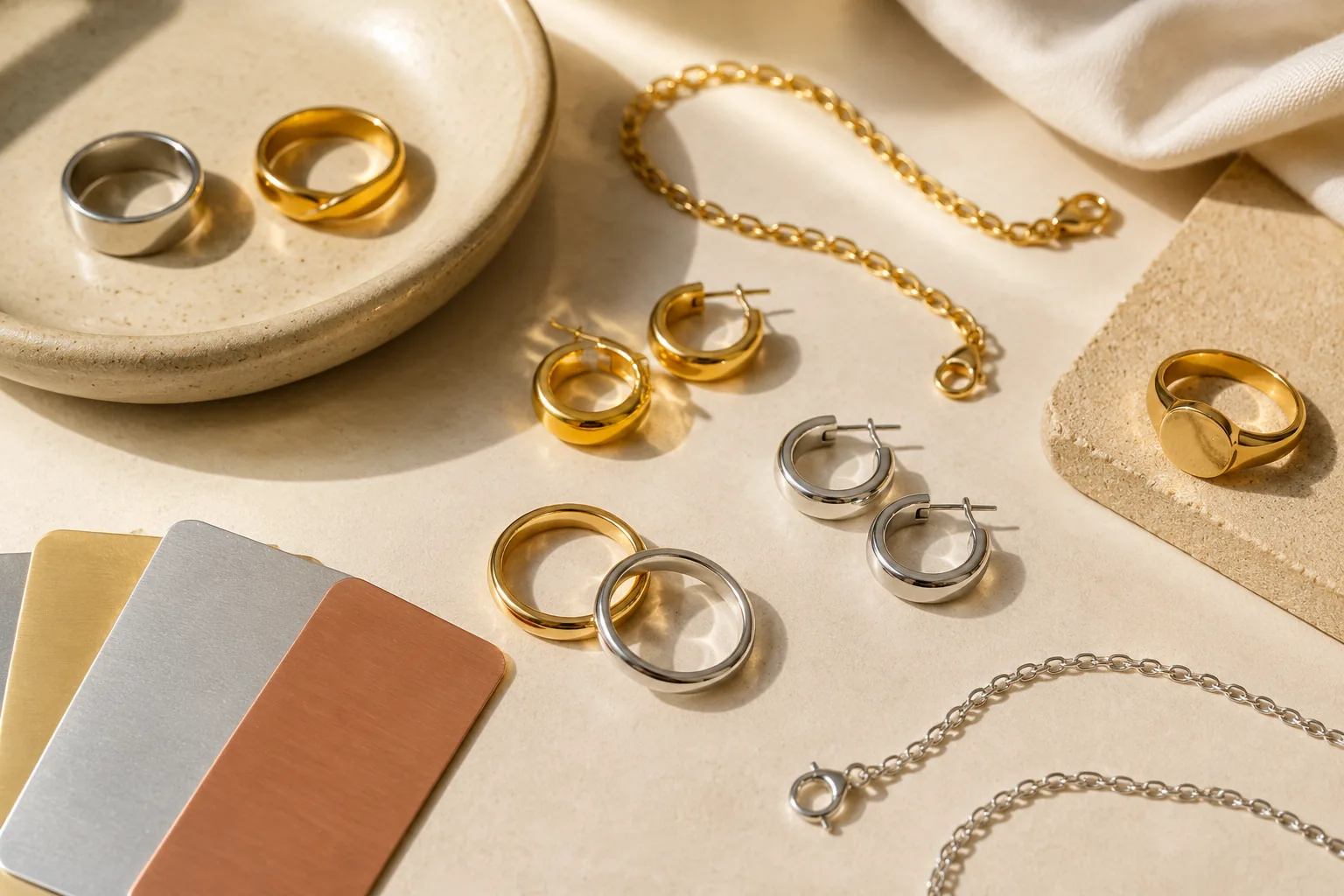
For everyday jewelry buyers, the harder question is not only which brand looks better. It is which brand makes it easier to understand what you are actually buying before checkout: solid gold, gold vermeil, ordinary gold plated jewelry, sterling silver, stainless steel, titanium, or something else with different wear expectations.
This Mejuri vs Missoma comparison focuses on public material disclosures, care and warranty limits, return-policy clues, and SKU-level checking. It does not rank tested durability, because the available evidence does not include independent plating wear tests, long-term wear trials, allergy testing, or warranty-claim outcomes. The practical question is narrower and more useful: which brand is easier to decode from official information before you spend money?
Quick Verdict: Which Brand Is Easier to Decode?
Missoma is generally easier to decode if your main concern is the construction of ordinary gold plated jewelry, gold vermeil, sterling silver, and solid gold. Its official Our Metals page groups the key variables in one place, including solid gold karats, gold vermeil structure, brass base metal for 18k gold plated pieces, category-specific plating thickness, sterling silver alloy composition, rhodium plating, and stainless steel with PVD.
Mejuri is broader rather than simpler. Its official Jewelry Materials & Quality page covers 10k and 14k gold, 925 sterling silver, 18k gold vermeil, titanium, platinum, stainless steel, diamonds, and gemstones. That wider material range is useful if you are comparing piercing jewelry, titanium flat backs, platinum, diamonds, or different gold karats. But for ordinary gold plated jewelry, the available material-page evidence is less centralized than Missoma’s disclosure.
The short version:
- Choose Missoma if you want a quicker read on vermeil, plated, sterling silver, and solid gold construction variables.
- Choose Mejuri if you want a wider material system to compare, especially 10k/14k solid gold, titanium piercing styles, platinum, diamonds, or gemstones.
- With either brand, check the specific product page before checkout. Category names such as “gold jewelry” or “gold rings” do not prove a piece is solid gold.
For a wider brand landscape, this comparison pairs naturally with the broader guide to Mejuri vs Monica Vinader vs Missoma vs Astrid & Miyu.
How Mejuri Explains Its Materials
Mejuri’s strength is range. Its official materials page is built like a material glossary for the brand, covering 14k and 10k gold, sterling silver, gold vermeil, titanium, platinum, stainless steel, diamonds, and gemstones.
Solid Gold, 10k, and 14k
Mejuri describes 10k gold as 41.7% pure gold, with the rest made up of alloy metals such as copper, silver, and zinc. It also lists 14k yellow gold and 14k white gold as solid gold options, and positions 14k gold as more suitable for everyday strength than higher-karat 18k or 22k gold.
That is useful disclosure because karat affects both gold content and practical hardness. A buyer comparing a 10k piece with a 14k piece is not just comparing price or color; they are comparing different gold percentages and alloy balances. Mejuri also states that its 14k gold collection uses 90% recycled gold and 10% newly mined gold. That can be relevant to values-led buyers, but it should not be stretched into a claim that every metal component in every Mejuri product is recycled gold.
Vermeil, Sterling Silver, Titanium, and Other Materials
Mejuri describes its 18k gold vermeil as a sterling silver base covered with a thick layer of solid gold, and specifies a 2.5-micron gold layer. It also says the tone is designed to sit close to 14k gold. For sterling silver, Mejuri discloses the standard 925 composition: 92.5% pure silver and 7.5% copper. The brand also states that its sterling silver uses 95% recycled silver and 5% newly mined silver.
Mejuri’s materials page also mentions titanium, including implant-grade titanium for flat back studs and piercing styles. That matters for buyers shopping ear jewelry, because piercing jewelry has a different skin-contact and fit context than a necklace or bracelet. For a more focused material checklist, see the guide to buying piercing jewelry in titanium, solid gold, and plated metals.
Where Mejuri is less easy to decode is ordinary gold plated jewelry. The materials page mentions stainless steel and PVD bonding, but the research package did not show the same kind of unified ordinary gold plated disclosure that Missoma provides for base metal and thickness by product category. That does not prove the products are weaker; it means a buyer has to rely more heavily on the specific product page.
How Missoma Explains Its Materials
Missoma’s advantage is concentration. The official Our Metals page gives a relatively direct map of the brand’s major metal categories: solid gold, 18k gold vermeil, 18k gold plated, sterling silver, silver plated, and 316L stainless steel.
Solid Gold and Vermeil
Missoma describes solid yellow gold and solid white gold as 9k or 14k. It also says its solid gold is handcrafted from 100% certified recycled gold or silver. As with Mejuri’s recycled-metal language, buyers should read that within the specific material category rather than assuming every component of every product is recycled precious metal.
For 18k gold vermeil, Missoma discloses a sterling silver base and 2.5 microns of solid gold. It also notes in its FAQ-style material information that UK gold vermeil is stamped “925” and tested by an Assay Office. That UK-specific marking point is useful, but it should not be generalized into a universal hallmark promise for every market.
Gold Plated, Sterling Silver, and Stainless Steel
Missoma is clearer than Mejuri on ordinary gold plated construction in the available official material evidence. It describes 18k gold plated jewelry as using a brass base. It also gives plating-thickness figures by category: 2 microns for rings, pendant necklaces, and bracelets, and 1 micron for earrings.
That disclosure helps everyday buyers set expectations. A plated brass piece is materially different from gold vermeil over sterling silver, and a 1-micron earring disclosure is different from a 2-micron ring disclosure. Those details do not tell you exactly how a piece will wear for your routine, but they make the tradeoff more visible before purchase.
Missoma also discloses sterling silver as 92.5% pure silver and 7.5% copper, stamped “925.” In addition, it says its sterling silver uses rhodium plating to support durability and high shine. Rhodium plating can affect appearance and maintenance expectations, so its disclosure is useful for buyers who want to understand not only the alloy but also the surface finish.
For stainless steel, Missoma discloses 316L stainless steel and states that it uses 18k gold or platinum PVD over that stainless steel. Again, this is not a wear-test result, but it gives a clearer construction label than a generic “gold” category name.
Gold Vermeil: The Most Direct Comparison
Mejuri and Missoma gold vermeil can be compared more directly than many other categories because both brands disclose the same core construction: 18k gold, a sterling silver base, and a 2.5-micron gold layer.
That structure also aligns with the U.S. background definition in the FTC Jewelry Guides, 16 CFR Part 23 §23.5, which discusses sterling silver, vermeil, minimum gold fineness, and a 2.5-micron fine-gold-equivalent thickness standard in the U.S. context. This is useful for U.S. readers, but it should not be treated as a global rule that replaces UK hallmarking, Canadian marking rules, or EU compliance requirements.
For practical shopping, the key point is this: Mejuri and Missoma vermeil are meaningfully comparable on disclosed structure, but not on proven lifespan. A 2.5-micron gold layer over sterling silver gives better construction information than a vague “gold finish” label, yet it does not mean the piece cannot fade, tarnish, scratch, or wear down. Exposure to friction, moisture, cosmetics, sweat, storage conditions, and cleaning choices can still matter.
If you are deciding whether vermeil is the right compromise between solid gold and lower-cost plating, the more detailed guide to buying gold vermeil jewelry and understanding replating, storage, and wear limits is the better next step.
Gold Plated Jewelry: Where Missoma Gives More Variables
Ordinary gold plated jewelry is where the Mejuri vs Missoma transparency gap is clearest.
Missoma discloses that its 18k gold plated jewelry uses a brass base. It also states that plating thickness varies by category: 2 microns for rings, pendant necklaces, and bracelets, and 1 micron for earrings. Those variables matter because rings and bracelets often experience more contact and abrasion than earrings, and base metal affects how buyers should think about price, maintenance, and expectations.
Mejuri’s materials page, according to the research package, does not show an equivalent centralized disclosure for ordinary gold plated jewelry base metal, plating thickness, and category differences. It does mention stainless steel with PVD bonding, but that is not the same thing as a full ordinary gold plated framework across product types.
This does not justify saying Missoma plated jewelry is more durable than Mejuri plated jewelry. It supports a narrower conclusion: Missoma gives buyers more construction variables upfront for ordinary gold plated products.
Sterling Silver: Similar Alloy, Different Surface Details
Both brands disclose the same core sterling silver alloy: 92.5% pure silver and 7.5% copper. That makes the base alloy easy to compare.
The difference is in the surrounding detail. Mejuri adds that its sterling silver uses 95% recycled silver and 5% newly mined silver. Missoma adds that its sterling silver is stamped “925” and uses rhodium plating for durability and high shine.
For buyers, the alloy similarity is reassuring, but the surface detail changes the ownership question. Rhodium plating can affect color, brightness, and eventual maintenance expectations if the finish wears. Mejuri’s recycled-silver statement may matter more to buyers prioritizing recycled material disclosure. Neither detail proves one brand’s silver will perform better in real life.
Solid Gold: What Buyers Can and Cannot Infer
Solid gold is usually the easiest category to understand at a high level, but the details still matter.
Mejuri gives more explicit karat-composition context for 10k gold, stating that it contains 41.7% pure gold and alloy metals such as copper, silver, and zinc. It also positions 14k gold as more suitable for everyday strength than 18k or 22k gold and lists 14k yellow and white gold options. Missoma describes solid yellow and white gold as 9k or 14k.
A buyer can reasonably infer that 9k, 10k, and 14k gold are different material choices, not interchangeable labels. Lower-karat gold contains less gold and more alloy metal; higher-karat gold contains more gold and may have different softness and color implications. But an article based on official materials pages should not turn those facts into a brandwide durability ranking.
Recycled-metal claims should also stay specific. Mejuri states a 90% recycled and 10% newly mined split for its 14k gold collection. Missoma says solid gold is made from 100% certified recycled gold or silver. These are official brand claims about material sourcing language, not independent proof of full supply-chain superiority or every component in every item.
Care, Warranty, and Returns Change the Ownership Picture
Material disclosure is only one part of ownership. Care instructions, warranty exclusions, returns, personalized-item limits, and regional fees all shape the real risk before checkout.
Mejuri’s warranty FAQ supports a two-year warranty, but it also excludes issues such as normal wear and tear, scratches, tarnishing, fading, and damage from chemicals, water, or excessive force. That matters because everyday-wear language on a materials or product page should not be read as a promise that a piece will resist all daily exposure.
Mejuri’s return and exchange FAQ supports a 30-day return window, same-country return requirements, non-returnable categories, and regional return details. The research package also notes an EU return shipping fee of EUR20, while the U.S., Canada, UK, Australia, and Germany are listed as free-return regions. Those details can affect cross-border buyers.
Missoma’s Help & FAQs support care information, rhodium-plated silver information, a two-year warranty, U.S.-site taxes and duties, and regional limitations. Its Returns page supports a 60-day return window, U.S. return fees, personalized-item restrictions, a two-year warranty, and defective or faulty item handling.
The practical lesson is that a longer return window or warranty label does not erase exclusions. Buyers should check whether personalized items, earrings, regional shipping, return fees, or final-sale terms apply to the exact order.
Product Pages Still Matter Before Checkout
Neither brand should be decoded only from navigation labels or collection names.
The research package notes that a Mejuri product-page example can show material choices and item-level labels such as 10k yellow gold, 90% recycled 10k gold, water resistant, and hypoallergenic. Those terms must be interpreted at the SKU level rather than extended to the whole catalog. A “water resistant” claim on one item does not make every Mejuri piece waterproof.
The Missoma product-page example shows the same checkout issue from another angle: first-time buyers may need to open the specific SKU’s Materials or Details section to confirm whether a product is vermeil, plated, or solid gold. A category or product name alone is not enough.
This is especially important when shopping earrings, rings, or gifts. The person buying may be comparing by style, but the person wearing the piece inherits the material and care tradeoffs. For water exposure specifically, the guide to what brand care pages warn about when showering with jewelry is a useful companion.
Who Should Choose Mejuri vs Missoma?
Choose Mejuri if you want broader material coverage and are willing to inspect individual product pages. Mejuri is the stronger fit for buyers comparing 10k and 14k solid gold, sterling silver, 18k gold vermeil, titanium piercing jewelry, platinum, diamonds, gemstones, and stainless steel. It is also a better fit if you are specifically interested in titanium flat back studs or piercing styles and want official material-page support for that category.
Choose Missoma if you want faster construction decoding across the most common everyday fashion-jewelry categories. Missoma’s material page is especially helpful for separating 18k gold vermeil from 18k gold plated jewelry, understanding that its ordinary gold plated pieces use brass, seeing the 1- or 2-micron plating figures by category, and noting rhodium plating on sterling silver.
Avoid treating either brand as the automatic winner for durability. The official disclosures support a transparency comparison, not a real-world lifespan verdict. Your use case still matters: rings, bracelets, and frequently handled necklaces can face more friction than occasional earrings; personalized gifts can have different return limits; and plated or vermeil pieces require more careful expectations than solid gold.
For brand-specific context beyond material decoding, see the guides to what makes Mejuri different and what makes Missoma different.
Evidence Limits and Claims This Comparison Cannot Make
This comparison is based on official brand material pages, official care and policy pages, product-page examples, and the U.S. FTC Jewelry Guides background for vermeil and sterling silver. That evidence is useful, but it has limits.
It cannot prove that Missoma jewelry lasts longer than Mejuri jewelry, or the reverse. It cannot prove that either brand’s vermeil will not fade, tarnish, or wear. It cannot prove that either brand’s entire catalog is nickel-free, hypoallergenic, waterproof, or suitable for every sensitive-skin wearer. It also cannot prove that warranty claims are handled consistently in every market or that all regions receive identical materials, markings, return fees, and aftercare execution.
Regional language needs special care. FTC vermeil guidance is a U.S. reference point, not a global legal rule. Missoma’s UK “925” and Assay Office statements should be read as UK-specific context unless the brand clearly extends the same statement elsewhere. Mejuri’s Extend Jewelry Protection Program, according to the research package, is limited to the U.S. and Canada and applies to purchases from January 28, 2026 onward.
The most defensible conclusion is about buyer readability: Missoma is easier to decode for common plated, vermeil, sterling silver, and solid gold construction variables; Mejuri is broader in material coverage but requires more SKU-level checking in some categories.
Conclusion
For everyday jewelry buyers comparing Mejuri vs Missoma, Missoma is generally the easier brand to decode before checkout. Its public materials page gives more centralized construction information for ordinary gold plated jewelry, including brass base metal and category-specific plating thickness, while also clearly explaining vermeil, sterling silver, solid gold, and stainless steel/PVD categories.
Mejuri remains a strong comparison candidate because its materials page covers a wider system: 10k and 14k gold, sterling silver, 18k gold vermeil, titanium, platinum, stainless steel, diamonds, and gemstones. That breadth is valuable, especially for buyers comparing solid gold options or piercing jewelry. The tradeoff is that some everyday buyers will need to do more product-page checking to understand ordinary plated construction.
The safest buying habit is the same for both brands: read the brand material page, then verify the exact SKU’s Materials or Details section, then check care, warranty, return, and regional restrictions before checkout. “Everyday,” “durable,” and “made to last” language can describe positioning, but it should not be treated as a measurable durability guarantee.
Related Guides
- What to Look for When Buying Gold Vermeil Jewelry: Replating, Storage, and Wear Limits
- Can You Shower With Jewelry? What Brand Care Pages Actually Warn About
- What Makes Mejuri Different? Best Sellers, Everyday Jewelry, and Hoop Choices
- What Makes Missoma Different? Layering Sets, Gold Vermeil, and Mix-and-Match Styling