



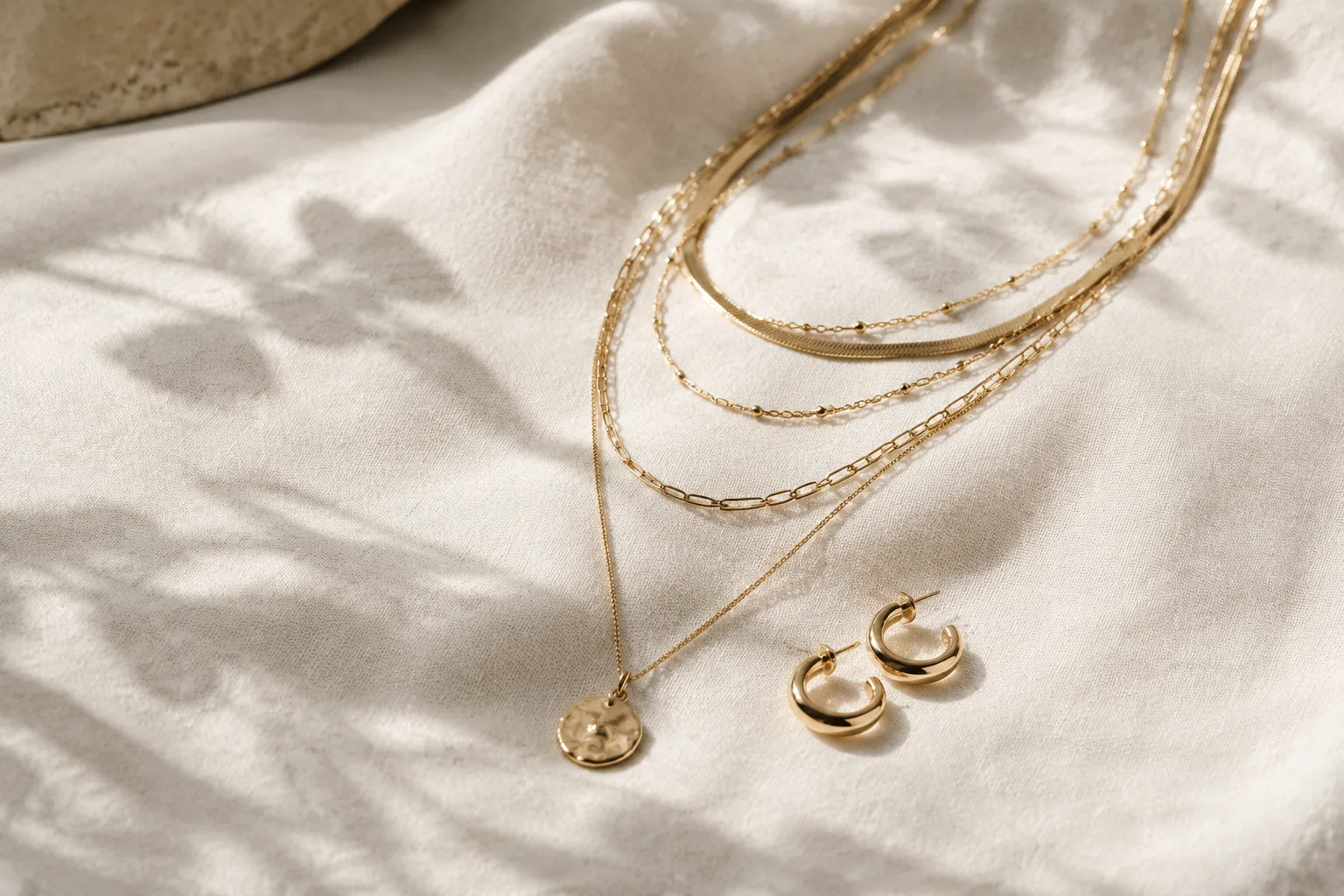
If you are deciding between a Missoma layering set and buying individual pieces, the real question is not just price. It is whether you want a coordinated starting point, or whether you care more about building your own stack piece by piece.
Missoma’s official pages frame the choice clearly: the brand sells curated jewelry bundles meant to be layered together, and it also sells those same kinds of pieces as individual items. That means the decision is about convenience, flexibility, and materials rather than about one inherently “better” option for everyone.
What Missoma Layering Sets Actually Are
Missoma’s US layering-set collection presents the brand’s sets as curated bundles designed to be worn together, while still allowing the pieces to mix with other Missoma styles. That is the core difference from shopping the line one item at a time: a set is built to give you an easy starting combination, while individual pieces give you more control over the final stack. 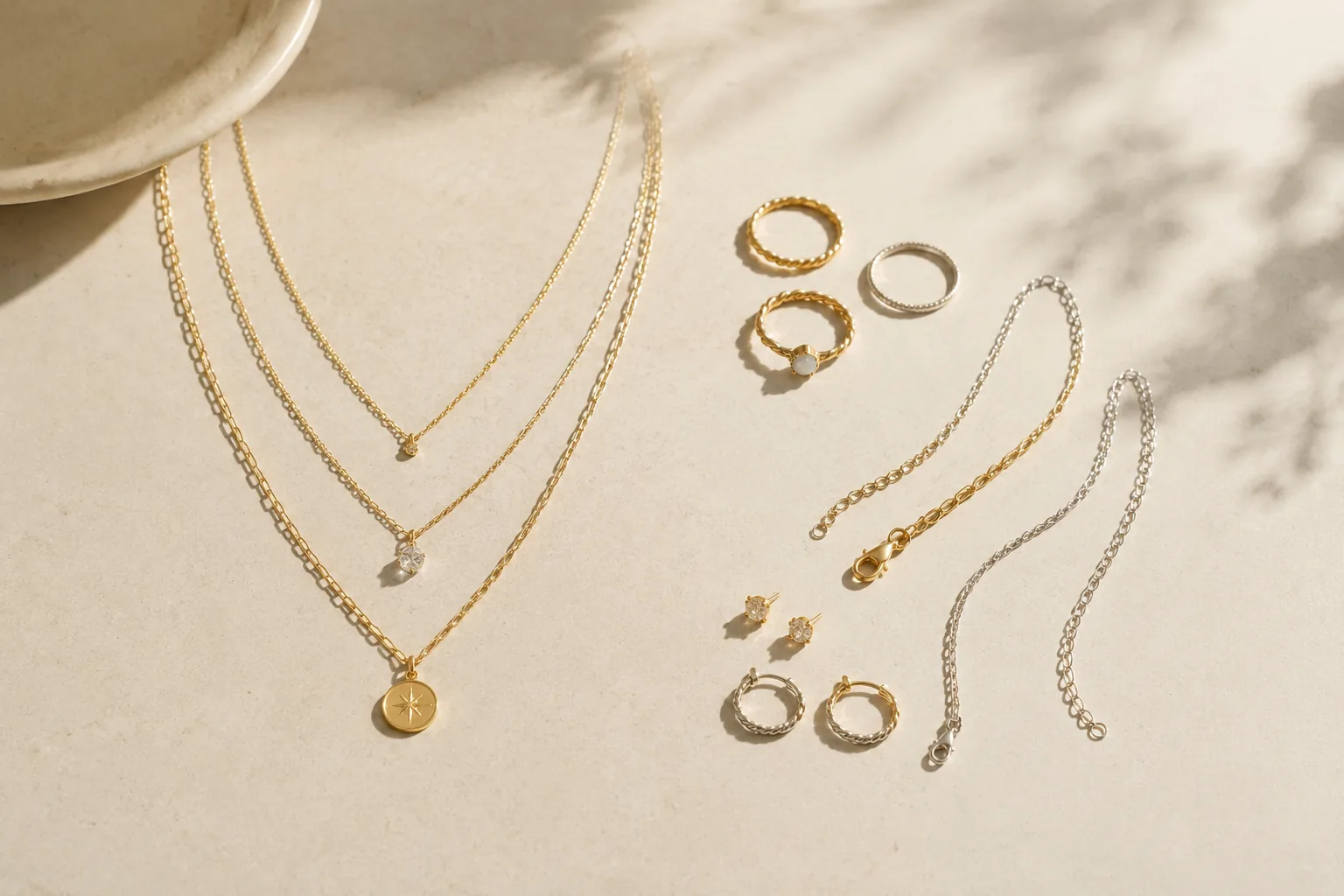
The brand also says buyers can save at least 15% by purchasing a set instead of buying the included pieces separately. That is a meaningful starting point, but it is not the same as saying every set is automatically the better value for every shopper. The useful comparison is simpler: if you like the exact bundle, the set may reduce both cost and decision fatigue. If you only want one item from the grouping, the individual route can be the cleaner buy.
Missoma’s collection page also shows that layering sets are not a single material category. The lineup includes 18k gold plated, gold vermeil, sterling silver, silver plated, and mixed-metal versions. That matters because the styling logic may be similar, but the wear and care implications are not identical.
The practical tradeoff
A layering set gives you a finished look faster. That can help if you want a known combination that already works together in proportion, tone, and styling direction.
Buying pieces separately gives you more room to change the formula later. You can adjust chain length, swap metals, repeat a motif across seasons, or keep one piece and replace the rest. For shoppers who like to build a long-term jewelry wardrobe, that flexibility is often the main argument for going piece by piece.
18k Gold Vermeil: What Missoma Says It Means
Missoma defines its 18k gold vermeil as a sterling silver base that is electroplated with 2.5 microns of solid gold. In plain terms, that means the piece is not solid gold, and the gold layer is not just a thin decorative wash. It is a thicker precious-metal finish over sterling silver, which is why vermeil is often positioned above standard gold plating in material hierarchy.
That said, vermeil is still a surface finish. It can wear over time, especially on high-contact areas, so it should be treated as a cared-for material rather than a maintenance-free one. Missoma says its jewelry is more durable than standard gold plating, but the brand also tells wearers to avoid swimming, showering, and exercising in vermeil pieces and to store and clean them gently.
The practical reading is straightforward: Missoma’s vermeil positioning is strong for shoppers who want the look of gold with a precious-metal base, but it is not a promise that the finish will behave like solid gold in all conditions.
What the brand discloses, and what it does not
The official pages give a useful high-level materials statement, but they do not provide a universal rule for every set’s exact construction, sizing, or chain-length combination. They also do not give a complete plating-thickness breakdown for every product family on the collection page itself.
That limitation matters because layering is a fit-sensitive category. A stack can look intentional on one body and crowded or uneven on another. Without item-level details, the best approach is to treat the collection page as a styling overview, not as a substitute for checking the specific product pages before you buy.
Set vs Individual Pieces: Which Fits the Way You Shop?
The simplest way to think about Missoma layering sets is this: sets are for coordination, individual pieces are for control.
If you want a ready-made look with a clear visual direction, a set is the easier path. If you already know your preferred chain lengths, metal mix, pendant scale, or ear-stack rhythm, individual pieces may give you a better final result.
Here is the decision logic in practical form:
| Shopping goal | Better fit |
|---|---|
| You want a coordinated look without assembling it yourself | Set |
| You want to save time choosing | Set |
| You want to customize every layer | Individual pieces |
| You already own some similar jewelry | Individual pieces |
| You want a lower-friction gift option | Set |
| You know you will only wear one item from the bundle | Individual pieces |
The set discount is still worth considering, but only after you ask whether the bundle matches your actual wardrobe. A discount on pieces you would not have chosen independently is not real value. A coordinated set that you will wear repeatedly is the stronger buy.
Missoma’s styling language also suggests that bundles are meant to remain flexible. Because the brand says its sets can be mixed with other Missoma pieces, the point is not to lock you into a fixed uniform. It is to give you a base combination that can expand later.
When Mix-and-Match Makes More Sense
Mix-and-match styling is usually the better choice when you already have a point of view.
If you prefer asymmetric layering, mixed metals, or a stack that evolves over time, individual pieces let you build with more precision. That also helps if you are trying to balance new purchases with jewelry you already own. A set can be efficient, but it can also be overly complete for someone who only needs one new anchor piece.
Mix-and-match is also the safer choice if you are sensitive to proportions. Necklace layering is less about matching and more about spacing, silhouette, and how the pieces fall together. If you are particular about where each chain sits, buying separately gives you more control.
For shoppers who are new to layering, a set can still be the better entry point. It removes some of the guesswork and shows you the brand’s intended style language. After that, you can add one or two individual pieces to personalize the formula.
Care, Wear, and Purchase Terms for US Shoppers
Missoma’s care guidance for vermeil is specific enough to matter. The brand advises against wearing vermeil while swimming, showering, or exercising. It also recommends dry storage, separate storage, and gentle cleaning.
That is a normal and important constraint for any finished-metal jewelry with a plated or vermeil surface. It means you should think of the piece as everyday wear with limits, not as something to leave on through all activities.
Missoma also says its jewelry uses 100% certified recycled gold and silver. That is a brand claim about material sourcing, and it may matter to shoppers who prefer recycled precious metals. It does not, by itself, tell you everything about the rest of the supply chain, but it is a meaningful disclosure to have on the page.
For US shoppers, the practical policy points are also clear. Missoma says US orders include duties and taxes, the current returns window is 60 days, and exchanges are not accepted. The brand also states a 2-year warranty that covers manufacturing defects such as breakage or tarnishing, subject to its terms.
Those terms do not remove the need to check the exact policy page before ordering, especially if you are buying a gift or a personalized item. But they do give you a solid baseline: you know the return window, you know exchanges are not accepted, and you know the warranty is tied to stated defect terms rather than broad wear-and-tear coverage.
Jewelry care recommendations vary by material, treatment, and setting. Always follow brand or jeweler care instructions for your specific piece. Return rights, hallmarking, and product-labeling rules vary by country. Check current seller policies and local regulations before purchase.
What Missoma’s Official Pages Support About Its Positioning
Missoma’s own pages support a pretty specific positioning: it is a demi-fine and fine jewelry specialist with a strong emphasis on wearable styling, layered looks, and precious-metal materials language.
That positioning is supported by three things on the official site. First, the brand sells curated layering sets rather than treating stacking as an afterthought. Second, it clearly promotes 18k gold vermeil with a defined sterling silver base and a 2.5-micron gold layer. Third, it ties the material story to recycled gold and silver plus a stated care framework, which makes the jewelry feel more considered than a generic fashion-accessory offer.
At the same time, the official pages do not fully standardize everything a shopper might want to know. They do not establish a universal chain-length rule across all sets. They do not disclose a fully consistent set-by-set metal construction on the collection listing. And they do not give a single consolidated explanation for repair handling beyond the warranty and FAQ language.
That is not a flaw so much as a boundary. The collection page is enough to understand the brand’s approach. It is not enough to replace item-level checking when you care about fit, length, or exact construction.
Who Should Buy a Set, and Who Should Not
A Missoma layering set makes the most sense if you want a curated, coordinated start and you are likely to wear the pieces together often. It is also a sensible choice if you want an easier entry into the brand’s style language and you value the bundled discount.
Buying individual pieces makes more sense if you already know your layering preferences, want more control over proportions, or plan to mix Missoma with jewelry you own from elsewhere. It is also the better route if you only want one item from a bundle and do not want to pay for the rest just to get the look.
The main reason not to buy a set is simple: a set only delivers value when the whole combination works for you. If you expect to wear the pieces separately most of the time, or if you need exact control over size and spacing, the convenience premium can disappear quickly.
Conclusion
Missoma is different less because it sells jewelry sets and more because it treats layering as part of the product design. The brand’s official pages show a clear structure: curated bundles for coordinated styling, individual pieces for flexibility, and 18k gold vermeil as a prominent materials tier with specific care limits.
For the right buyer, a Missoma layering set can be a practical shortcut to a polished stack. For a shopper who wants more freedom, mix-and-match buying is the smarter route. The best choice depends on whether you want the brand to assemble the look for you, or whether you want to assemble it yourself.
In either case, the sensible next step is the same: check the exact product page for size, chain-length, and construction details before you buy.