



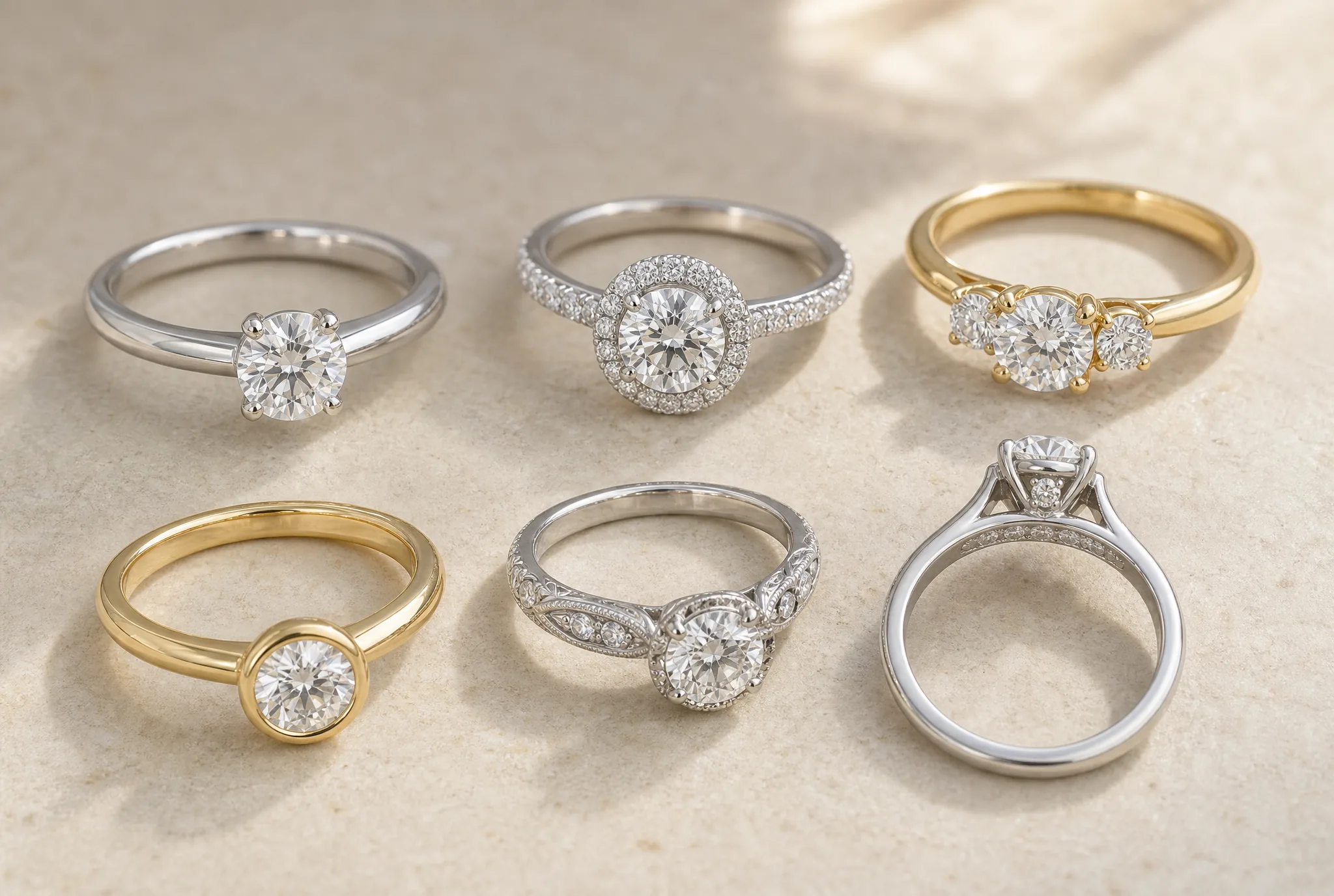
Brilliant Earth lab grown engagement rings are not one single look. The setting choice usually starts with a design question: do you want the center diamond to do most of the visual work, or do you want the setting to add size, side-stone presence, vintage detail, or extra protection?
This guide organizes Brilliant Earth’s official lab-grown engagement ring offering by setting style, then translates those styles into practical buying tradeoffs. A low-profile bezel, a classic solitaire, a bright halo, a three-stone ring, a hidden halo, and a detailed vintage-inspired design can all make sense for different routines, wardrobes, hands, and budgets.
Because engagement rings involve design, fit, policies, and diamond documentation, treat this as a decision framework before comparing individual stones or checkout details. For broader context on lab-created stones outside bridal shopping, see our lab-grown diamond jewelry buying guide.
What Brilliant Earth Officially Offers
Brilliant Earth’s own product page uses the title “Lab Grown Diamond Engagement Rings”, so this is an official product concept, not only an editorial keyword. The page presents engagement rings using lab-grown diamonds and describes a buying path where shoppers can choose a setting and pair it with a lab-grown diamond.
That matters because the setting and the diamond are separate decisions. A shopper may start with a lab-grown diamond, start with a setting, design an engagement ring, or explore custom engagement rings through Brilliant Earth’s official purchase paths. In practical terms, the same broad category, such as solitaire or halo, can still vary by band width, prong style, center-stone shape, metal, side stones, and profile height.
Brilliant Earth also describes lab-grown diamonds on that page as having the same physical, chemical, and optical properties as natural diamonds and as being available in a range of shapes, sizes, and grades. Treat that as a brand product description, while still checking the grading report and disclosure language for the exact diamond selected.
If ring size is still uncertain, settle that before getting attached to a complex setting. A plain solitaire may be simpler to resize than a decorative band, but any engagement ring order can have policy limits. Our guide to measuring ring size at home can help narrow the sizing decision before you choose a setting.
The Six Setting Styles Covered Here
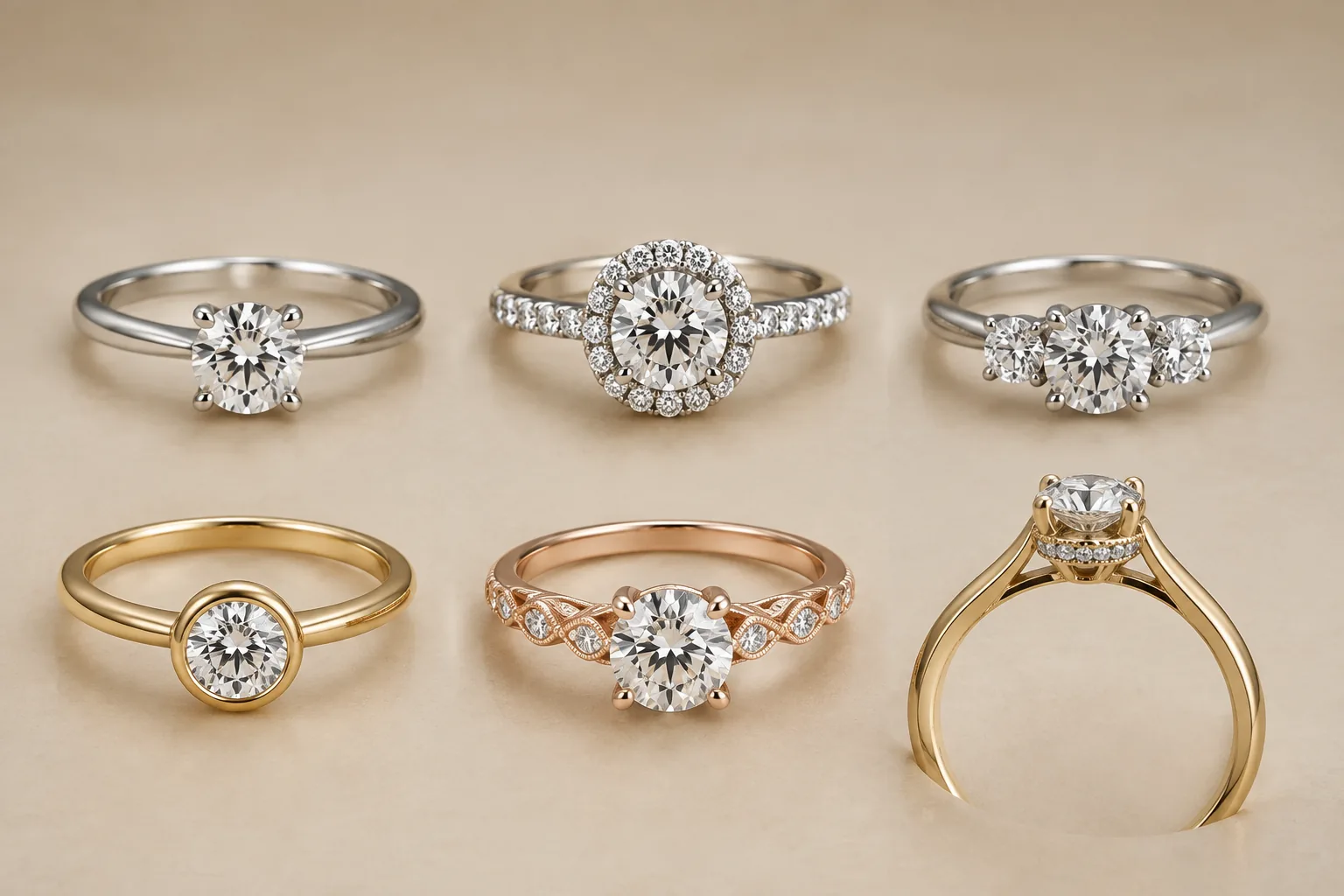
This article covers six setting directions that Brilliant Earth officially surfaces through its lab-grown page, engagement-ring navigation, or product examples: solitaire, halo, three-stone, bezel, vintage-inspired, and hidden halo. The boundaries are not always clean because a single ring can combine multiple ideas. A vintage-inspired ring may include a halo. A solitaire may have hidden detail beneath the center stone. A three-stone ring may also use prongs, bezels, or decorative band work.
Brilliant Earth’s official lab-grown page surfaced examples including “Secret Halo,” “Luna 2mm Bezel,” “Freesia Hidden Halo,” “Opera Three Stone,” “Petite Elodie 1.5mm Solitaire,” and “Peyton 4mm Solitaire.” These examples support the style discussion, but they should not be treated as permanent inventory promises or as a complete count of every available design.
Official Labels Versus Buyer-Friendly Grouping
Solitaire, halo, three-stone, bezel, vintage-inspired, and hidden halo are safe to discuss as officially surfaced Brilliant Earth style concepts. However, this guide uses them as buyer-friendly groupings, not as a claim that Brilliant Earth’s site always sorts every ring into only one fixed category.
That distinction is useful when comparing rings. A hidden halo may be a product-name descriptor, a navigation label, or an under-gallery detail on a broader style. Vintage-inspired may describe an overall design language rather than a single mechanical setting type.
What This Guide Can and Cannot Claim
This guide can compare likely wear and style tradeoffs using jewelry education and official Brilliant Earth pages. It cannot confirm current counts by setting style, current inventory, current discounts, long-term wear outcomes, or whether every metal is available for every design.
For service and policy comparisons across major online engagement-ring sellers, see our guide to Brilliant Earth, Blue Nile, and James Allen resizing, repairs, and upgrade programs.
Solitaire Settings: Center-Stone Focus and Simpler Wear
A solitaire setting is usually the most center-stone-forward choice. Brilliant Earth officially surfaces solitaire as a lab-grown engagement ring style, including examples such as “Petite Elodie 1.5mm Solitaire” and “Peyton 4mm Solitaire” on the lab-grown page.
The appeal is straightforward: fewer decorative elements compete with the diamond. If you want the lab-grown center stone, its shape, and its proportions to be the main event, a solitaire is often the cleanest design direction. A slim band can make the diamond feel more prominent; a wider band can make the ring feel sturdier or more substantial, depending on the design.
For daily wear, solitaire settings are often easier to understand than pavé-heavy or halo designs because there are fewer small stones and fewer tiny setting surfaces. GIA’s engagement-ring buying guidance notes that ring settings affect both appearance and protection, and it distinguishes prong and bezel settings as different ways of holding and protecting a diamond.
Daily-Wear Strengths
A plain solitaire can suit shoppers who want a classic ring, a lower-maintenance look, and more budget emphasis on the center diamond rather than decorative setting detail. GIA also notes that solitaire rings are generally easier to resize than rings with pavé or bead-set details, which can matter if your size changes or if you are between sizes.
This does not mean every solitaire is low-risk. A high prong setting can sit above the finger and catch more easily on pockets, knitwear, gloves, or active work routines. GIA notes that higher settings can make a diamond appear larger but may snag more and increase exposure to damage.
Who Should Be Cautious
A solitaire may feel too minimal if you want visible sparkle across the finger or a decorative side profile. It also places more visual responsibility on the center diamond. If the goal is maximum spread or sparkle for the overall ring face-up, a halo, three-stone, or elongated diamond shape may be worth comparing.
A solitaire is also not automatically the most durable option. The exact prong design, height, band thickness, metal, and inspection routine all matter.
Halo and Hidden Halo Settings: More Sparkle, More Detail
Brilliant Earth officially surfaces halo as a lab-grown engagement ring style and hidden halo as both a navigation or category label and a product-name descriptor. Examples from the official lab-grown page include “Secret Halo” and “Freesia Hidden Halo.”
Halo and hidden halo designs both add detail around or beneath the center diamond, but they create different effects. A visible halo frames the center stone with smaller diamonds, making the ring look brighter and often larger from the top. A hidden halo usually sits below the girdle or around the gallery, so the sparkle is more visible from the side or at an angle.
GIA notes that halo settings can make a center diamond look larger, while also adding small stones and prongs that require maintenance. That is the main tradeoff: more sparkle and visual detail, but more tiny components to inspect and clean.
Visible Halo: Face-Up Impact
A visible halo is a strong fit for shoppers who want the ring to read bright, detailed, and larger across the finger. It can be especially appealing if you prefer a romantic or high-sparkle look, or if you want the setting to contribute more to the ring’s presence instead of putting nearly all emphasis on center-stone size.
The caution is maintenance. A halo adds small stones, more setting points, and more edges where lotion, soap residue, and everyday debris can collect. That does not make halos automatically fragile, but it does mean the specific construction matters.
Hidden Halo: Side Detail Without a Full Frame
A hidden halo is often better for shoppers who like a mostly center-stone-forward top view but want extra sparkle from the side. It can feel more subtle than a full visible halo because it does not always change the face-up outline as dramatically.
The practical issue is that a hidden halo can still add small stones and setting complexity. If the ring sits high, the center diamond may be more visually prominent, but the higher profile may also increase snag and impact exposure. Inspect the side profile carefully, not just the top-down product image.
Three-Stone Settings: Side-Stone Presence and Symbolic Style
Brilliant Earth officially surfaces three-stone designs through its lab-grown page examples and engagement-ring navigation, including “Opera Three Stone” as a surfaced example.
A three-stone ring changes the emphasis from one center diamond to a wider composition. The side stones can make the ring feel more substantial across the finger, add symmetry, and create a more formal or symbolic look. Many shoppers associate three-stone rings with past, present, and future symbolism, but the buying decision should still focus on proportions, comfort, and setting construction.
Three-stone rings may suit someone who wants more presence than a solitaire without the all-around frame of a halo. They can also be useful if you like elongated coverage across the finger, especially with oval, emerald, pear, marquise, radiant, or cushion center stones.
Daily-Wear Tradeoffs
The extra stones bring extra setting points. A three-stone ring can be practical if the stones are securely set, the profile is not too high for your routine, and the shoulders do not feel bulky between the fingers. But the style name alone does not prove durability. A low, well-framed three-stone ring and a high, delicate three-stone ring can wear differently.
Because GIA emphasizes that settings affect appearance and protection, shoppers should look closely at how each stone is held. Are the side stones prong-set? Are they bezel-set? Do they sit high? Do they create sharp edges against neighboring fingers?
Budget Emphasis
Compared with a solitaire, a three-stone design usually shifts some visual and budget attention from one diamond to the whole composition. That may appeal if you want spread and detail. It may be less ideal if your priority is the largest or highest-grade center lab-grown diamond within a fixed budget.
Bezel Settings: Lower-Snag, More Protective Framing
Brilliant Earth officially supports bezel as a lab-grown engagement ring style or setting method, including the official example “Luna 2mm Bezel.” A bezel setting surrounds the diamond’s edge with metal rather than relying only on exposed prongs.
For practical wear, this is one of the clearest setting distinctions. GIA describes bezel settings as protective because metal surrounds the diamond edge and there are no prongs to snag. For someone who works with their hands, wears gloves, travels often, or prefers a smoother ring profile, a bezel may be worth prioritizing.
Why Bezels Suit Lower-Maintenance Buyers
A bezel can reduce exposed edges and snag points, especially compared with a high prong setting. It may also create a modern, clean outline around round, oval, emerald, pear, or marquise shapes, depending on the design.
This does not mean a bezel needs no care. Dirt can still collect around metal edges, the ring can still scratch, and the exact profile still matters. But as a style direction, bezel settings are often a strong candidate for buyers who want protection and a sleeker surface.
Who May Prefer Another Style
Some shoppers find bezels visually heavier because the metal frame can make the diamond look more enclosed. If you want maximum light, airy prongs, or a very traditional bridal look, a solitaire prong setting or hidden halo may feel closer to your style.
A bezel also changes the metal’s visual role. In yellow or rose gold, the frame becomes a noticeable design feature. In white gold or platinum, it may blend more with the diamond’s brightness.
Vintage-Inspired Settings: Detail, Romance, and Cleaning Complexity
Brilliant Earth officially surfaces vintage-related styles through vintage-inspired wording on its lab-grown page and Antique & Vintage engagement-ring navigation. In buyer terms, vintage-inspired usually means the design borrows from older jewelry aesthetics without necessarily being an antique ring.
These rings may include milgrain-style borders, engraving, floral or nature-influenced details, side stones, halos, decorative galleries, or more intricate bands. That can make them feel romantic and distinctive, especially for shoppers who do not want a plain modern solitaire.
The tradeoff is complexity. More decorative surfaces can mean more places for residue to collect and more details to inspect over time. A vintage-inspired ring with pavé, bead-set diamonds, or delicate engraving may have different maintenance expectations than a simple bezel or plain solitaire.
Style Strengths
Vintage-inspired settings are strong for shoppers who want the setting itself to carry personality. They can make a ring feel less generic and may pair especially well with oval, emerald, pear, marquise, cushion, or Asscher-style silhouettes, depending on the exact design.
They can also be a good fit if you want a ring that looks detailed from the side. Many vintage-inspired designs put effort into the gallery, shoulders, or band pattern, not only the center stone.
Practical Questions to Ask
Before choosing a vintage-inspired Brilliant Earth design, inspect the exact construction. Are there tiny side stones? Is the band engraved all the way around? Could resizing disrupt the pattern? Does the ring sit high? Are there edges that may catch on fabric?
These questions matter more than the style label. A vintage-inspired ring can be reasonably wearable for daily use, but it is not automatically low-maintenance.
Metal Choices and Diamond Shapes to Compare
Brilliant Earth’s lab-grown page officially surfaces shape shopping paths including oval, round, emerald, pear, marquise, and elongated cushion. Its engagement-ring navigation also surfaces radiant, cushion, princess, Asscher, and heart shape paths.
Shape affects the look of every setting style. Round diamonds often feel classic and symmetrical. Oval, marquise, pear, and elongated cushion shapes can create more finger coverage. Emerald and Asscher shapes give a more geometric, step-cut look. Princess and radiant shapes bring sharper corners or more angular brilliance, depending on the cut.
Metal choice also changes the ring’s personality. The lab-grown page FAQ lists platinum, 14K and 18K yellow gold, 14K and 18K white gold, and rose gold as metal options, while visible filters showed 14K and 18K yellow and white gold. The careful takeaway is that Brilliant Earth presents several metal options, but availability should be verified on the exact design and order page.
For sizing-related uncertainty, especially if your preferred setting has stones along the band, compare the guidance in Between Two Ring Sizes? What Official Ring Size Guides Recommend.
Budget and Visual-Size Tradeoffs
A lab-grown diamond engagement ring budget can be allocated in different ways. One shopper may put most of the budget into a larger center diamond and choose a simple solitaire. Another may select a slightly smaller center diamond but add a halo, hidden halo, three-stone layout, or detailed vintage-inspired setting for more overall presence.
Brilliant Earth states that lab-grown diamonds are available in a range of shapes, sizes, and grades. That range gives shoppers flexibility, but it also means two rings with similar silhouettes can differ substantially by the chosen diamond, metal, and setting details.
Center Diamond Versus Setting Detail
If your priority is the center diamond, solitaire and some bezel designs keep attention concentrated. You may prefer this route if you care most about shape, cut appearance, proportions, or a clean bridal look.
If your priority is visual spread, a halo or three-stone design may do more for the ring’s overall footprint. GIA’s guidance that halos can make a center diamond look larger is useful here, but the tradeoff is extra small stones and maintenance points.
Height, Sparkle, and Everyday Wear
Higher settings can make a diamond appear larger, according to GIA, but they may snag more and increase exposure to damage. That means visual drama has to be balanced against lifestyle. If you wear gloves often, work with your hands, or want a ring that feels less intrusive, a lower-profile design may be more comfortable.
For a broader comparison of online engagement-ring buying workflows, see James Allen vs Blue Nile vs Brilliant Earth.
Pricing and Inventory Limits
Do not treat any category-page price or example as permanent. Brilliant Earth’s own Form 10-K discusses virtual inventory, supplier-based pricing, diamond price volatility, and market-driven pricing risks. That does not tell you whether a specific ring is a good or bad value; it simply reinforces that current price, stone availability, and setting availability should be checked at the time of purchase.
What to Verify Before Buying
Before buying a Brilliant Earth lab-grown engagement ring, verify the exact ring, exact diamond, and exact order terms. This is especially important for customized rings, resized rings, modified orders, or designs with decorative bands.
Diamond Report and Lab-Grown Disclosure
GIA advises buyers to obtain and review a diamond grading report when buying an engagement ring. For lab-grown diamonds specifically, GIA’s laboratory-grown diamond services include reports or assessments and laser inscriptions identifying eligible stones as laboratory-grown.
In the United States, the FTC jewelry guides require marketers to avoid misrepresentation in jewelry advertising and to disclose when a diamond is laboratory-grown, laboratory-created, or otherwise not mined. The FTC jewelry guides in 16 CFR Part 23 also restrict terms such as “real,” “genuine,” or “natural” for artificially produced stones if the usage misrepresents the product.
That U.S. disclosure rule should not be presented as a global law. If you are buying from outside the U.S., check the applicable local consumer and jewelry disclosure rules as well.
Return, Exchange, and Resize Eligibility
Brilliant Earth’s official returns and resizing page says returns and exchanges are generally 30 days for original unworn items, subject to exclusions. It also states that exclusions include resized or modified rings, custom designs, altered orders, repaired or modified items, and lifetime-upgrade purchases.
The same page describes one complimentary resize within 60 days regardless of sizing range, or up to one year if within range, with restrictions. Because engagement rings often involve setting selection, diamond pairing, sizing, and possible customization, verify the current policy for your exact order before relying on any general summary.
Construction Details
For the specific ring you are considering, check:
- Whether the ring sits high or low on the finger
- Whether the center stone is held by prongs, bezel metal, or another setting method
- Whether there are small stones on the halo, gallery, shoulders, or band
- Whether decorative details continue around the full band
- Whether resizing could affect pavé, engraving, or bead-set areas
- Whether your chosen metal is available for that exact design
- Whether your chosen diamond shape fits that exact setting
This is where setting style becomes practical. A halo is not automatically too delicate, a solitaire is not automatically problem-free, and a bezel is not automatically right for every aesthetic. Construction matters.
How to Treat Sustainability and Sourcing Claims
Brilliant Earth’s brand positioning includes values-led language, and many shoppers consider the brand because they care about sourcing, materials, and transparency. This article does not independently verify sustainability or ethical sourcing claims.
That boundary is important because Brilliant Earth’s own Form 10-K discusses risks related to ESG expectations, environmental marketing standards, sourcing-related claims, litigation, regulation, reputation, and reporting. In other words, sustainability and sourcing language should be attributed to the brand unless independently verified by the specific evidence you are using.
For buyers, the practical approach is to separate three questions. First, do you like the ring’s design and construction? Second, does the selected lab-grown diamond have the documentation and disclosure you expect? Third, are the brand’s sourcing and sustainability claims clear enough for your personal threshold?
A values-led purchase can still be careful and evidence-based. Look for specific disclosures, not broad slogans, and avoid assuming that any lab-grown diamond or branded ring is automatically completely ethical or sustainable.
Conclusion
Brilliant Earth lab grown engagement rings are officially offered as a buildable product path: choose a setting, pair it with a lab-grown diamond, and compare shape, metal, and design details. The main setting styles in this guide each solve a different problem.
Choose a solitaire if you want the center diamond and a cleaner design to lead. Consider a halo if you want more face-up sparkle and perceived size. Look at a hidden halo if you want side detail without a full visible frame. Compare three-stone settings if you like width, symbolism, and side-stone presence. Prioritize bezel settings if lower snagging and protective framing matter more than an airy prong look. Explore vintage-inspired designs if you want romance and detail, while accepting more construction questions.
Before buying, verify the diamond report, lab-grown disclosure, current price, exact metal availability, setting construction, return eligibility, and resize terms for the specific order. The right setting is the one that fits your style, routine, and tolerance for maintenance, not the one that looks most impressive in a product grid.
Related Guides
- Lab-Grown Diamond Jewelry Buying Guide: Fashion Jewelry vs Engagement Ring Shopping
- Brilliant Earth vs Blue Nile vs James Allen: Resizing, Repairs, and Upgrade Programs Compared
- James Allen vs Blue Nile vs Brilliant Earth: Which Engagement Ring Buying Process Fits You?
- How to Measure Ring Size at Home: Printable Chart, Plastic Sizer, or Existing Ring?