



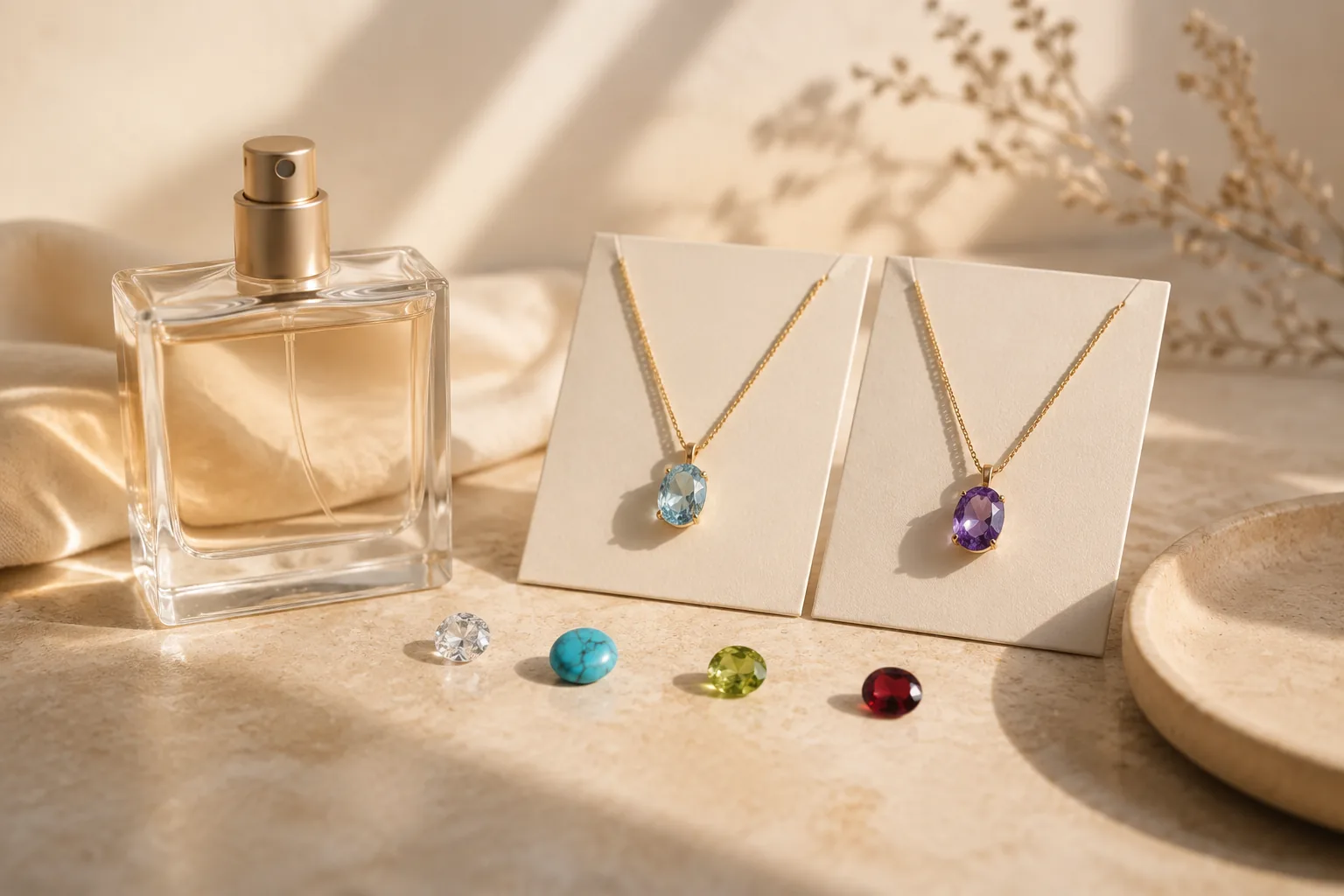
If you are comparing a birthstone month chart across jewelry brands and seeing different stones for the same month, that does not automatically mean one chart is wrong. In many cases, the difference comes from a mix of tradition, accepted alternatives, and brand-level merchandising choices. The key is knowing whether you are looking at an authoritative reference, a collection page, or a product listing.
For shoppers, that distinction matters. A brand page may use a month name as a styling or gifting label, while the actual product material may be described separately. If you read those pages as if they were canonical charts, you can end up assuming a mismatch where there is only a different purpose.
Why Birthstone Charts Can Differ
Birthstone charts are not always identical because the category has more than one layer. Some references reflect long-standing tradition, while others reflect modern additions, retail framing, or a specific brand’s product assortment. GIA notes that multiple birthstones exist because of tradition, rarity, and popularity, which helps explain why one month can have more than one recognized stone in circulation.
That means a variation is not always a mistake. Sometimes it is an accepted alternative. Sometimes it is a product decision. And sometimes it is simply a collection page that uses birthstone language without trying to serve as a universal standard.
The practical takeaway is simple: a brand’s birthstone page tells you how that brand is presenting the category, not necessarily how every authority defines the month.
Which Birthstone References Are Authoritative?
For a baseline, GIA and the American Gem Society are the strongest references in the research set. GIA lists April as diamond and December as turquoise, tanzanite, and zircon. AGS lists April as diamond and maintains a December-specific page covering tanzanite, zircon, and turquoise.
That makes them useful standards for comparison because they are not trying to sell a particular product line. They are reference sources. Retailer pages are different. A retailer may be accurate, but it is still speaking from within its own assortment, design language, and merchandising strategy.
That difference matters most when a page is phrased like a shopping edit instead of a chart. A collection page can be useful to browse, but it should not be treated as a universal authority unless the page explicitly claims that role.
April: Diamond Versus White Topaz
April is a clean month to compare because the authoritative references in the research set are aligned. GIA lists April as diamond, and AGS does the same. Monica Vinader’s birthstone earrings page also lists April as diamond, and James Allen’s birthstone jewelry page does likewise.
Astrid & Miyu is the main contrast in the supplied material because its birthstone collection uses April White Topaz language. That does not automatically mean the page is making a false claim. It may be using a collection-specific stone choice, a style alternative, or a product naming convention that is different from the standard reference chart. The available source material does not prove which of those is intended, so the safer reading is that this is a brand-specific presentation, not a replacement for the canonical April reference.
For shoppers, April is the month where it is easiest to separate the reference standard from the retail presentation. If a brand says April and shows white topaz, check whether the page is naming a product line, a gemstone material, or a birthstone association. Those are not always the same thing.
December: Several Accepted Stones and Retail Choices
December is where birthstone charts most clearly diverge. GIA lists turquoise, tanzanite, and zircon for December. AGS also recognizes multiple December birthstones and maintains a December-specific page for tanzanite, zircon, and turquoise. That alone explains why more variation appears in retail charts for this month.
Monica Vinader’s birthstone earrings page uses turquoise for December. Missoma’s birthstone edit also uses turquoise and presents itself as a birthstone selection page rather than a canonical authority chart. Pandora’s December birthstone page goes further by stating that its birthstones are 100% man-made stones and color-inspired, and it identifies December with turquoise-inspired stone language.
James Allen takes another route. Its main birthstone jewelry page lists December as topaz, while its December detail page describes December as blue topaz. Astrid & Miyu includes December Tanzanite in its collection naming. Mejuri’s birthstone jewelry collection is even broader in structure: it is a product category page that includes multiple stone labels across items, including lab-grown and non-month-specific materials, rather than a single month chart.
So December is not one fixed retail answer. It is a month where accepted alternatives and brand choices are already part of the category. The variation is therefore less about error and more about which stone a brand has chosen to foreground.
A Chart Is Not Always a Material Disclosure
A birthstone association is not the same thing as a product material disclosure. That is the most important reading skill in this category.
A chart says, in effect, “this stone represents this month.” A product page says, “this is the material or stone used in this item.” Those may overlap, but they are not interchangeable. Pandora makes this especially clear by describing its birthstones as 100% man-made stones and color-inspired. That wording is not a claim that the piece contains a natural gemstone in the traditional sense.
Mejuri’s collection page creates a different kind of ambiguity because it functions as a product category rather than a single chart. A shopper may see several stone names in one place and assume they are all part of one canonical mapping. They are not necessarily. The page may be organizing products by theme, not by a strict month-to-stone reference table.
This is why a birthstone page deserves the same close reading as any other jewelry listing. The month label, stone name, and material disclosure can each serve a different purpose.
How to Read a Brand Birthstone Page
A useful way to read these pages is to ask four questions in order.
First, what is the page trying to be? A reference chart, a shopping edit, or a product collection can look similar at a glance, but they do not carry the same meaning.
Second, what stone is actually named? If a page says April and names white topaz, that is a different statement from a page that says April and names diamond.
Third, does the page identify the material type? Words such as lab-grown, man-made, synthetic, and color-inspired are not decorative details. They change what the shopper is being told about the item.
Fourth, does the disclosure appear at the item level? A collection page may group products under one heading, but the actual product detail page is usually the better place to confirm the exact stone and material.
If those four points do not line up, do not assume the page is wrong. Treat it as a sign that the page has a different purpose from a canonical birthstone chart.
When a Different Stone Is a Problem
A different stone is not automatically a problem. It becomes a problem when the page presentation creates a material mismatch that matters to the buyer.
If the difference is an accepted alternative, like the multiple December stones recognized by GIA and AGS, the issue may simply be that the brand chose one option over another. That is normal in this category.
If the difference is a brand-specific choice, the main question is whether the brand is being clear about what it is selling. Pandora’s man-made, color-inspired language is a good example of why this matters. It tells the shopper not to confuse the category label with a claim about a natural gemstone.
If the difference is ambiguous, the safest move is to check the product-level description before buying. A birthstone headline is not enough on its own, especially if you care about the exact gemstone name.
The point is not to police every chart for consistency. It is to avoid overreading a marketing label and assuming it means one fixed material standard.
What Shoppers Should Do Instead
Use authoritative references first, then use retailer pages for shopping context. For April, the reference baseline is straightforward: diamond. For December, expect more variation and check whether the retailer is using turquoise, tanzanite, zircon, topaz, or a color-inspired alternative.
Then read the product description carefully. Look for the exact gemstone name, whether the stone is natural or lab-grown, and whether the brand uses words like man-made or inspired by a color rather than naming a natural gem directly.
Finally, separate taste from terminology. A brand’s choice to feature white topaz, turquoise, blue topaz, or tanzanite may be a design decision. That does not make it a canonical month chart, and it does not automatically make it a mistake.
Conclusion
Birthstone month charts do not always match because they are not always doing the same job. GIA and AGS provide the clearest reference baseline, but retailer pages may follow accepted alternatives, brand style choices, or collection-specific merchandising. April is relatively consistent across the sources in this set, while December is intentionally more flexible.
The safest shopping habit is to treat a brand birthstone page as a product guide, not a universal authority. Check the exact stone name, confirm the material disclosure, and read the page in the context of what it is actually selling.
Frequently Asked Questions
Is a different birthstone on a brand page always wrong?
No. A difference may reflect an accepted alternative, especially for months like December that have multiple recognized stones. It may also reflect a brand’s own collection choice.
Why do April pages sometimes show white topaz?
In the sources provided, the authoritative baseline for April is diamond, but one brand collection uses White Topaz language. The available material does not prove intent, so the safest interpretation is that it is a brand-specific presentation rather than a universal chart.
Which months are most likely to vary?
December is the clearest example in the research set because the authoritative references already include multiple stones, and retailers use different options such as turquoise, tanzanite, zircon, blue topaz, and color-inspired wording.
Can I trust a birthstone collection page as a chart?
Only if the page explicitly says it is providing a standard reference. Otherwise, treat it as a shopping page or collection page and verify the exact stone in the product details.
What should I check before buying birthstone jewelry?
Check the exact gemstone name, whether the stone is natural, lab-grown, man-made, or synthetic, and whether the month association matches the seller’s disclosure at the item level.
Jewelry care recommendations vary by material, treatment, and setting. Always follow brand or jeweler care instructions for your specific piece. This content provides shopping and educational information, not medical advice. Consult a qualified clinician or dermatologist about persistent irritation or reactions. Return rights, hallmarking, and product-labeling rules vary by country. Check current seller policies and local regulations before purchase.