



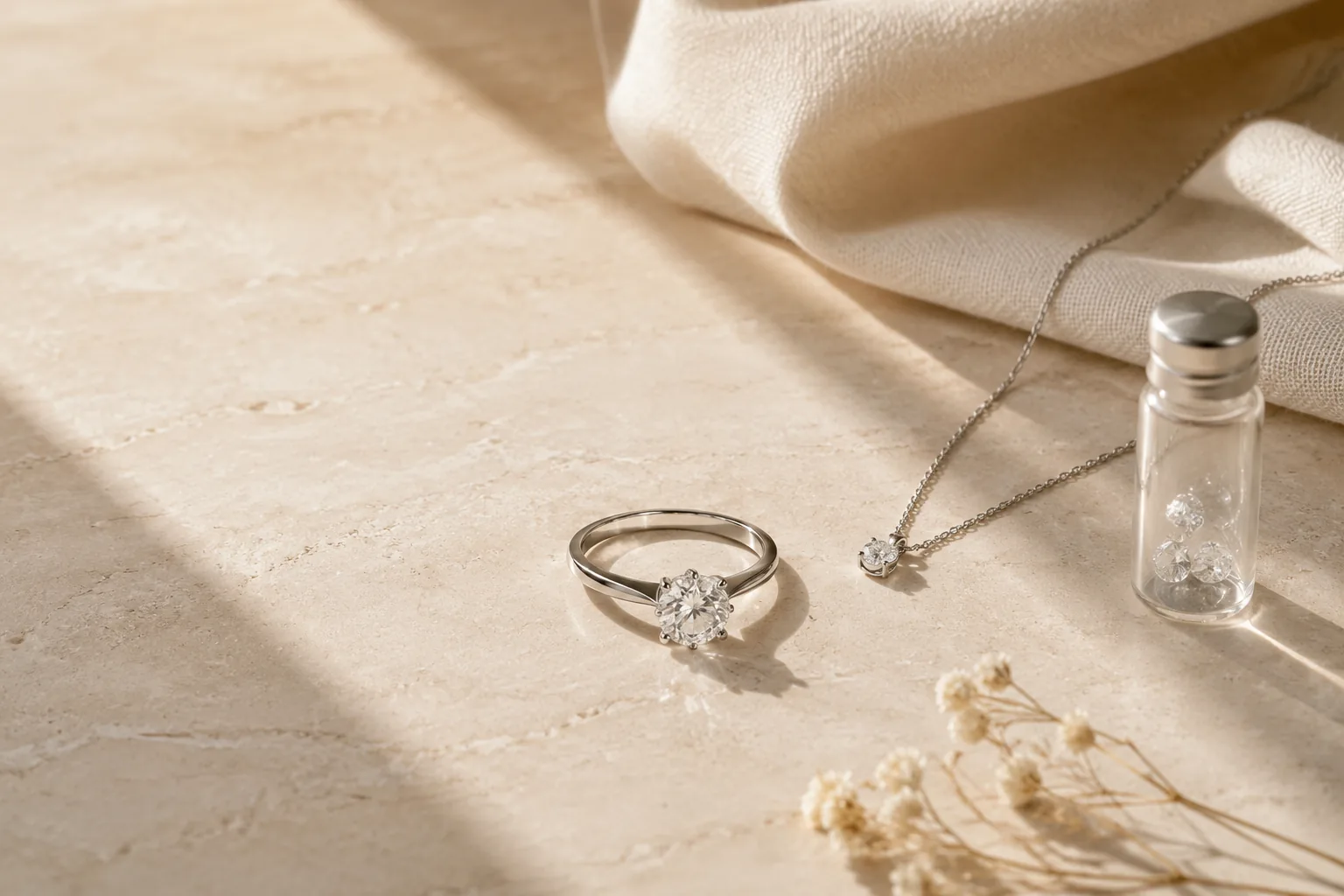
If you are deciding whether Monica Vinader is a good fit for a gift, a bridal purchase, or a lab-grown diamond piece, the key question is not just what the brand sells. It is how the brand frames the collection, what it says about materials and traceability, and what you still need to verify before you buy.
Monica Vinader officially positions its lab-grown diamond range as a jewelry category built around lab-grown gems and 14k solid gold, with traceability language and gifting use cases built into the page presentation. Its wedding shop is broader than wedding bands alone: the official wedding page is structured as a curated wedding destination with bridal, guest, and gifting routes. For a buyer, that makes the brand feel more style-led and occasion-led than ring-specialist or bridal-jewelry specialist.
The practical issue is that several of the strongest brand claims are still brand claims. That matters because shoppers need to separate Monica Vinader’s own sourcing and sustainability language from independently verified product facts. Jewelry care recommendations vary by material, treatment, and setting. Always follow brand or jeweler care instructions for your specific piece. This content provides shopping and educational information, not medical advice. Consult a qualified clinician or dermatologist about persistent irritation or reactions. Return rights, hallmarking, and product-labeling rules vary by country. Check current seller policies and local regulations before purchase. Hands-on testing is claimed only when the article documents the testing process and evidence.
What Monica Vinader Officially Says About Its Lab-Grown Diamond Jewelry
Monica Vinader has an official US category page titled “Lab Grown Diamond Jewelry.” On that page, the brand describes lab-grown diamonds as not replicas and as chemically and physically identical to diamonds from the earth. It also states that its lab-grown diamond jewelry is “100% traceable.”
The collection is presented as jewelry, not as a narrow investment or bridal-only line. Visible product-type language includes rings, necklaces, bracelets, hoop earrings, birthstone or gift jewelry, romantic gifts, birthday gifts, Christmas gifts, and everyday stack pieces. That matters because the category is being framed for repeat wear and gifting as much as for a single milestone purchase.
Monica Vinader also says each piece in the collection is crafted from lab-grown gems and 14k solid gold. The page names ALTR as a partner and states that ALTR uses 100% renewable energy from its own solar plant. The page also uses sustainability-related language such as “sustainable jewelry,” “trusted partners,” “ethical gems,” “recycled metals,” and “sustainable gemstones.”
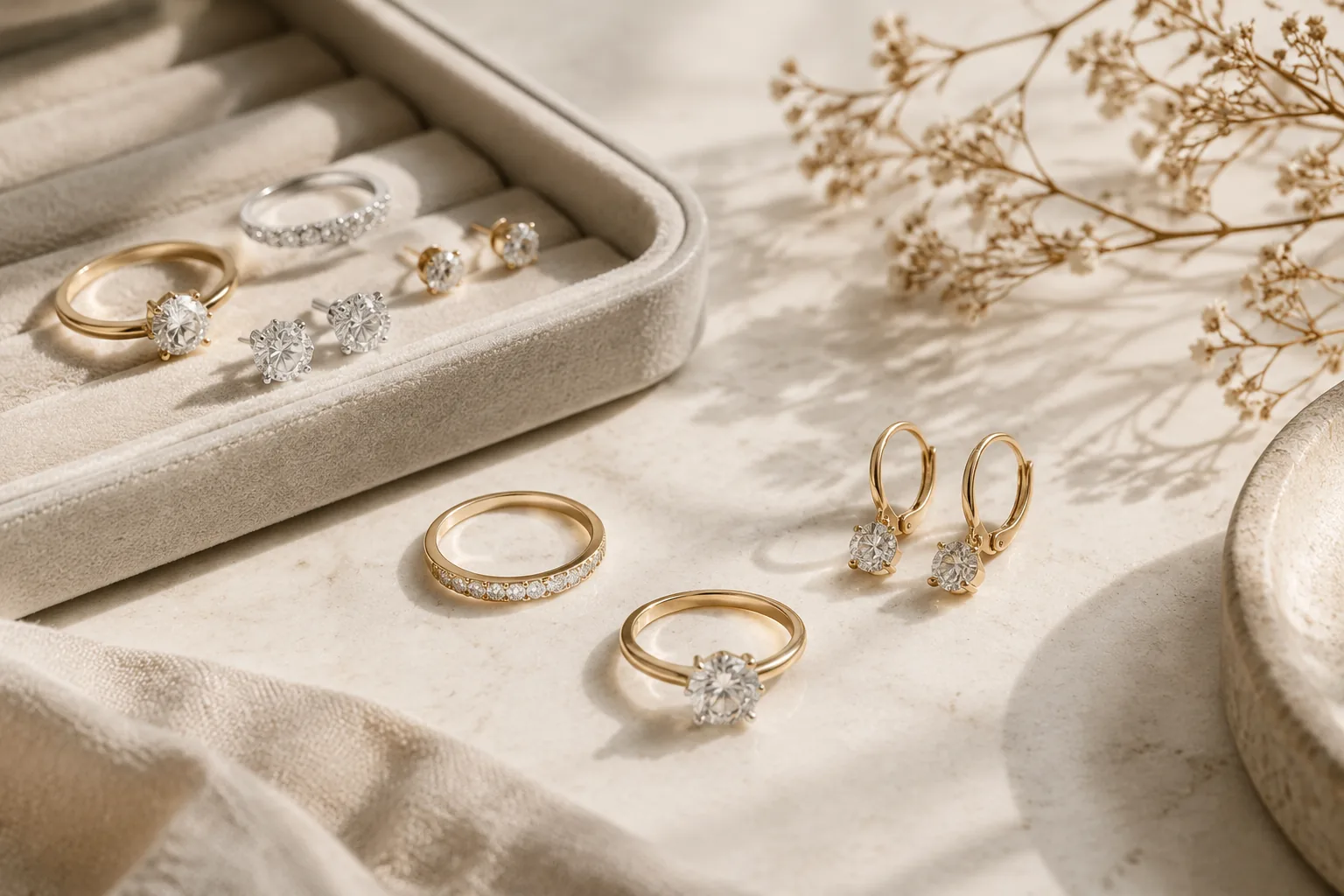
For a buyer, the clearest reading is that Monica Vinader is trying to combine three selling points in one line: lab-grown diamonds, solid-gold construction, and traceability-led branding. That combination is distinctive in presentation, even before you compare the actual product assortment against other brands.
How to Interpret the Lab-Grown Diamond Claims
The independent context here is straightforward. GIA says laboratory-grown diamonds have essentially the same chemical, physical, and optical properties as natural diamonds, while differing by origin. GIA also identifies HPHT and CVD as the main methods used to grow them, and notes that trained gemologists or laboratories using specialized equipment are needed to distinguish lab-grown diamonds from natural diamonds.
That distinction matters because “lab-grown” is not a lesser material category by default; it is an origin category. A shopper should still compare the same decision factors that matter for any diamond purchase: cut, color, clarity, carat weight, shape, setting, and overall design. The category page alone does not expose SKU-level details for those factors, so you should not assume the line is fully transparent on the page-level evidence alone.
FTC Jewelry Guides are the other important frame. They apply to labeling, advertising, promotional materials, product names, depictions, and other marketing. They also say that misrepresenting material aspects such as origin, grade, quality, size, weight, durability, or value is unfair or deceptive. For lab-created diamond or gemstone terms, the guides require that the non-mined origin be clearly and conspicuously conveyed. They also caution against using terms such as “real,” “genuine,” and “natural” to describe artificially produced products, and they require disclosure of the grading system when a grade is represented.
That means Monica Vinader’s lab-grown diamond language should be read as brand positioning, not as third-party proof. The brand can say “100% traceable” and can describe its supply chain and energy claims, but those statements are not the same thing as an item-level public passport or an independent audit record for each SKU. The article should keep that boundary intact.
In practice, the most useful buyer questions are simple: does the product page show the exact diamond details, does it disclose the grading system if a grade is shown, and does it make the lab-grown origin plain without burying it in marketing language? Those are the details that help a shopper compare Monica Vinader to any other lab-grown diamond seller.
What Monica Vinader Officially Says About Wedding Jewellery and Bridal Shopping
Monica Vinader’s wedding page is titled “Wedding Jewellery for Guests & Gifts” and is presented as “The Wedding Shop.” That title is a strong clue to the brand’s category strategy. The page reads as a wedding destination, but not one limited to bridal rings.
Visible modules on the page include All Wedding Jewellery, For the Bride, Pearl Jewellery, Something Blue, Honeymoon Essentials, For the Mother of the Bride, Bridal Styling Appointments, and For The Bridesmaids. The navigation also includes routes such as necklaces, bracelets, earrings, rings, engagement rings, eternity rings, pearls, diamonds, gemstones, engraving or personalised gifts, and styling appointments.
The practical takeaway is that Monica Vinader is using wedding as a merchandising umbrella. It is not presenting itself here as a pure wedding-band specialist. Instead, it is curating the full event ecosystem: bride, bridal party, guests, mother of the bride, honeymoon, and gifts.
The US “For the Bride” page confirms that a bride-specific route exists, but the crawled text did not expose the full main product or editorial copy. That means it supports the existence of the route, but not detailed claims about styling advice, product descriptions, or price points. Any article copy that goes beyond that would be overreading the evidence.
For a buyer, this makes Monica Vinader more appealing if the purchase is tied to the event around the wedding, not only the ring exchange itself. If you are shopping for a bride, bridesmaids, a mother-of-the-bride gift, or a polished piece for the ceremony and related events, the official structure fits that job well. If you are shopping for a traditional wedding band specialist, this page alone does not establish that positioning.
Materials, Recycled-Metal Language, and Traceability Positioning
Monica Vinader’s materials page states that the brand crafts with 100% recycled metals, conflict-free or lab-grown diamonds, and responsible gemstones. It also states that gold vermeil is 18k gold over sterling silver, and that sterling silver is 925. The same page describes 14k solid gold as durable and resistant to daily wear.
The Product Passport page adds more traceability language. It describes traceability as an “imperfect journey,” says that 100% of its jewelry is made from ethically sourced recycled gold and silver, and states that its refineries have Responsible Jewellery Council Chain of Custody. It also says the brand sources 100% recycled gold and silver, including 18k gold for vermeil, 14k solid gold, and 925 sterling silver.
The materials page also states that its mined diamonds follow the Kimberley Process and WDC System of Warranties, and that its lab-grown diamonds are made with 100% certified renewable energy and have 95% less carbon intensity than a like-for-like mined equivalent.
These are important statements, but they should remain attributed to Monica Vinader. They are not the same as independent verification of the full chain of custody, environmental footprint, or ethical profile of every item. The wording is useful because it tells you how the brand wants to be compared. It is not a substitute for reading a product page, checking the localized return policy, or looking for item-level documentation where it matters most.
The material mix also helps explain the brand’s practical lane. 14k solid gold gives the lab-grown diamond line a more premium feel than plated fashion jewelry. Recycled metals and traceability language may matter to values-led shoppers. And the mix of vermeil, sterling silver, and solid gold gives the wedding shop enough range to cover different budgets and wearing habits without forcing the customer into one material tier.
What Makes Monica Vinader Different: Editorial Buyer-Fit Analysis
The main difference is not that Monica Vinader owns lab-grown diamonds or wedding jewelry as a concept. It is how the brand combines them.
From a buyer-fit perspective, the line looks strongest for shoppers who want jewelry that sits between fashion-led and fine-jewelry-coded. The pieces are presented as giftable, wearable, and occasion-ready. The lab-grown diamond collection uses 14k solid gold and traceability language, which gives it a more elevated material story than a typical fashion line. The wedding shop broadens that story into a full event context instead of isolating one hero product.
That makes the brand well suited to shoppers who want a polished gift with a clear occasion attached: engagement-adjacent gifting, bride gifts, bridesmaid pieces, mother-of-the-bride gifts, or jewelry that can move from ceremony to everyday wear. The brand also looks designed for people who care about styling support. Bridal styling appointments and personalization routes matter because they reduce some of the friction around choosing a special piece.
The limitations are just as important. Monica Vinader is not presented here as a large-stone specialist, a traditional wedding-band specialist, or a platinum-first bridal destination. The crawled evidence does not show the full 4Cs detail, item-level grading reports, or complete SKU specification set across the lab-grown line. If your purchase decision depends on precise diamond comparison, standardized grading documentation, or wedding-ring technical detail, you should not rely on the category page alone.
In other words, the brand’s difference is curation. It is a style-and-occasion brand with a lab-grown diamond lane, not a diamond-data-heavy bridal house.
What to Verify Before Buying
Before you buy, check the details that the brand pages do not fully expose.
First, confirm the localized price, delivery date, and return policy for your region. The terms of sale page identified in the research states that returns are allowed within 100 days and that engraved or bespoke products are excluded from cancellation, refund, or exchange unless damaged, defective, faulty, or incorrectly delivered. Because country context can vary, verify the live local terms for the page you are using.
Second, check whether the exact item has engraving restrictions, size limitations, or resizing constraints. Rings are especially sensitive to this, and a wedding purchase often has less time for error than an everyday accessory.
Third, confirm the exact metal. Monica Vinader’s pages distinguish 14k solid gold, 18k gold vermeil, and sterling silver. Those are different constructions with different wear profiles, so do not assume the same long-term behavior across the line.
Fourth, verify the diamond details at product level: shape, carat weight, and whether the listing shows a grading report or clearly names the grading system. FTC guidance is explicit that grade claims need proper disclosure, and the category page alone does not prove full 4Cs transparency.
Fifth, look for item-level traceability documentation if that matters to your purchase. “100% traceable” is a brand claim, not proof that every SKU has a public passport page you can inspect.
Who Should Consider Monica Vinader and Who Should Compare Alternatives
Monica Vinader is a sensible shortlist brand if you want a giftable, style-led piece with a wedding or special-occasion frame, especially if you like the brand’s mix of lab-grown diamonds, solid gold, recycled-metal language, and personalization routes. It is also a reasonable option if you value a wedding shop that covers more than rings and includes bride, bridesmaid, guest, and honeymoon-adjacent use cases.
You should compare alternatives if your priority is different. Shoppers who want a traditional wedding-band specialist, a platinum-heavy bridal offering, a large center stone, or a strict apples-to-apples diamond comparison should look elsewhere as well. The same applies if you need complete grading documentation visible before purchase or if your decision hinges on detailed item-level traceability.
The cleanest summary is this: Monica Vinader appears strongest when the buyer wants a thoughtful, branded, occasion-specific purchase with a modern material story. It is less compelling if you are shopping like a technical diamond buyer or a ring-first bridal buyer.
Conclusion
Monica Vinader stands out because it uses lab-grown diamonds, recycled-metal language, and wedding merchandising as one connected story. Officially, the brand presents its lab-grown diamond jewelry as 14k solid gold, traceable, and gift-friendly. Officially, it presents wedding as a broader shop for bride, guests, bridesmaids, and related occasions rather than only a ring destination.
That combination can be a strong fit for a gift or a bridal purchase. It is not enough, though, to treat the brand’s own sustainability or traceability language as independent proof, or to assume every product page gives the full technical detail a diamond shopper may want. The best approach is to use Monica Vinader for what it clearly offers, then verify the item-level facts that matter most before you buy.