



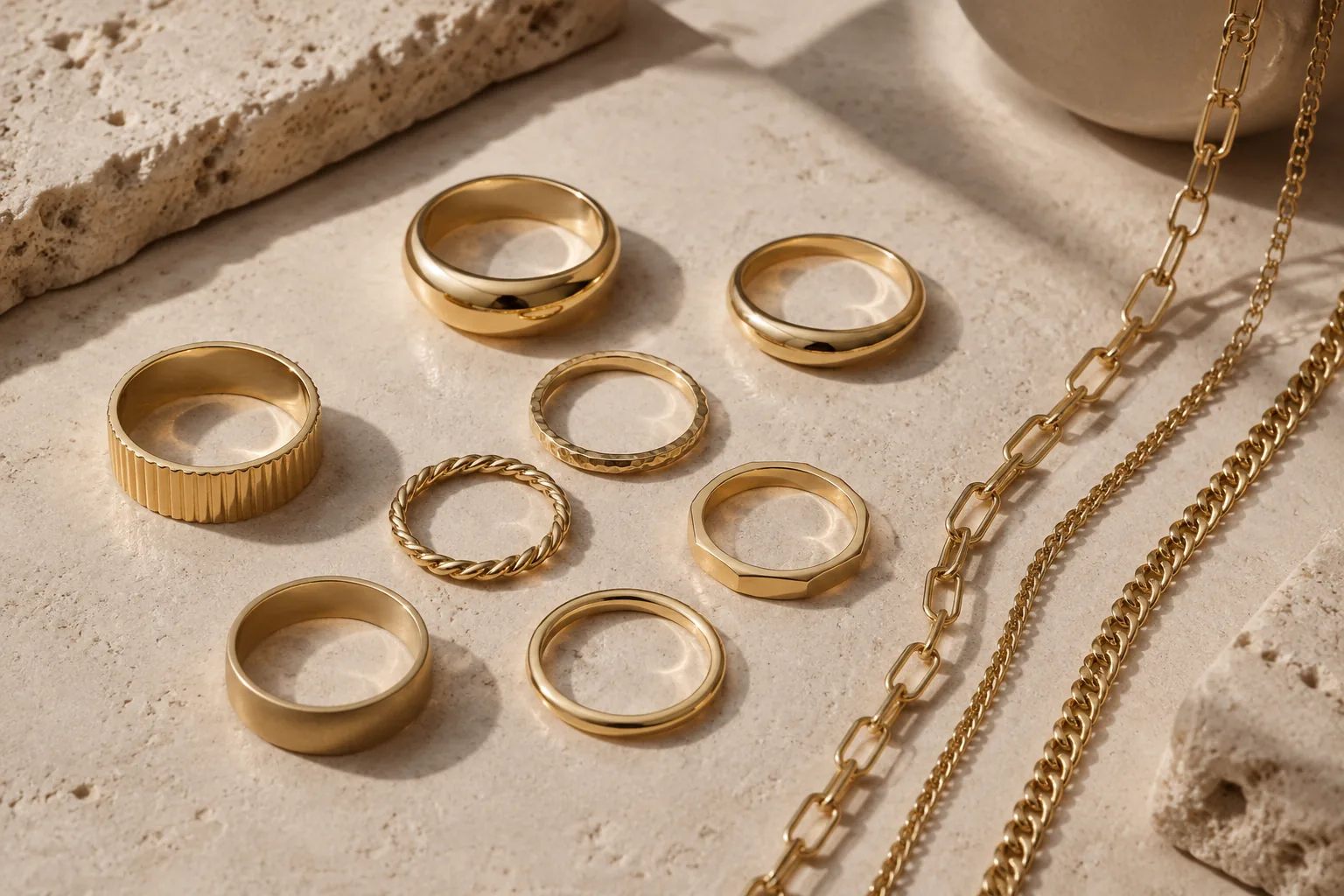
Choosing between 10K, 14K, 18K, and 9K gold is not just a question of which number looks more luxurious. The karat tells you how much of the alloy is gold, but your best choice also depends on how often you will wear the piece, where it will sit on the body, what color you prefer, how much maintenance you are willing to accept, and how the seller describes the material.
The short version: higher karat gold contains more gold, while lower karat gold contains more non-gold alloy metal. That can affect color, price positioning, and everyday wear. But higher karat does not automatically mean better for every shopper, and lower karat does not automatically mean fake.
This guide explains the 10k 14k 18k gold difference, adds 9K for readers shopping in markets where it is commonly sold or recognized, and separates solid gold from vermeil, gold filled, gold plated, and gold-tone jewelry.
What a Gold Karat Number Means
A gold karat number describes gold purity as parts out of 24. The Federal Trade Commission explains that 24K is pure gold, 18K is 18 parts gold and 6 parts other metals, and 14K is 14 parts gold and 10 parts other metals.
That means the basic comparison is straightforward:
| Karat | Gold parts out of 24 | Gold percentage |
|---|---|---|
| 9K | 9 parts | 37.5% |
| 10K | 10 parts | 41.7% |
| 14K | 14 parts | 58.3% |
| 18K | 18 parts | 75% |
| 24K | 24 parts | 100% |
For jewelry shoppers, “karat” is different from “carat.” Karat, often written as K, refers to gold purity. Carat, often written as ct, is used for gemstone weight. A 14K gold ring and a diamond carat weight are describing two different things.
Quick Comparison: 9K vs 10K vs 14K vs 18K Gold
The table below turns the purity numbers into shopping tradeoffs. The durability, color, and price-positioning notes are analysis based on the purity facts and brand education sources, not laboratory wear testing.
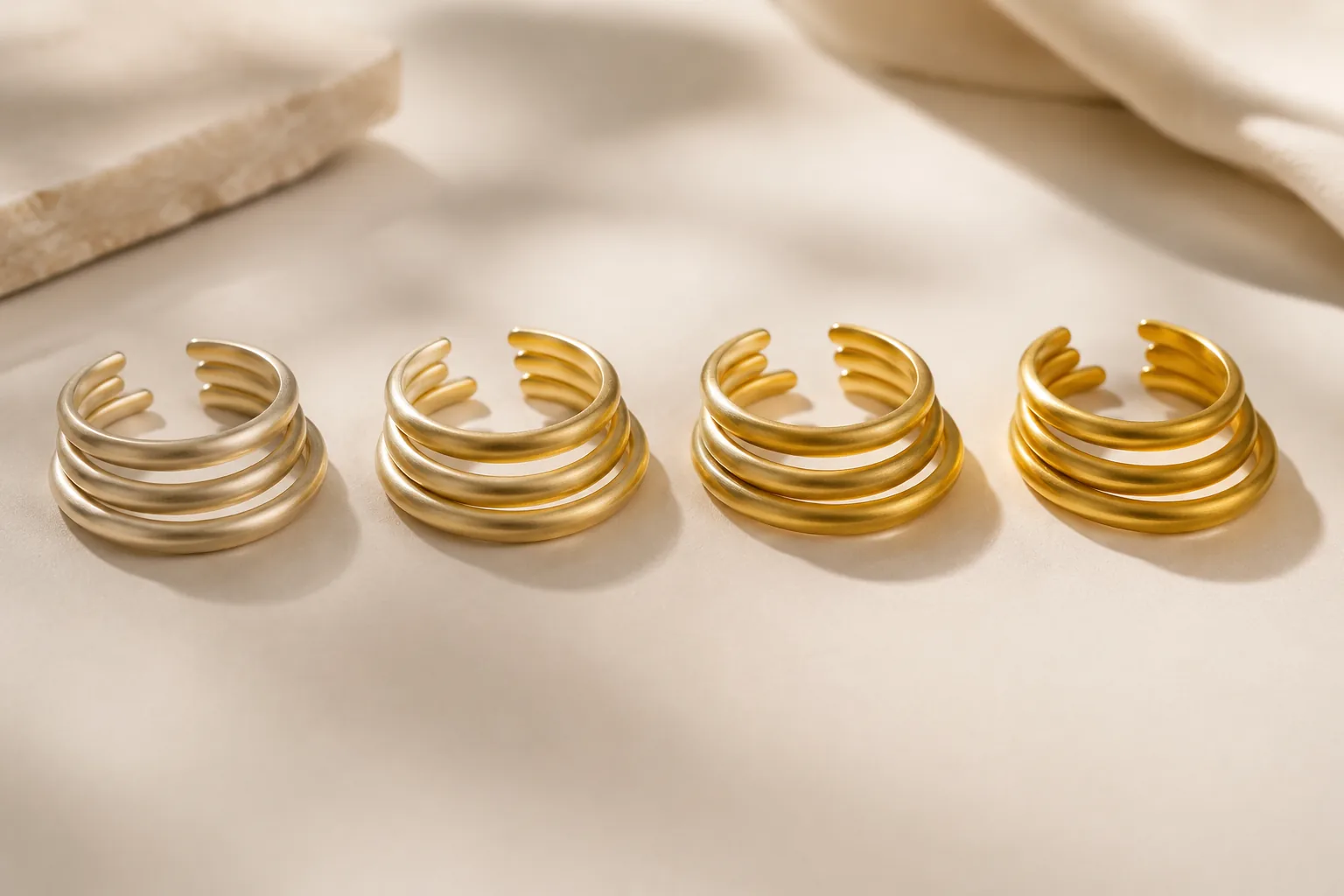
| Karat | Pure gold content | Color expectation | Everyday wear analysis | Price positioning analysis |
|---|---|---|---|---|
| 9K | 37.5% | Usually less rich in yellow-gold tone than higher karats, depending on alloy | Can be a practical solid-gold option where sold or recognized, but it has the lowest gold content in this comparison | Often positioned below higher-karat solid gold, but actual prices depend on weight, design, brand, stones, and services |
| 10K | 41.7% | Usually subtler gold color than 14K or 18K yellow gold | A lower-gold-content solid-gold choice that may suit frequent wear when budget and toughness matter | Commonly positioned as a more accessible solid-gold option |
| 14K | 58.3% | Noticeably gold, typically less saturated than 18K yellow gold | Often treated as a balanced everyday choice because it combines meaningful gold content with alloy-supported strength | Usually positioned between 10K and 18K, but not priced by karat alone |
| 18K | 75% | Richer gold presence, especially in yellow gold | Appealing when higher gold content and color matter, but not automatically longer-wearing than 14K or 10K | Usually positioned above lower karats in comparable pieces, though design and brand still matter |
Astrid & Miyu states that 9K gold is 37.5% pure gold and that it uses 9K yellow, white, or rose gold for welded jewelry. Mejuri states that its 10K gold is 41.7% pure gold and includes other metals such as copper, silver, and zinc. James Allen also states that 10K gold is 41.7% gold, and that 14K gold is 58.3% gold while 18K gold is 75% gold.
What 10K Gold Means
10K gold is real gold when it is sold and labeled as a recognized gold alloy. It contains 10 parts gold out of 24, or 41.7% gold. Mejuri describes its 10K gold as 41.7% pure gold with other metals such as copper, silver, and zinc, and James Allen also gives 41.7% as the gold content for 10K.
The main appeal of 10K is practical. Because it has a higher proportion of non-gold alloy metals than 14K or 18K, it is often positioned as a more accessible solid-gold option. In buyer-fit terms, 10K can make sense for pieces that are worn often, given as lower-risk gifts, or bought by someone who wants solid gold without moving into higher-karat pricing.
The tradeoff is just as important. 10K has lower intrinsic gold content than 14K or 18K, and its yellow-gold color may look less rich than higher-karat yellow gold. It also exposes the wearer to a higher proportion of alloy metals. The source set supports mentioning copper, silver, zinc, nickel, and palladium as possible alloy metals in gold jewelry contexts, but it does not verify every brand’s recipe or prove that a specific 10K item is appropriate for every sensitive-skin wearer.
What 14K Gold Means
14K gold contains 14 parts gold out of 24, or 58.3% gold. Astrid & Miyu states that 14K solid gold is 58.3% pure gold and describes it as durable, hard-wearing, warm-toned, and suitable for everyday wear. Mejuri describes 14K yellow and white gold as selected for everyday durability and strength compared with higher-karat gold. James Allen also states that 14K gold is 58.3% gold.
That is why 14K is often the practical middle ground in U.S.-oriented jewelry shopping. It has more gold than 10K, a stronger gold identity in color and material value, and more alloy content than 18K. For rings, bracelets, earrings, necklaces, and many bridal pieces, that balance can be useful.
This is analysis, not a universal rule: 14K is often a strong default when you want solid gold for regular wear and do not have a specific reason to choose 18K. The final decision still depends on the construction of the piece, the setting, the thickness of the band or chain, the clasp, the stones, the finish, and the seller’s care guidance.
Pandora’s authentication guidance gives another useful reference point for shoppers reading marks. Pandora says it stamps jewelry with quality marks and gives G585 for 14K gold and G750 for 18K gold.
What 18K Gold Means
18K gold contains 18 parts gold out of 24, or 75% gold. James Allen states that 18K gold is 75% gold, and GIA explains that 18K gold may be stamped 750. Pandora also lists G750 as its quality mark example for 18K gold.
For shoppers, the appeal of 18K is usually higher gold content and a richer gold presence, especially in yellow gold. If you are choosing a plain band, a special-occasion piece, or jewelry where color warmth matters more than maximum resistance to knocks, 18K may be worth considering.
The caution: 18K does not automatically last longer than 14K or 10K. More gold content can mean a richer material, but everyday durability depends on more than purity. Band thickness, chain gauge, prong design, stone setting, casting quality, finishing, and maintenance can all affect how a piece wears over time. A delicate 18K chain may still be less suitable for rough daily use than a sturdier lower-karat design.
What 9K Gold Means
9K gold contains 9 parts gold out of 24, or 37.5% gold. Astrid & Miyu states that 9K gold is 37.5% pure gold and says it uses 9K yellow, white, or rose gold for welded jewelry. Missoma also lists 9K and 14K solid gold among its metal formats.
The important caveat is regional. GOV.UK hallmarking guidance uses 9 carat gold with a 375 fineness example, which supports 375 as a UK hallmarking-related fineness mark for 9 carat gold. GOV.UK also describes UK hallmarking elements such as a sponsor or maker mark, metal fineness mark, assay office mark, and a 1 gram gold threshold.
That does not mean 9K has the same legal or retail status everywhere. In a UK-style shopping context, 9K can be a recognized solid-gold option. In other markets, shoppers should check the seller’s material description and local labeling rules rather than assuming the same standard applies.
How Karat Affects Yellow, White, and Rose Gold Color
Karat affects color because it changes the proportion of gold to other metals, but it is not the only factor. Alloy metals and surface finishes matter too.
GIA states that yellow gold commonly uses alloying metals such as copper, silver, and zinc. In general shopping terms, higher-karat yellow gold often has a richer yellow appearance because it contains more gold, while lower-karat yellow gold may look softer or paler depending on the alloy.
GIA states that white gold is alloyed with metals such as nickel, palladium, and zinc and is usually rhodium plated for a whiter look, shine, and scratch protection. That rhodium layer is important for expectations. If you like a bright white look, ask whether the piece is rhodium plated and what the seller recommends for maintenance. White gold underneath the plating may not look identical to platinum, sterling silver, or stainless steel.
GIA states that rose gold is made by alloying gold with copper and silver. In practical terms, copper contributes to the rosy tone. However, the exact shade can vary by brand, karat, and alloy recipe. The research package does not verify exact alloy formulas for each brand or product, so shoppers should use product photos and seller descriptions as item-specific guidance.
Durability, Daily Wear, and Jewelry Type
Durability is where karat numbers are most often oversimplified. A lower karat means less gold and more alloy metal. A higher karat means more gold and less alloy metal. But a piece’s long-term wear is also shaped by construction.
For rings and wedding bands, 14K is often a practical default because rings receive frequent contact with desks, bags, gym equipment, door handles, and other surfaces. Mejuri’s and Astrid & Miyu’s everyday-wear language around 14K supports the idea that many brands position it as a durable daily option. For engagement rings, the same logic may apply, but the setting, prongs, stone shape, and lifestyle matter as much as the karat.
For earrings and necklaces, the piece may receive less impact than a ring or bracelet. That can make 18K more appealing if the buyer wants richer color or higher gold content, especially for pieces not exposed to constant knocks. Very fine chains, however, can still be fragile regardless of karat.
For bracelets, construction is especially important because bracelets hit surfaces more often than necklaces or earrings. A solid, well-made 14K bracelet may be a more practical daily choice than a delicate 18K bracelet if the wearer is hard on jewelry.
For 9K and 10K, the analysis is similar: they can be practical solid-gold options where available and properly described, especially when budget matters. The tradeoff is lower gold content and potentially different color expectations.
Solid Gold vs Vermeil, Gold Filled, Gold Plated, and Gold-Tone Jewelry
A karat number alone does not tell you whether the whole piece is solid gold or whether gold appears as a layer or finish. This distinction is essential.
The FTC’s consumer guidance supports distinguishing solid gold from gold filled, gold overlay, rolled gold plate, gold electroplate, vermeil, gold flashed, and gold washed jewelry terminology. It states that gold filled, gold overlay, and rolled gold plate describe a layer of at least 10K gold mechanically applied to base metal. The FTC describes vermeil as gold-plated sterling silver.
Brand descriptions show how this appears in real shopping language. Mejuri describes 18K gold vermeil as gold over sterling silver with a 2.5-micron layer. Missoma describes 18K gold vermeil as 2.5 microns of gold over sterling silver and distinguishes that format from 18K gold plating over brass. Missoma lists 9K and 14K solid gold, 18K gold vermeil, sterling silver, 18K gold plating, silver plating, and 316L stainless steel with PVD among its metal formats. Astrid & Miyu describes recycled sterling silver as 92.5% silver plated in 18K yellow gold, 18K rose gold, or rhodium, and separately describes plated brass.
The practical takeaway: “18K gold vermeil” is not the same as solid 18K gold. It describes the karat of the gold layer, not a piece made entirely from 18K gold. That does not make vermeil or plating bad; it simply means the wear expectations, care needs, and material value are different.
Marks, Stamps, and Regional Caveats
Marks can help, but they should be read carefully. GIA explains that 18K gold may be stamped 750. GOV.UK uses 9 carat gold with a 375 fineness example. Pandora says it uses S925 for sterling silver, G585 for 14K gold, and G750 for 18K gold, and adds that older Pandora jewelry made before June 2011 may have number-only marks.
Common fineness references include:
| Mark example | Meaning in the supported source context |
|---|---|
| 375 | 9 carat gold example in GOV.UK hallmarking guidance |
| 585 | 14K gold fineness equivalent |
| 750 | 18K gold fineness equivalent noted by GIA |
| G585 | Pandora quality-mark example for 14K gold |
| G750 | Pandora quality-mark example for 18K gold |
Legal labeling and hallmarking rules vary by country. The source set supports U.S. consumer terminology through the FTC and UK hallmarking discussion through GOV.UK, but it does not verify Canadian, EU-wide, or individual EU member-state rules. Before treating a stamp as legally meaningful in a specific country, check the relevant local authority or seller documentation.
Which Karat Should You Choose?
Here is a practical decision framework.
Choose 10K if you want solid gold at a more accessible position than higher karats and are comfortable with lower gold content. It may be a sensible option for everyday pieces where budget and toughness matter, provided the seller clearly identifies the metal.
Choose 14K if you want a balanced everyday option. Based on the cited brand sources, 14K is commonly described around durability, strength, and daily wear. It is often a good starting point for rings, chains, bracelets, earrings, wedding bands, and many gift purchases.
Choose 18K if richer gold color or higher gold content matters more than minimizing cost. It may be especially appealing for yellow gold pieces, special purchases, or jewelry that is not likely to receive constant impact. Do not choose it only because you assume it will always last longer.
Choose 9K if it is properly described, suits your budget, and is recognized in your shopping context. It can make sense in UK-style or brand-specific contexts, but shoppers should not assume it has the same status in every market.
For sensitive-skin concerns, do not rely on karat alone. GIA identifies nickel, palladium, zinc, copper, and silver among alloy metals used in different gold colors. The research package does not verify that any karat or color is hypoallergenic for every wearer. If you have serious or persistent irritation, ask the seller about the specific alloy and consult a qualified clinician or dermatologist.
Also consider maintenance. White gold is commonly rhodium plated, according to GIA, so a bright white finish may need future attention depending on wear and the seller’s care recommendations. Jewelry care recommendations vary by material, treatment, and setting. Always follow brand or jeweler care instructions for your specific piece.
Common Questions About Gold Karats
Is 10K gold real gold?
Yes, where it is sold and labeled as a recognized gold alloy, 10K gold is real gold. It contains 41.7% gold, according to Mejuri and James Allen. It is lower in gold content than 14K or 18K, but that does not make it fake.
Is 14K or 18K better for daily wear?
For many shoppers, 14K is the more practical everyday default because it combines 58.3% gold with a substantial alloy portion. Astrid & Miyu describes 14K solid gold as durable and suitable for everyday wear, and Mejuri describes 14K yellow and white gold as selected for everyday durability and strength compared with higher-karat gold. 18K may still be the better choice if color and higher gold content matter more for the specific piece.
Does 18K gold always last longer than 14K or 10K?
No. 18K has higher gold content, but longevity also depends on design, thickness, setting, wear habits, and maintenance. A well-constructed 14K piece may be more suitable for hard daily wear than a delicate 18K piece.
Is 9K gold worth buying?
It can be, if it is clearly described, priced appropriately for the design and gold content, and recognized in the market where you are shopping. Astrid & Miyu states that 9K gold is 37.5% pure gold, and GOV.UK guidance supports 375 as a UK hallmarking-related fineness example. The caveat is that 9K should not be treated as having identical status everywhere.
Does higher karat gold mean better quality?
Not automatically. Higher karat means higher gold content. Quality also depends on craftsmanship, construction, finishing, stone setting, clasp quality, and whether the material description is transparent.
Can shoppers compare prices by karat alone?
No. Karat matters, but it is only one part of price. Item weight, design complexity, gemstones, brand positioning, labor, warranty or service terms, and retail channel can all affect the final price. The research package does not verify current price spreads between karats.
Conclusion
The 10k 14k 18k gold difference comes down to gold content first: 10K is 41.7% gold, 14K is 58.3% gold, and 18K is 75% gold. 9K, where recognized, is 37.5% gold. Those numbers shape color, alloy content, and price positioning, but they do not decide the best purchase on their own.
For many everyday shoppers, 14K is the most balanced starting point. 10K can be practical when budget and solid-gold status matter. 18K is compelling when richer gold color and higher gold content are priorities. 9K can be a legitimate option in the right regional and brand context. The better question is not “Which karat is best?” but “Which karat fits this piece, this wearer, this budget, and this seller’s material disclosure?”
Sources
- Federal Trade Commission: Buying Platinum, Gold, and Silver Jewelry
- GIA 4Cs: Buying Guide for White, Yellow and Rose Gold Engagement Rings
- GOV.UK: Hallmarking Practical Guidance Summary
- Mejuri: Jewelry Materials & Quality
- Astrid & Miyu: Our Materials & Jewellery Care
- James Allen: Engagement Ring Metal Types
- Missoma US: Our Metals
- Pandora Group: Identifying Authentic Pandora Products