



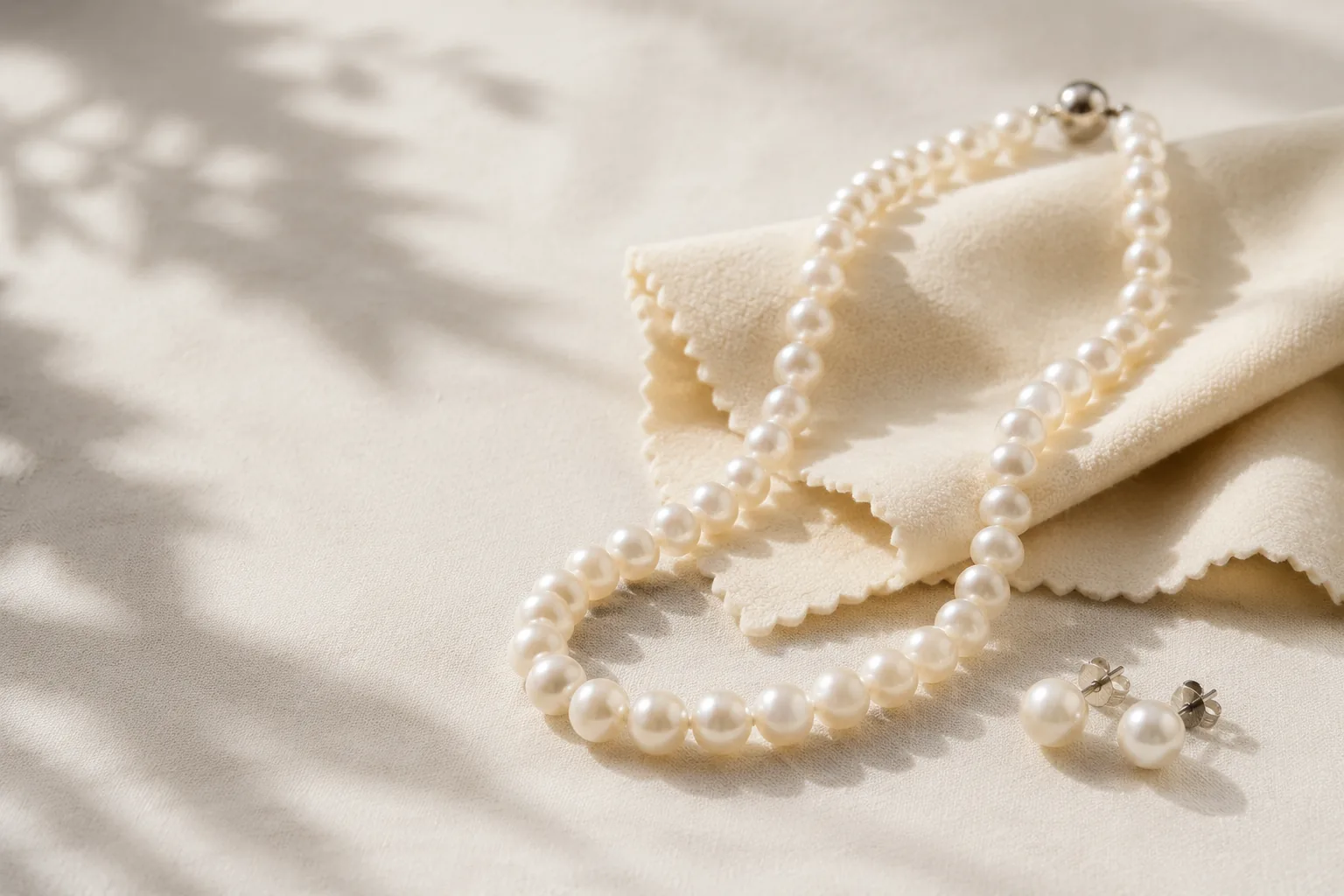
If you are trying to clean pearl earrings, a pearl necklace, or a pearl-accented ring at home, the safest starting point is restraint. Pearls are not cleaned like plain gold chains, sterling silver rings, or diamond studs. The shared rule across the pearl-care guidance reviewed here is simple: wipe gently, use as little moisture as possible, do not soak, do not scrub, and let the piece dry fully before putting it away.
This guide explains how to clean pearl jewelry safely using official care guidance from Pandora, Blue Nile, Missoma, Mejuri, Astrid & Miyu, and material context from GIA. It is written for ordinary upkeep, not restoration. If a pearl is cracked, peeling, cloudy, badly discolored, loose, or sitting on a worn string, home cleaning is no longer the main issue.
Jewelry care recommendations vary by material, treatment, and setting. Always follow the brand or jeweler care instructions for your specific piece.
The Safest Way to Clean Pearl Jewelry at Home
For routine at-home care, use this conservative method:
- Lay the pearl jewelry on a clean, soft cloth.
- Wipe each pearl gently with a dry soft cloth after wear.
- If the pearl has visible surface residue, use a soft cloth that is only lightly damp with lukewarm water.
- Avoid rubbing hard, twisting strands, or dragging the cloth aggressively across the surface.
- Pat dry with a clean soft cloth.
- Leave the piece out on a dry cloth until any moisture has fully evaporated before storage.
This baseline is supported by the official brand guidance in the research package. Pandora says pearls should be gently wiped with a soft, damp cloth and lukewarm water, then patted dry, and notes that pearl materials need extra gentleness and care. Blue Nile advises wiping pearls gently with a soft cloth when removed and says pearls should be completely dry before storage. Missoma says to gently wipe pearls with a soft, damp cloth after wearing, avoid soaking, avoid harsh chemicals, and store pearls in a soft pouch. Astrid & Miyu says freshwater pearls should be kept away from water where possible and cleaned with a microfiber cloth if needed.
Analysis: because these sources differ in how much water they allow, the safest shared approach is not “wash pearls.” It is “wipe pearls.” Use dampness only when a dry cloth is not enough, and keep it minimal.
Why Pearls Need Different Care Than Metal-Only Jewelry
Pearls need different care because they are not just hard decorative stones mounted in metal. GIA identifies pearls as organic gems and describes them as soft, with a Mohs hardness around 2.5. GIA also says pearls can be damaged by heat, acids, perfume, cosmetics, and perspiration.
That material context explains why ordinary jewelry-cleaning assumptions can be risky. A cleaning method that may be suggested for some metal jewelry, such as polishing more firmly, using a chemical dip, or putting a piece into a machine cleaner, should not be transferred to pearls unless the brand or jeweler specifically says it is appropriate for that pearl piece.
Pandora’s guidance also separates pearl care from general jewelry cleaning by saying pearl materials need extra gentleness and care. That distinction matters because many jewelry-care pages include instructions for gold, sterling silver, plated brass, gemstones, or general jewelry, but those instructions do not automatically apply to pearls.
What to Do After Ordinary Wear
The easiest way to keep pearl jewelry cleaner is to reduce what lands on it in the first place. Blue Nile advises putting pearls on after perfume, hairspray, and makeup. The broader source set supports keeping pearls away from perfume, cosmetics, hairspray, and harsh chemicals.
A practical after-wear routine looks like this:
- Remove pearl jewelry before applying more fragrance, lotion, hairspray, or cosmetics.
- After wearing, wipe the pearls gently with a soft dry cloth.
- If the piece feels slightly damp from skin moisture, let it air-dry on a soft cloth before storing.
- Store it separately from harder jewelry that could scratch the pearl surface.
For pearl necklaces, avoid tugging the strand while cleaning. Blue Nile advises not to fully immerse pearl necklaces and says pearl necklaces should be stored flat in a soft cloth bag. GIA says pearl string should be completely dry before wearing and that restringing is appropriate when the string shows wear.
Suggestion: if you wear pearls often, make wiping them after wear part of the same routine as closing clasps and separating chains. It is a small habit, but it reduces the need for deeper cleaning later.
What to Do When Pearls Look Dirty
If pearls look visibly dirty, start with the least aggressive option.
First, try a soft dry cloth. If residue remains, use a clean soft cloth lightly dampened with lukewarm water, then pat the pearls dry. Do not put the jewelry under running water, leave it in a bowl, or soak a strand.
Soap is the part that needs the most caution. Blue Nile’s gemstone care and cleaning page says a soft damp cloth with mild soap and water may be used for deeper pearl cleaning, while also saying pearl necklaces should not be fully immersed and pearls should be completely dry before storage. Pandora’s pearl guidance in the research package mentions lukewarm water and a damp cloth, not soap. Missoma says soft damp cloth and avoid soaking. Astrid & Miyu points to microfiber-cloth cleaning for freshwater pearls and says to keep them away from water where possible.
Analysis: mild soap should be treated as a limited, conditional step, not the default pearl-cleaning method. If your brand’s instructions allow it, use only a tiny amount with a lightly damp cloth, remove any residue with another lightly damp cloth, and dry thoroughly. If your piece includes adhesive, complex settings, old stringing, foil-backed elements, plated metal, or unknown treatments, it is more prudent to ask the seller or a jeweler before using soap.
What Not to Use on Pearl Jewelry
Pearl care is as much about avoiding the wrong tools as choosing the right cloth.
Do not use these at home unless the brand or jeweler gives pearl-specific instructions saying otherwise:
| Avoid | Why it is a concern |
|---|---|
| Soaking or immersion | Blue Nile says not to fully immerse pearl necklaces; Missoma says to avoid soaking; Astrid & Miyu says freshwater pearls should be kept away from water where possible. |
| Scrubbing or harsh rubbing | Pearls are soft organic gems, and the brand guidance favors gentle wiping. |
| Abrasive cleaners | The Mejuri pearl support page cited in the research report advises against abrasive cleaners for pearl jewelry. |
| Polishing cloths | Mejuri’s pearl support page cited in the report says not to use polishing cloths on pearls; some polishing cloths are intended for metals, not pearl surfaces. |
| Steam cleaners | The Mejuri pearl support page cited in the report advises against steam cleaners for pearl jewelry. |
| Ultrasonic cleaners | The Mejuri pearl support page cited in the report advises against ultrasonic cleaners for pearl jewelry. |
| Chemical dips, alcohol, and household cleaners | The source set supports keeping pearls away from harsh chemicals, and GIA says pearls can be damaged by acids, perfume, cosmetics, and perspiration. |
The important distinction is pearl-specific permission. A brand may recommend a polishing cloth for silver or gold on the same care page, but that does not mean the cloth is suitable for pearls.
What to Do After Perfume, Cosmetics, Sweat, Water, or Chemicals
If pearls touch perfume, cosmetics, sweat, water, or household chemicals, do not try to “reset” them with aggressive cleaning. Use calm triage.
For perfume, makeup, hairspray, or perspiration, gently wipe the pearls with a soft cloth as soon as practical. If residue is visible and your piece is not fragile, use a barely damp soft cloth, then pat dry. GIA says pearls can be damaged by heat, acids, perfume, cosmetics, and perspiration, so the goal is to remove surface residue without adding a second problem.
For accidental water exposure, blot the jewelry gently with a soft absorbent cloth. Lay it flat and allow it to dry completely before storage. Pay special attention to pearl strands because moisture can affect the string. GIA says pearl string should be completely dry before wearing.
For household chemicals, stop and inspect before doing more. If the pearl surface looks changed, the setting seems loose, adhesive appears affected, or the string looks weakened, further home cleaning may make the problem worse. Ask the original brand or a jeweler for guidance.
This content provides shopping and educational information, not medical advice. Consult a qualified clinician or dermatologist about persistent irritation or reactions.
How to Dry and Store Pearls After Cleaning
Drying is part of cleaning. Blue Nile says pearls should be completely dry before storage, and the shared brand guidance supports minimal moisture and full drying before putting pearls away.
After wiping pearls:
- Pat them dry with a clean soft cloth.
- Place them on a dry cloth in a safe spot.
- Let the piece sit until any dampness has fully disappeared.
- Store separately from harder gems, chains, and textured metal pieces.
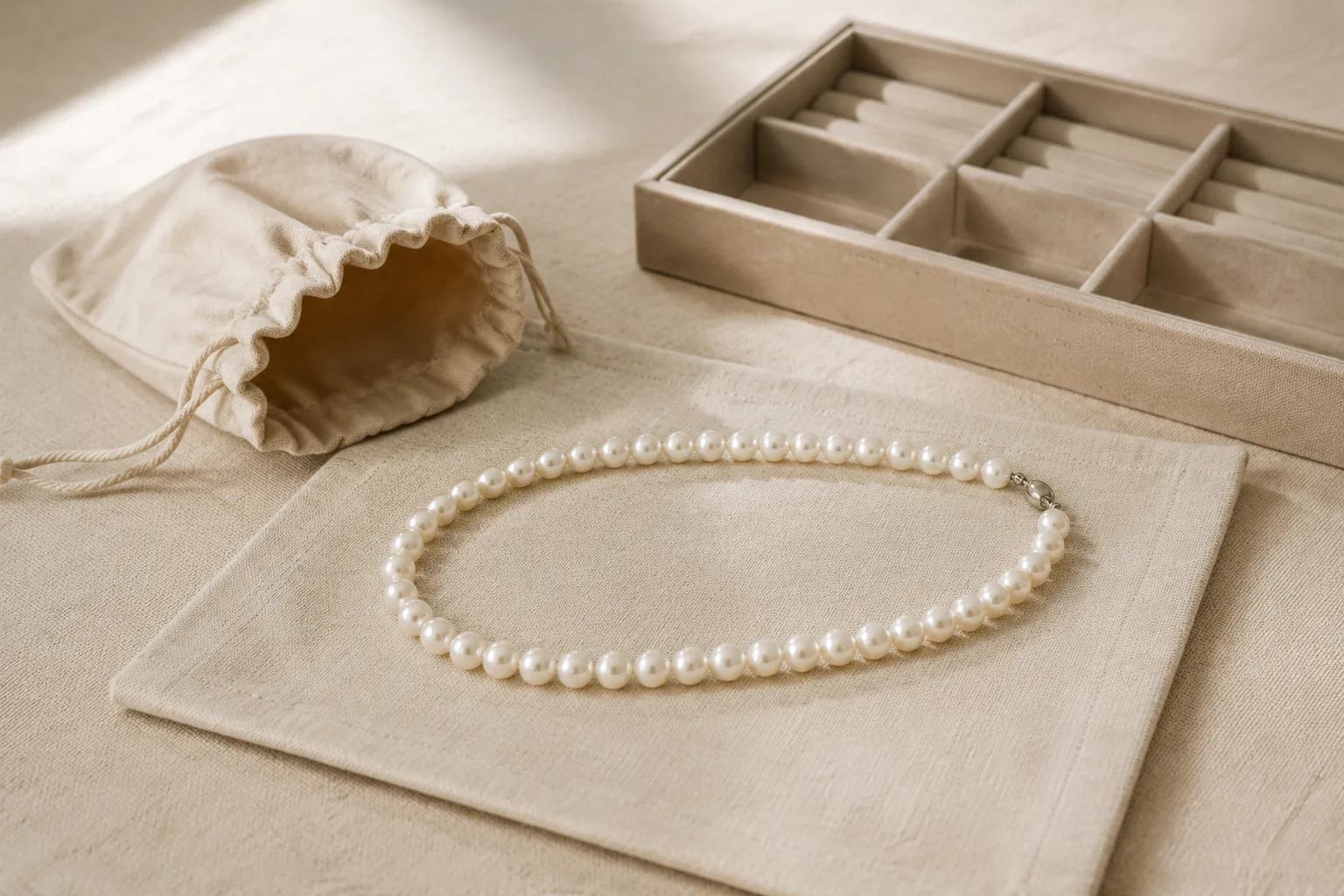
Blue Nile advises storing pearl necklaces flat in a soft cloth bag and other pearl jewelry in a fabric-lined box. Blue Nile’s pearl guide also says to store pearls in a soft cloth bag. Missoma says to store pearls in a soft pouch to prevent scratches. Astrid & Miyu says freshwater pearls should be stored in a sealed pouch.
Analysis: the sources agree on soft, protective storage, but they do not establish one universal storage container for every pearl piece. For most everyday jewelry owners, the practical rule is to keep pearls separated, cushioned, dry after cleaning, and away from heat and chemicals. For necklaces, flat storage is especially useful because it reduces strain on the string.
When to Stop Cleaning and Ask the Brand or a Jeweler
Stop home cleaning when the issue looks structural, chemical, or beyond surface residue.
Ask the original brand or a jeweler if you notice:
- Cracks, peeling, pits, or unusual cloudiness on the pearl surface
- Strong discoloration after perfume, cosmetics, sweat, water, or chemical exposure
- A loose pearl, loose post, unstable setting, or visible adhesive issue
- A necklace or bracelet string that is stretched, frayed, dirty between pearls, or slow to dry
- A clasp problem that makes the piece unsafe to wear
- An antique, inherited, or unknown pearl piece with no care history
GIA says restringing is appropriate when the pearl string shows wear. That is a repair boundary, not a cleaning trick. If the string is compromised, wiping the pearls more will not solve the underlying issue.
Mejuri’s main jewelry-care URL is part of the required source set for this article and should be checked before publication for current brand-wide care context. The research package also cites a Mejuri pearl support page that advises against abrasive cleaners, polishing cloths, steam cleaners, and ultrasonic cleaners for pearl jewelry, but notes that this page differs from the title record’s Mejuri URL. For publication, Mejuri-specific wording should be verified directly against the current official page and region.
Brand Guidance Compared: Where the Sources Agree and Differ
The table below summarizes the evidence record used for this draft. It separates official pearl-specific instructions from broader care-page context where the source scope matters.
| Source | What it supports for pearl care | Important limit |
|---|---|---|
| Pandora | Wipe pearls gently with a soft damp cloth and lukewarm water, then pat dry; pearl materials need extra gentleness and care. | Do not extend general jewelry-cleaning advice to pearls unless Pandora says it applies to pearls. |
| Blue Nile gemstone care | Put pearls on after perfume, hairspray, and makeup; wipe gently after removal; use a soft damp cloth with mild soap and water for deeper cleaning; do not fully immerse pearl necklaces; dry completely before storage. | Soap is supported here, but not equally stated across all other brand sources. |
| Blue Nile pearl guide | Wipe pearls with a soft cloth after wear, periodically clean with mild soap and water, and store in a soft cloth bag. | Supporting source in the package; still not a universal rule for all pearl constructions. |
| Missoma | Gently wipe pearls with a soft damp cloth after wearing, avoid soaking, avoid harsh chemicals, and store in a soft pouch to prevent scratches. | Pearl guidance appears within a broader brand-wide jewelry-care page. |
| Mejuri | The research report identifies a pearl support page advising against abrasive cleaners, polishing cloths, steam cleaners, and ultrasonic cleaners for pearl jewelry. | The report notes an information gap for the main Mejuri jewelry-care URL, so current wording should be rechecked before publication. |
| Astrid & Miyu | Freshwater pearls should be kept away from water where possible; direct cosmetics contact can cause marks or fading; clean with a microfiber cloth if needed; store in a sealed pouch. | The page also covers other materials, so non-pearl instructions should not be applied automatically to pearls. |
| GIA | Pearls are organic gems, relatively soft at about 2.5 Mohs, and can be damaged by heat, acids, perfume, cosmetics, and perspiration; worn strings may need restringing. | GIA provides material and care context, not product-specific instructions for a particular brand piece. |
The main agreement is clear: pearl cleaning should be gentle and low-moisture. The main difference is soap. Blue Nile allows mild soap and water for deeper cleaning, but other cited brand instructions do not all include soap as a pearl-cleaning step. A conservative article should therefore present soap as conditional and brand-dependent.
Conclusion: Clean Pearls Like a Delicate Material, Not Like Metal
The safest answer to how to clean pearl jewelry safely is to keep the routine simple: wipe with a soft cloth after wear, use a lightly damp soft cloth only when needed, avoid soaking and scrubbing, and let pearls dry completely before storage. Keep pearls away from perfume, cosmetics, hairspray, heat, sweat buildup, and household chemicals as much as practical.
For visible dirt, mild soap is not a universal pearl rule. Blue Nile allows mild soap and water for deeper cleaning, but the broader evidence supports using soap cautiously and only when your piece’s own care instructions do not rule it out. Avoid ultrasonic cleaners, steam cleaners, abrasive cleaners, chemical dips, alcohol, household cleaners, and metal polishing cloths unless the brand gives pearl-specific permission.
Home care is maintenance. If the pearl surface, string, adhesive, clasp, or setting seems affected, stop cleaning and ask the original brand or a jeweler. That boundary is part of safe pearl ownership.