



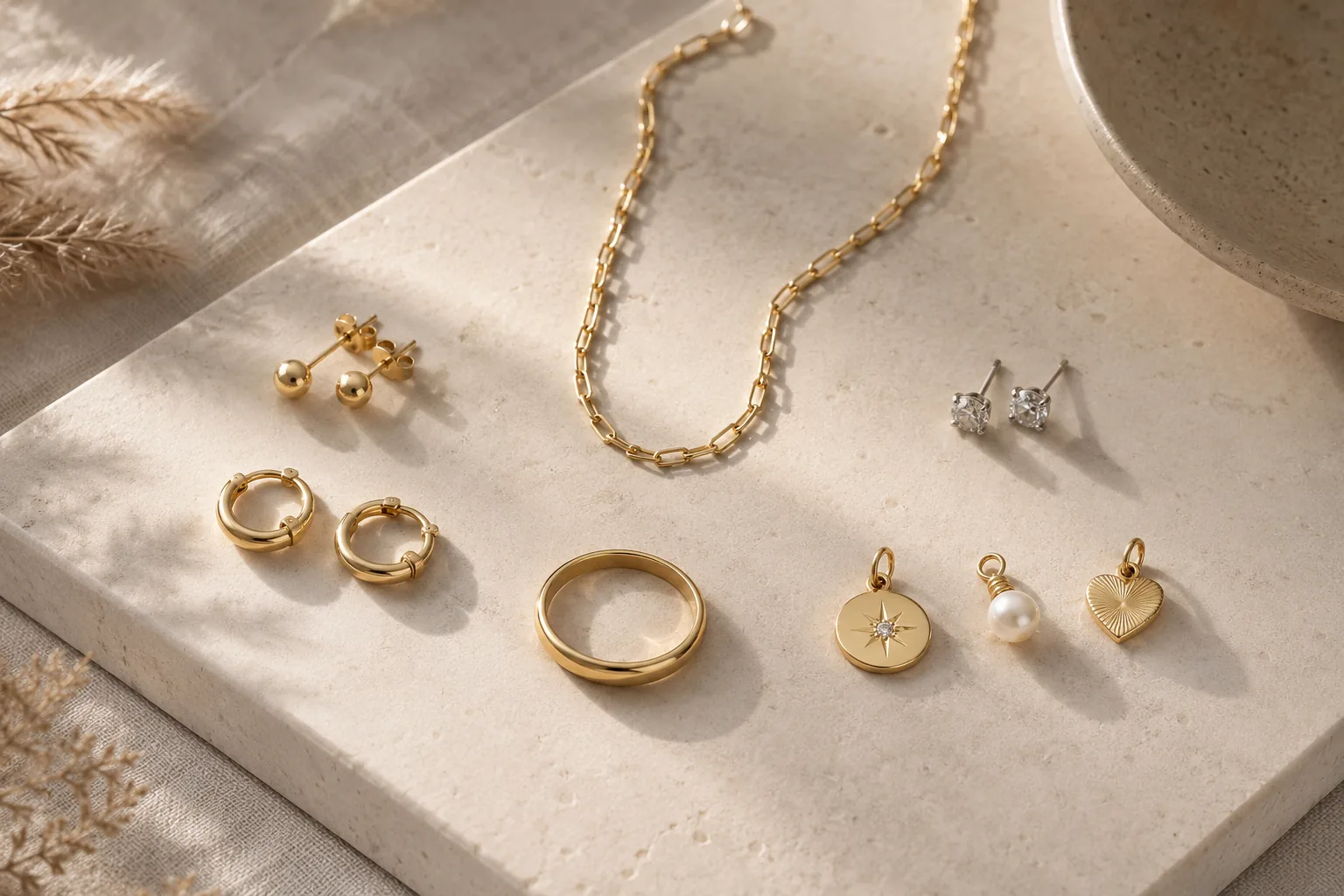
A starter jewelry wardrobe is not a list of pieces everyone must own. It is a small set of jewelry you can wear often: earrings that do not fight your clothes, a chain that works with most necklines, a ring or two that fits your hands and habits, and optional charms or pendants that make the set feel personal.
The practical question is where to start. If you buy the most expressive piece first, you may end up with something you love in theory but rarely wear. If you buy only the cheapest version of every category, you may learn your style but run into plating wear, sizing mistakes, or care limits sooner than expected. A better approach is to build in stages: start with repeat-wear pieces, learn your material preferences, then spend more only where the piece earns its place.
This guide uses official material and care disclosures from accessible jewelry brands as examples, alongside U.S. Federal Trade Commission consumer guidance on jewelry materials. Brand statements are treated as brand claims, not independent proof of long-term wear, sensitivity outcomes, sustainability, or universal durability.
Start With Repeat Wear, Not a Fixed Checklist
A useful starter jewelry wardrobe is personal, but the buying logic is fairly consistent. Prioritize pieces that score well on five practical questions:
| Buying question | Why it matters |
|---|---|
| Will I wear this several times a week? | Frequent wear helps justify better materials or construction. |
| Is the fit forgiving? | Earrings and necklaces are often easier to start with than rings. |
| Does it work with my usual clothes? | A piece that fits your real wardrobe will get more wear than a fantasy purchase. |
| Is the material clear? | Similar-looking gold-tone pieces can have different construction and care needs. |
| Can I style it multiple ways? | Simple bases make later additions, such as charms or stacking pieces, easier. |
As editorial guidance, the lowest-regret order for many beginners is: everyday studs, a simple chain, small hoops or huggies, one carefully chosen ring style, and then charms or more expressive pieces. That is not a sourced industry rule. It is a practical sequence based on fit risk, style flexibility, and repeat wear.
The Lower-Risk First Pieces: Studs, Chains, and Small Hoops
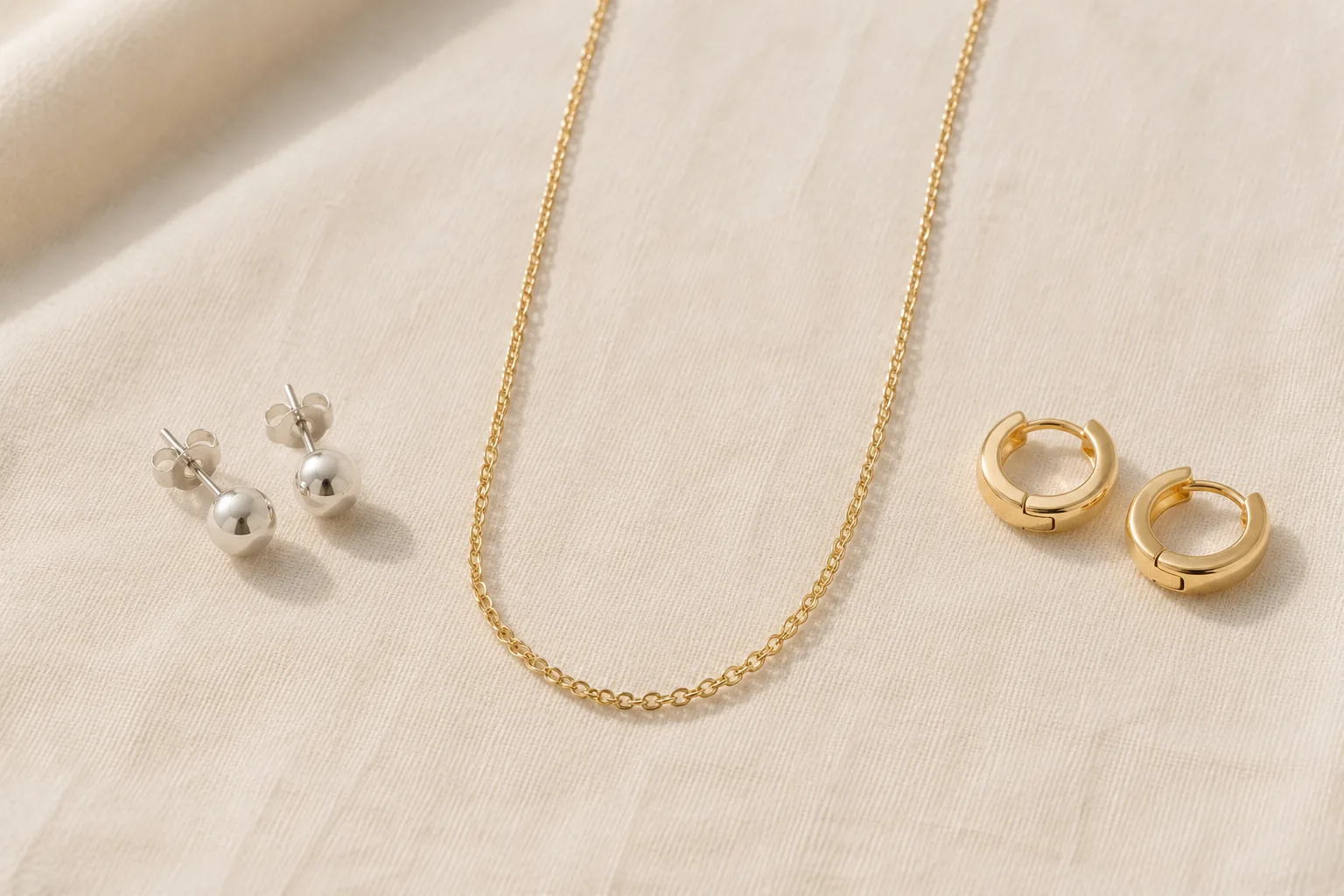
Everyday studs, simple chains, and small hoops are strong early candidates because they tend to be easy to repeat and simple to style. The key is choosing versions that match your lifestyle, metal preference, and care tolerance.
Everyday Studs
Stud earrings are often a useful first purchase because they can be worn with casual clothes, workwear, and dressier outfits without demanding much styling effort. A small metal ball, bezel-set stone, pearl-style stud, or simple geometric shape can act as a daily base.
For beginners, the main decisions are post material, backing style, size, and care. If you have a history of irritation, do not assume any earring is safe for every wearer. Look for clear material disclosure, and consult a qualified clinician or dermatologist about persistent reactions. For newly pierced ears or sensitive situations, follow professional piercing and medical guidance rather than relying on general shopping advice.
A good first pair should be simple enough that you do not need to plan an outfit around it. If you are unsure, choose a size that feels proportional to your face and hairstyle rather than the largest stud you can find.
Simple Chains
A plain chain or small pendant chain is another high-use starter piece. It can sit alone, hold a pendant, or become the base for future layering. A medium-fine chain usually gives beginners more flexibility than an ultra-delicate chain that feels too fragile or a heavy chain that becomes the whole outfit.
Before buying, check the chain length, clasp type, metal, and whether the pendant can be removed. If you want to add charms later, verify the bail size, clasp mechanism, and product compatibility rather than assuming a charm will fit.
A starter chain does not have to be solid gold. But if you expect to wear it very often, especially against skin, perfume, sunscreen, or sweat, material and care expectations matter more than they do for an occasional piece.
Small Hoops or Huggies
Small hoops and huggies can add more presence than studs while staying practical for repeat wear. They are also a good way to learn whether you prefer polished metal, pavé-style sparkle, thicker profiles, or minimal wire shapes.
Comfort depends on diameter, weight, closure, and ear placement. A hoop that looks small online may still feel too wide, heavy, or difficult to close for your ear. Product photos, model views, and measurements help, but they do not replace checking return rules for earrings before purchase.
Where Charms Fit
Charms are best treated as a second-stage purchase unless you are deliberately building around a charm bracelet or pendant system from the start. They can make a starter jewelry wardrobe feel more personal, but they also introduce compatibility questions.
Pandora has an official jewelry materials page, and the brand says it uses materials including solid sterling silver, 14k gold, 18k gold, gemstones, cultured pearls, and man-made stones. Monica Vinader’s U.S. jewelry category page shows shopping areas including charms, chain necklaces, pendant necklaces, gold vermeil, sterling silver, 14K solid gold, lab-grown diamonds, pearls, and gemstones. Those pages are useful for understanding the categories and materials a brand presents, but they do not replace product-page verification for a specific charm, chain, bracelet, or clasp.
The main risk with charms is assuming interchangeability. A charm may require a specific bracelet, chain thickness, bail size, clasp, or brand system. Even if two pieces look compatible in photos, verify the product details before buying. For personalized or engraved charms, also check whether the item is returnable, whether engraving affects timing, and whether the piece has special care limits.
As analysis, charms are most useful after you already own a base piece you like wearing. A chain you never reach for will not become more wearable just because it has a meaningful charm on it.
Why Rings Need More Caution
Rings are tempting early purchases because they are visible to you while you wear them. They can also be higher-risk starter pieces because fit matters more than many beginners expect.
Finger size can vary by hand, finger, temperature, time of day, and ring width. A wide band may feel tighter than a slim band in the same size. Stacking rings can change how a size feels. A ring that fits at the base of the finger may spin if the knuckle is larger, while a ring sized too tightly can be uncomfortable.
This is practical analysis, not a sourced universal rule: rings usually deserve more caution than studs or simple chains because a small sizing mistake can make the piece hard to wear. Before buying, check the seller’s size guide, return or exchange terms, resizing expectations, and whether the material or design is typically resizable. Do not assume plated, stone-set, eternity, or highly detailed rings can be resized easily.
For a first ring, consider a simple band, signet-inspired style, or low-profile stone setting rather than a tall statement ring. If you plan to stack rings, start with one anchor ring and add slowly. That gives you time to learn what width, weight, and spacing feel good on your hands.
Materials to Understand Before Spending More
Material language is one of the most important parts of a starter jewelry wardrobe. Two gold-tone pieces can look similar online but have different base metals, plating layers, care needs, and long-term expectations.
For U.S.-focused material language, the Federal Trade Commission provides Jewelry Guides for the jewelry, precious metals, and pewter industries and consumer guidance on buying platinum, gold, and silver jewelry. The FTC approved final revisions to its Jewelry Guides in 2018. These sources support distinguishing among solid gold, gold-plated jewelry, vermeil, sterling silver, and plated finishes in consumer education.
Sterling Silver
Sterling silver is 92.5% silver, according to the FTC source set. It is a common starter material used across earrings, chains, rings, and charms.
Sterling silver may still require care, and some brands plate silver with rhodium or gold-tone finishes. If a product is described as sterling silver, check whether it is plain sterling silver, rhodium-plated sterling silver, gold vermeil, or another plated construction. These differences can affect color, surface wear, and care instructions.
Solid Gold
Solid gold jewelry uses gold alloy throughout the piece rather than a surface layer over another metal. Gold purity is usually expressed by karat, such as 14k or 18k, although the exact alloy mix can vary. The supplied research supports discussing solid gold as distinct from plated jewelry and vermeil, but it does not verify the alloy composition of specific products.
As a suggestion, solid gold is worth considering when a piece has proven itself as a frequent-wear staple, such as a daily chain, favorite studs, wedding-adjacent ring, or hoop style you know you will repeat. It may be less urgent for trend-led pieces, occasional charms, or styles you are still testing.
Gold Plating and Vermeil
Gold-plated jewelry has a layer of gold over another material. The FTC consumer source set supports the caution that gold plating can wear away over time. That does not mean plated jewelry is always a poor choice. It means buyers should treat it as a different construction from solid gold.
Plated jewelry can be a reasonable way to test a silhouette, color, or trend before spending more. The tradeoff is that surface wear may matter more, especially on rings, bracelets, and pieces exposed to friction, water, sweat, perfumes, lotions, or frequent handling.
Vermeil is gold plated over sterling silver, according to the FTC source set. For shoppers, that makes it different from gold plating over a non-precious base metal. However, vermeil still has a gold layer at the surface, so care and wear expectations should not be treated as identical to solid gold.
When comparing vermeil pieces, look for the base metal, gold karat, and plating thickness when the brand discloses it. Missoma, for example, says its 18k gold vermeil uses a sterling-silver base with 2.5 microns of gold. That is a brand-level disclosure and should still be checked against the specific product page before purchase.
How Brand Material Pages Can Help
Official brand material pages can help you understand how a seller describes its jewelry, but they should not be read as independent proof of performance. Use them to compare language, construction, and care expectations, then verify the specific product.
Pandora says it uses solid sterling silver, 14k gold, 18k gold, gemstones, cultured pearls, and man-made stones. Mejuri says it offers piercing-grade titanium and stainless steel, emphasizes durability and transparency, and makes traceability claims for gemstones. Missoma says its 18k gold vermeil uses sterling silver with 2.5 microns of gold; it also says its sterling silver is 92.5% silver with rhodium plating, and that its stainless steel is PVD plated and marketed as hypoallergenic and sweat-proof. Because sensitivity and wear can vary by person and product, treat terms such as “hypoallergenic” and “sweat-proof” as brand marketing or product claims unless independently verified.
Monica Vinader’s U.S. jewelry category page confirms offering areas such as charms, chain necklaces, pendant necklaces, gold vermeil, sterling silver, 14K solid gold, lab-grown diamonds, pearls, and gemstones. Astrid & Miyu says plated brass should avoid water, sweat, and perfumes. It also says sterling silver is 92.5% silver and may be plated, and that pearls and gemstones need extra care.
These disclosures are useful for comparison, but a category page or materials page does not replace checking the exact item you plan to buy.
A Practical Buying Sequence
The following sequence is editorial guidance for building slowly. It is designed to reduce regret, not to prescribe a universal style.
| Stage | Category | What to buy first | Main risk | When to upgrade |
|---|---|---|---|---|
| 1 | Studs | Simple everyday pair | Post material, backing comfort, earring return rules | When you wear them often and know your preferred size |
| 2 | Chain | Plain chain or small pendant chain | Length, clasp, tangling, plating wear | When it becomes a near-daily piece |
| 3 | Small hoops | Huggies or compact hoops | Weight, closure, diameter | When you know your ideal hoop size |
| 4 | Ring | One simple ring style | Sizing, width, resizing assumptions | After confirming fit and wear habits |
| 5 | Charms | One charm for an existing base | Compatibility, personalization return limits | When the base chain or bracelet is already proven |
Stage 1: Choose Everyday Studs
Start with earrings if you wear earrings regularly. Choose a pair that fits your daily life: small enough for repeat wear, visible enough to feel intentional, and clearly disclosed enough that you understand the material.
If you are choosing between a highly decorative pair and a simpler pair, the simpler pair is usually the better starter choice. You can add personality later with hoops, drops, charms, or an ear stack.
Stage 2: Add a Simple Chain
A chain is the backbone of many starter wardrobes. It can carry a pendant, layer with another necklace, or sit alone. Pay attention to length first: a chain that always hits the wrong neckline will stay in the box.
Material expectations matter here. A plated chain may be fine for occasional wear, but if you want a necklace you rarely remove, verify the material and care guidance carefully. Do not assume any piece is suitable for showering, swimming, sweating, or sleeping unless the seller gives specific guidance for that item.
Stage 3: Try Small Hoops or Huggies
Small hoops are a useful next step because they shift the look without requiring a full styling strategy. Huggies can feel more polished than studs while staying compact.
Check the closure style and measurements. If the hoop is for a second or third piercing, confirm the diameter works for that placement. If the product includes stones, pearls, enamel, adhesive-set details, or plating, follow the brand’s care guidance rather than generic cleaning advice.
Stage 4: Test Rings Carefully
Do not buy a full ring stack before you know your size and comfort preferences. Start with one ring you can wear alone. If you want a stack, add the second ring only after the first has worked with your daily routine.
Rings experience more friction than many necklaces and earrings, so plating wear can be more visible over time. This is one reason a plated ring may be a good style test, while a more durable construction may make sense once you know the shape is a keeper.
Stage 5: Add Charms or Expressive Pieces
Once you know your base pieces, charms become more useful. A charm can make a chain or bracelet feel personal without replacing the whole wardrobe. This is where initials, symbols, birthstones, travel references, or meaningful motifs can work well.
Before buying, verify compatibility and return rules. Personalized pieces may have different policy limits, and gemstone or pearl charms may have special care needs.
What to Verify Before Buying
Before purchasing earrings, chains, rings, or charms, check current product and policy details. This is especially important because prices, stock, product specifications, care instructions, warranty terms, and return rules can change.
Verify the exact material. Look for whether the item is solid gold, sterling silver, gold vermeil, gold plated, stainless steel, brass, titanium, or another construction. If the piece is gold-tone, do not assume it is solid gold.
Verify plating details when relevant. If plating thickness, PVD coating, rhodium plating, or vermeil construction matters to your decision, look for product-level disclosure. A brand-level materials page may not answer every item-specific question.
Verify nickel or sensitivity language if available. Do not treat the absence of a warning as a guarantee. Sensitivity varies, and this article is shopping education, not medical advice.
Verify earring return rules. Earrings may be treated differently for hygiene reasons depending on seller policy and location. Check the current policy before buying.
Verify ring sizing, exchange, and resizing terms. Measure carefully, consider band width, and do not assume a ring can be resized.
Verify charm compatibility. Check bail size, chain thickness, clasp type, bracelet system, and whether the charm is designed for the base piece you own.
Verify pearl, gemstone, coating, adhesive, and setting care. Astrid & Miyu says pearls and gemstones need extra care, and plated brass should avoid water, sweat, and perfumes. That is a useful example of why care needs can differ by material and construction.
Verify current price, stock, warranty, and repair terms. The supplied research does not verify current prices, promotions, stock, warranties, repairs, or long-term wear data.
Starter Wardrobe Examples by Style
These formulas are illustrative, not product recommendations. They are meant to help you choose a direction without inventing prices or implying that one brand is universally best.
Minimal Everyday Wardrobe
Choose small studs, a plain chain, and compact hoops in one metal color. This is the cleanest route if you want jewelry that works with most outfits and does not require much styling.
Material suggestion: sterling silver, solid gold, or clearly disclosed vermeil can all fit, depending on budget and wear frequency. If choosing plated pieces, remember that gold plating can wear away over time and follow care instructions closely.
Mixed-Metal Starter Wardrobe
Choose one silver-tone base and one gold-tone base, such as silver studs with a gold-tone chain, or gold hoops with a sterling silver ring. Mixed metals can help you avoid feeling locked into one color.
Material suggestion: compare construction rather than color alone. A gold-tone plated piece, gold vermeil piece, and solid gold piece are not the same even if they look similar in photos.
Personalized Starter Wardrobe
Choose a simple chain or bracelet first, then add one charm after confirming compatibility. This works well for shoppers who want initials, symbols, birthstones, or meaningful motifs.
Material suggestion: verify whether the charm uses sterling silver, gold vermeil, solid gold, gemstones, cultured pearls, man-made stones, or plated base metals. Pandora and Monica Vinader can be used as examples of brands with charm or pendant-related categories and material disclosures, but specific pieces still need product-page review.
Upgrade-Focused Wardrobe
Start with affordable or mid-range versions only where you are still learning your style. Spend more selectively on the pieces you wear most: perhaps a daily chain, favorite studs, or hoops in your ideal size.
Material suggestion: solid gold may make more sense for high-frequency pieces once you know the style works for you. Vermeil or plated jewelry may be useful for testing silhouettes, occasional wear, or trend-led pieces, provided you understand the care tradeoffs.
Common Claims to Treat Carefully
Some jewelry language sounds decisive but needs context. Avoid turning brand marketing into universal shopping rules.
Do not assume “hypoallergenic” means guaranteed irritation-free for every wearer. Missoma says its stainless steel is PVD plated and markets it as hypoallergenic and sweat-proof, but that should be attributed to the brand and checked against your own sensitivity history.
Do not assume “traceable” or “sustainable” settles every sourcing question. Mejuri makes traceability claims for gemstones, but this guide does not independently verify full supply-chain traceability or ethical superiority.
Do not assume plated jewelry is always suitable for water, sweat, perfume, or sleep. Astrid & Miyu says plated brass should avoid water, sweat, and perfumes. Other materials and brands may have different instructions, so follow the guidance for the specific piece.
Do not assume one cleaning method works for every item. Jewelry care recommendations vary by material, treatment, coating, gemstone, pearl, adhesive, and setting. Always follow brand or jeweler care instructions for your specific piece.
Conclusion: Build the Base First, Then Add Personality
The best starter jewelry wardrobe is small, wearable, and honest about tradeoffs. Begin with the pieces most likely to repeat: everyday studs, a simple chain, and small hoops or huggies. Approach rings more cautiously because sizing, width, stacking plans, and resizing expectations can complicate the purchase. Add charms once you already have a compatible base chain, bracelet, or charm system you enjoy wearing.
Use official brand material pages as comparison tools, not as proof of universal performance. Use FTC guidance to understand broad U.S.-focused material terminology such as sterling silver, gold plating, vermeil, and solid gold. Then verify the product page before buying: exact material, plating details, earring policies, ring sizing, charm compatibility, gemstone or pearl care, current price, stock, warranty, and repair terms.
A starter jewelry wardrobe does not need to be finished quickly. It should teach you what you actually wear, where better materials are worth it, and which expressive pieces deserve space in your everyday rotation.
Sources
- Federal Trade Commission: Jewelry Guides
- Federal Trade Commission: Buying Platinum, Gold, and Silver Jewelry
- Federal Trade Commission: FTC Approves Final Revisions to Jewelry Guides
- Pandora: Jewelry Materials
- Mejuri: Materials
- Missoma: Our Metals
- Monica Vinader: Jewellery
- Astrid & Miyu: Jewellery Care