



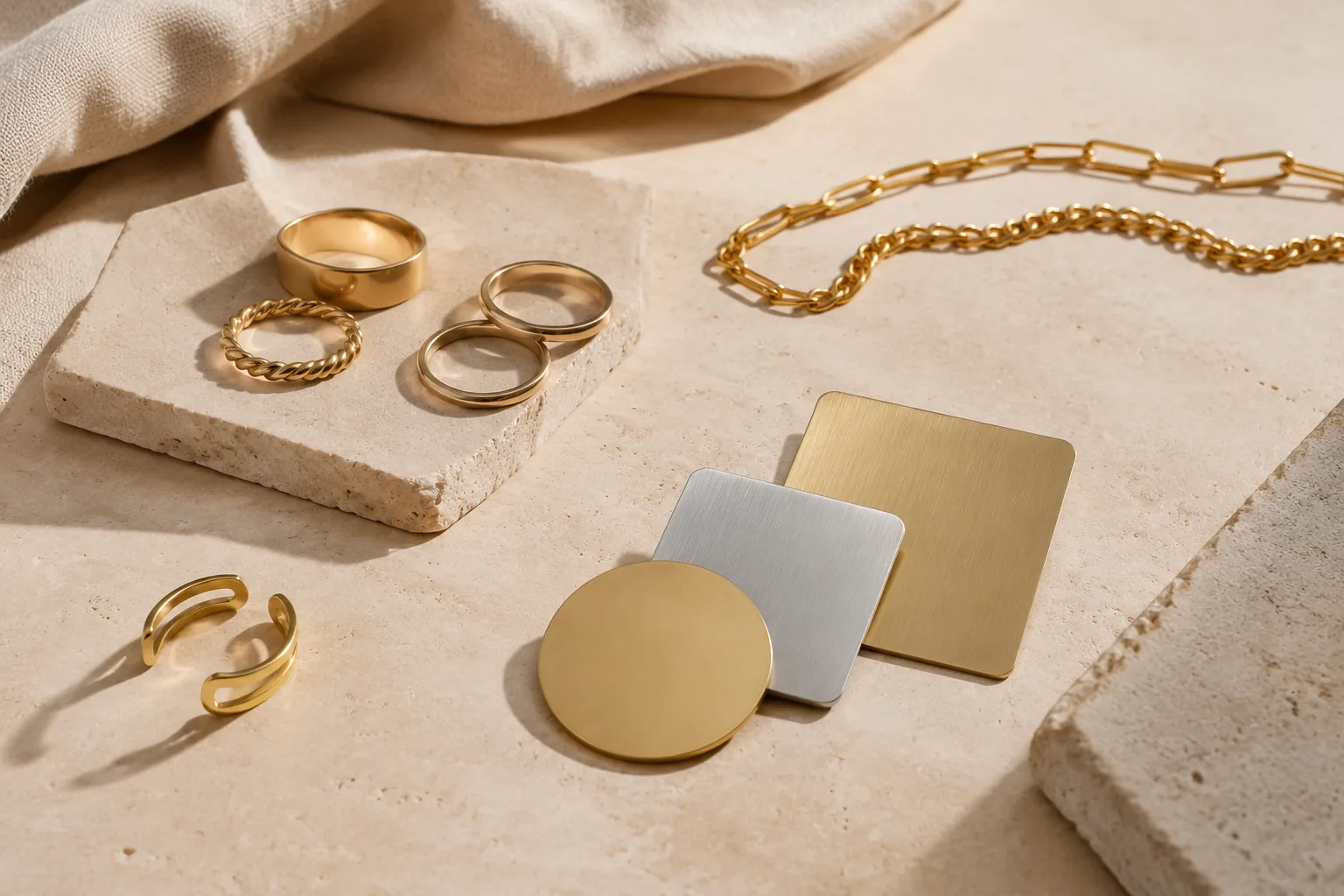
If you are comparing two gold-tone pieces and one says gold vermeil while the other says gold plated, the practical question is not simply whether one is “real gold.” It is what sits under the gold layer, how much of that gold layer is disclosed, and whether the seller gives enough material detail to justify the price.
The short version: gold vermeil is a more specific type of plated jewelry. In U.S. terminology, vermeil requires a sterling silver base and a gold or gold-alloy coating that meets minimum fineness and thickness requirements. Ordinary gold-plated jewelry is broader. It may be plated over brass, copper, stainless steel, sterling silver, or another base metal, depending on the product disclosure.
That base metal matters. Sterling silver under vermeil gives you a precious-metal base beneath the gold color. Brass or other base metals under ordinary plating may still be a reasonable choice, especially for trend-led designs, but they do not represent the same material proposition.
Gold Vermeil vs Gold Plated: The Short Answer
Gold vermeil is plated jewelry with a sterling silver base. Under the U.S. FTC Jewelry Guides, the term “vermeil” may be used for an industry product when it has a sterling silver base, a gold or gold-alloy coating on all significant surfaces, gold fineness of at least 10 karat, reasonable durability, and a minimum thickness equivalent to 2.5 microns of fine gold. The FTC also warns that “vermeil” can be misleading if the sterling silver is covered with another base metal, such as nickel, before the gold layer, unless that structure is disclosed. Source: 16 CFR § 23.4.
Gold-plated jewelry is a wider category. The U.S. FTC Jewelry Guides address gold plate, gold electroplate, gold filled, rolled gold plate, and gold overlay separately, so these terms should not be treated as interchangeable. Source: 16 CFR § 23.3.
The buying takeaway is simple: vermeil usually signals a sterling silver base plus a defined gold coating standard in the U.S. Ordinary gold plating tells you there is a gold or gold-alloy coating, but you still need to check the base metal, plating thickness if disclosed, and care expectations.
Vermeil is still plated jewelry. It should not be described as solid gold.
What Gold Vermeil Means
For beginner shoppers, gold vermeil means a gold layer over sterling silver. Sterling silver is commonly described as 92.5% silver alloyed with other metals, often copper, though each brand’s exact disclosure should be checked.
In the U.S., the FTC definition gives the term a specific structure: sterling silver base, gold or gold-alloy coating on significant surfaces, at least 10k gold fineness, reasonable durability, and a minimum gold thickness equivalent to 2.5 microns of fine gold. That is why vermeil is more specific than a generic “gold plated” label.
The UK uses a different framework. UK guidance from the British Hallmarking Council says descriptions for gold-plated silver articles should include both “gold-plated” and “silver” wording, and that “vermeil” may be used additionally if the description is not misleading. It also says gold-plated silver articles are hallmarked as silver, not as gold. Source: GOV.UK guidance on gold-plated silver articles.
That country context matters. A U.S. vermeil thickness rule should not be presented as a universal global rule for every market.
What Gold-Plated Jewelry Means
Gold-plated jewelry means a layer of gold or gold alloy has been applied over another material. The important part is that the base metal can vary.
That base might be brass, copper, stainless steel, sterling silver, or another alloy. It may also involve additional coating systems or finishes, depending on the brand and product. Because “gold plated” is broad, the phrase alone does not tell you enough to compare value.
Brand disclosures show why this matters. Missoma’s official metals page, according to the supplied research report, describes its 18k gold vermeil as sterling silver electroplated with 2.5 microns of solid gold. The same report says Missoma describes its 18k gold-plated jewelry as gold electroplated onto brass, with two microns on rings, pendant necklaces, and bracelets, and one micron on earrings. Source: Missoma Our Metals.
Astrid & Miyu provides another example. According to the supplied research report, its materials help page distinguishes recycled sterling silver pieces from plated brass pieces, saying plated brass is used for bold statement jewelry and plated in 18k yellow gold, 18k rose gold, or rhodium. Sources: Astrid & Miyu materials help page and Astrid & Miyu jewellery care.
The analysis for shoppers: do not assume all gold-tone pieces from one brand use the same base metal. A brand may sell both vermeil and ordinary plated designs.
Why the Base Metal Changes Value
The base metal changes what you are paying for beneath the gold color.
With vermeil, the gold layer sits over sterling silver. That gives the piece a precious-metal base even if the visible surface is plated. In analysis terms, this is the main reason vermeil often sits in a demi-fine price position: it is not solid gold, but it is usually materially different from gold plating over brass.
With ordinary gold plating over brass or another base metal, you may be paying more for design, scale, branding, and finish than for precious-metal content. That can still make sense. Brass can support bold, sculptural, or trend-driven jewelry at a lower price than sterling silver or solid gold. But it is a different value proposition.
Mejuri’s materials page, according to the supplied research report, describes 18k gold vermeil as a thick layer of solid gold over sterling silver, says it is never brass, and says its vermeil has a 2.5-micron gold layer. Source: Mejuri Materials.
Monica Vinader’s gold-vermeil category page, according to the supplied report, describes its gold pieces as recycled gold vermeil: a thick layer of 18ct gold over recycled silver. The same report notes that the checked Monica Vinader pages did not disclose an exact vermeil micron thickness. Sources: Monica Vinader About, Monica Vinader 18ct Gold Vermeil, and Monica Vinader Gold Vermeil Infinity Ring.
The practical point is not that vermeil has strong resale value. Ordinary consumer jewelry should not be treated as a guaranteed investment. The point is that sterling silver under the gold layer is a more substantial material disclosure than an unspecified base metal.
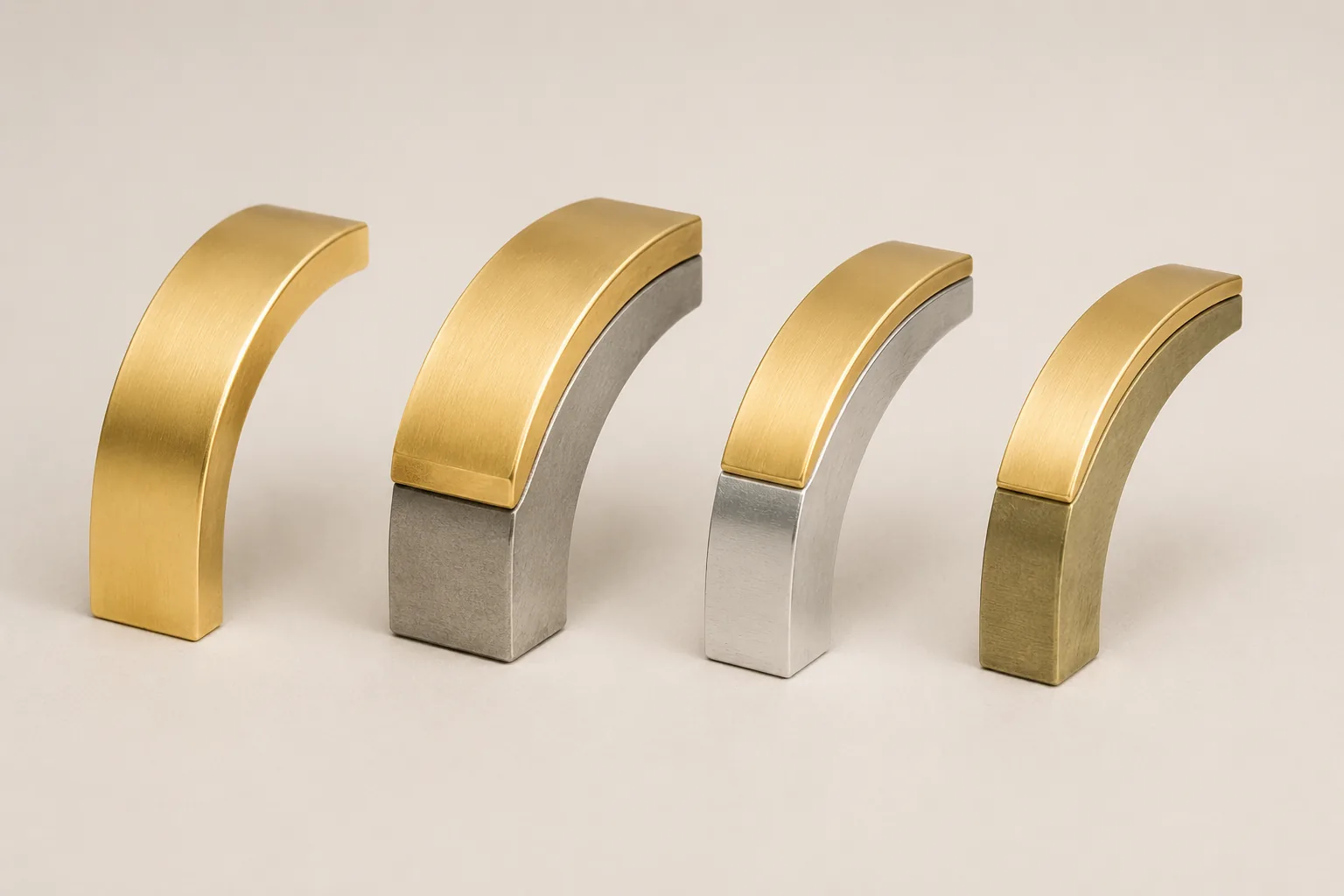
Brand Examples: How Material Language Differs
These brand examples are disclosure examples, not a ranking and not a hands-on durability test.
Mejuri: The supplied report says Mejuri describes 925 sterling silver as 92.5% pure silver plus 7.5% copper, and says its 18k gold vermeil uses a 2.5-micron gold layer over sterling silver. Mejuri also claims its vermeil pieces are long-lasting and hypoallergenic. Those statements should be treated as Mejuri brand claims, not independent clinical or durability proof. Source: Mejuri Materials.
Missoma: The supplied report says Missoma describes 18k gold vermeil as sterling silver electroplated with 2.5 microns of gold, while its 18k gold-plated jewelry is electroplated onto brass with different disclosed micron levels by product type. This makes Missoma a useful example of why shoppers should check the exact product material, not just the brand name. Source: Missoma Our Metals.
Monica Vinader: The supplied report says Monica Vinader describes its gold vermeil as a thick layer of 18ct gold over recycled silver. A checked product page included 5-year warranty language, possible repair, and replating if vermeil loses color. The report did not find exact vermeil micron thickness in the checked pages. Sources: Monica Vinader 18ct Gold Vermeil and Gold Vermeil Infinity Ring.
Astrid & Miyu: The supplied report says Astrid & Miyu distinguishes recycled sterling silver pieces from plated brass pieces and directs shoppers to product details. Its plated-care guidance warns against showering, bathing, swimming, handwashing with rings, and exercising in plated pieces, and says jewelry should be last on and first off. Sources: Astrid & Miyu jewellery care, materials help page, and plated-item care page.
Pandora: Pandora Group’s authentic-products page says Pandora jewelry is primarily solid sterling silver and 14k or 18k gold with other materials, and explains markings including ALE, S925, G585, and G750. It also says markings are a first step and do not by themselves guarantee authenticity. This source is useful for marking and authenticity context, but it should not be used to prove current Pandora gold-plated base metals or plating thickness. Source: Pandora Group authentic-products page.
Durability: What You Can and Cannot Assume
A thicker gold layer and a sterling silver base can support a stronger material story, but they do not make vermeil the same as solid gold.
The evidence supports a cautious durability message: vermeil and gold-plated jewelry can both wear because the gold layer is on the surface. How quickly that happens depends on variables such as gold thickness, karat, wear frequency, friction, sweat, perfume, water, chemicals, storage, and product type.
Rings and bracelets often face more friction than pendants or occasional earrings. A bold plated brass statement ring may be a perfectly reasonable fashion purchase, but it should not be expected to behave like solid gold. A vermeil pendant may see gentler wear than a vermeil ring, even if the material label is the same.
Missoma’s supplied brand information includes recommendations to avoid water, perfume, and chemicals. Astrid & Miyu’s plated-care guidance similarly warns against showering, bathing, swimming, handwashing with rings, and exercising in plated pieces. These are brand care claims, but they align with a practical care suggestion: reduce moisture, chemical exposure, and abrasion when you want plated surfaces to look better for longer.
Jewelry care recommendations vary by material, treatment, and setting. Always follow the brand or jeweler care instructions for your specific piece.
Skin Sensitivity and Base Metals
Skin sensitivity is one reason the base metal matters, but it should be handled carefully.
A shopper with sensitivity concerns should check the full material disclosure, not only the gold color. The gold layer may be what you see, but the underlying metal, intermediate layers, solder, posts, clasps, and coatings can also matter. The FTC’s vermeil guidance specifically notes that covering sterling silver with another base metal such as nickel before the gold layer can make the term misleading unless disclosed.
Some brands use “hypoallergenic” language. For example, the supplied report says Mejuri claims its vermeil pieces are hypoallergenic. That should be treated as a brand claim, not a universal medical guarantee. The supplied research does not establish nickel content or nickel release for the named brands.
For EU context, the research package identifies ECHA’s REACH restricted-substances database as a publication check for nickel-restriction research, but it does not provide a final EU-specific jewelry labeling conclusion. Source: European Chemicals Agency REACH restrictions.
This content provides shopping and educational information, not medical advice. If you have serious or persistent irritation, consult a qualified clinician or dermatologist.
Labeling and Hallmarking: Check the Country Context
Material words do not operate in exactly the same way everywhere.
In the U.S., the FTC Jewelry Guides provide specific rules for terms such as vermeil, gold plate, gold electroplate, gold filled, rolled gold plate, and gold overlay. In the UK, official guidance says gold-plated silver articles should be described with both gold-plated and silver wording, and that they are hallmarked as silver, not gold.
Canada has its own precious-metals marking guidance through the Competition Bureau. The research package flags Canada-specific quality marks and advertising claims as something to check directly before publication rather than inferring from U.S. rules. Sources: Competition Bureau Canada precious metals marking and detailed requirements for marking precious metals.
For shoppers, the practical guidance is to read the seller’s country-specific product page, not just a general brand page. Return rights, hallmarking, and product-labeling rules vary by country. Check current seller policies and local regulations before purchase.
How to Choose Between Gold Vermeil and Gold Plated
Choose gold vermeil when you want a gold-tone piece with a sterling silver base, the seller clearly discloses the material, and the design is something you expect to wear beyond a short trend cycle. Vermeil may be especially appealing for pendants, earrings, and pieces where you want a demi-fine feel without moving into solid gold.
Choose ordinary gold-plated jewelry when the design, size, or price makes more sense than the precious-metal content. Plated brass can be a reasonable choice for bold statement pieces, occasional wear, or styles you may not want long term. The key is to know that you are buying plating over a non-silver base if that is what the disclosure says.
Be more cautious when a product page says only “gold tone,” “gold finish,” or “gold color” without naming the base metal or coating. That does not automatically mean the piece is poor quality, but it gives you less information for comparing price and care expectations.
Before buying, check:
| Detail to Check | Why It Matters |
|---|---|
| Base metal | Sterling silver, brass, stainless steel, copper, and mixed alloys change the material value and sensitivity considerations. |
| Gold layer description | “Vermeil,” “gold plated,” “gold electroplated,” “gold filled,” and “solid gold” are not interchangeable. |
| Gold karat | Karat affects the gold alloy description, though it does not by itself prove durability. |
| Thickness, if disclosed | A disclosed micron thickness helps compare plated pieces, but not every brand discloses it by SKU. |
| Care instructions | Plated surfaces generally need more care around water, chemicals, perfume, sweat, and abrasion. |
| Warranty or replating language | Repair and replating options are brand-specific and should not be assumed. |
| Country-specific terms | U.S., UK, Canadian, and EU frameworks should not be merged into one universal rule. |
Comparison Table: Vermeil, Gold Plated, Gold Filled, and Solid Gold
| Term | Typical Base Metal | Gold Layer | Price Signal | Durability Expectation | Sensitivity Considerations | Care Burden | Best-Fit Buyer |
|---|---|---|---|---|---|---|---|
| Gold vermeil | Sterling silver | Gold or gold-alloy coating; U.S. FTC vermeil definition includes at least 10k gold and 2.5 microns equivalent fine gold | Usually demi-fine | Still plated, but more specific than ordinary plating | Check full disclosure, including any intermediate layers | Moderate; protect from water, chemicals, perfume, sweat, and abrasion | Wants gold color with a precious-metal base below the surface |
| Gold plated | Brass, copper, stainless steel, sterling silver, or another base, depending on disclosure | Gold or gold-alloy coating; thickness varies if disclosed | Often accessible to midrange | Varies widely by thickness, product type, and wear | Base metal matters; do not rely only on gold color | Often higher for frequent-wear pieces | Wants design or trend value at a lower price |
| Gold filled, rolled gold, or overlay | Base metal with a mechanically bonded gold layer, depending on term and jurisdiction | Treated separately from gold plating in U.S. FTC guidance | Often above ordinary plating | Not the same as vermeil or solid gold; check exact term | Check base and seller disclosure | Varies by construction | Wants a gold-layer option but needs the exact term verified |
| Solid gold | Gold alloy throughout the piece | No separate plating layer required for the gold color | Usually higher | Not a surface-only gold layer, though it can still scratch or require care | Alloy composition still matters for some wearers | Usually lower than plated surfaces for color wear, but still material-specific | Wants long-term gold jewelry and can justify the higher cost |
FAQ
Is Gold Vermeil Real Gold?
Gold vermeil uses real gold or gold alloy on the surface, but it is not solid gold. In the U.S. FTC definition, vermeil has a sterling silver base and a qualifying gold or gold-alloy coating. It should be understood as plated jewelry with a precious-metal base.
Is Gold Vermeil Better Than Gold Plated?
Analysis: gold vermeil is often the better choice if you value a sterling silver base and clearer material standards. Ordinary gold-plated jewelry may be the better choice if the piece is trend-led, bold, occasional, or priced in a way that makes sense for the disclosed base metal. “Better” depends on use case, disclosure, and budget.
Does Brass Under Gold Plating Matter?
Yes, it matters for value comparison and material expectations. Brass under gold plating is not the same proposition as sterling silver under vermeil. That does not make brass-plated jewelry automatically unsuitable; it means you should price and care for it as plated base-metal jewelry.
Can Gold Vermeil Tarnish or Wear?
Yes, vermeil can wear because it is still plated jewelry. Durability depends on thickness, wear frequency, friction, sweat, perfume, water, chemicals, storage, and the type of piece. No fixed lifespan should be assumed from the word “vermeil” alone.
Should I Wear Gold Vermeil or Gold-Plated Jewelry Every Day?
Analysis: for daily wear, choose the most complete material disclosure you can, avoid unnecessary water and chemical exposure, and be realistic about friction. A vermeil pendant may be easier to preserve than a plated ring worn through handwashing and daily abrasion. For pieces you never want to baby, solid gold may be worth comparing, budget permitting.
Conclusion
The real difference in gold vermeil vs gold plated jewelry is not a simple real-versus-fake divide. Vermeil is a specific form of plated jewelry that, in U.S. terminology, uses sterling silver under a qualifying gold layer. Ordinary gold-plated jewelry is broader and may use brass, copper, stainless steel, sterling silver, or another base metal.
That base metal changes the value proposition. Sterling silver under vermeil gives you a precious-metal foundation beneath the gold surface. Brass or other base metals under ordinary plating can still make sense for fashion-forward or occasional pieces, but they should not be priced or evaluated as if they were the same material.
The safest buying habit is to read the full product disclosure: base metal, gold layer term, thickness if available, karat, care instructions, warranty or replating language, and country-specific labeling context. When those details are missing, treat the piece as harder to compare, not automatically better or worse.